The LED Anti-Fog Bathroom Mirror: Why TikTok Is Obsessed and Whether It's Worth It
Transparency Note: We independently select these products based on research and user reviews. If you buy something through our links, we may earn a commission.
Six months ago our main bathroom still had the builder-grade frameless mirror that came with the house. Perfectly fine. Did its job. Reflected faces accurately. And every single morning after a shower it was completely fogged over and needed wiping before anyone could use it, which is not a large thing but it is a daily friction that compounds.
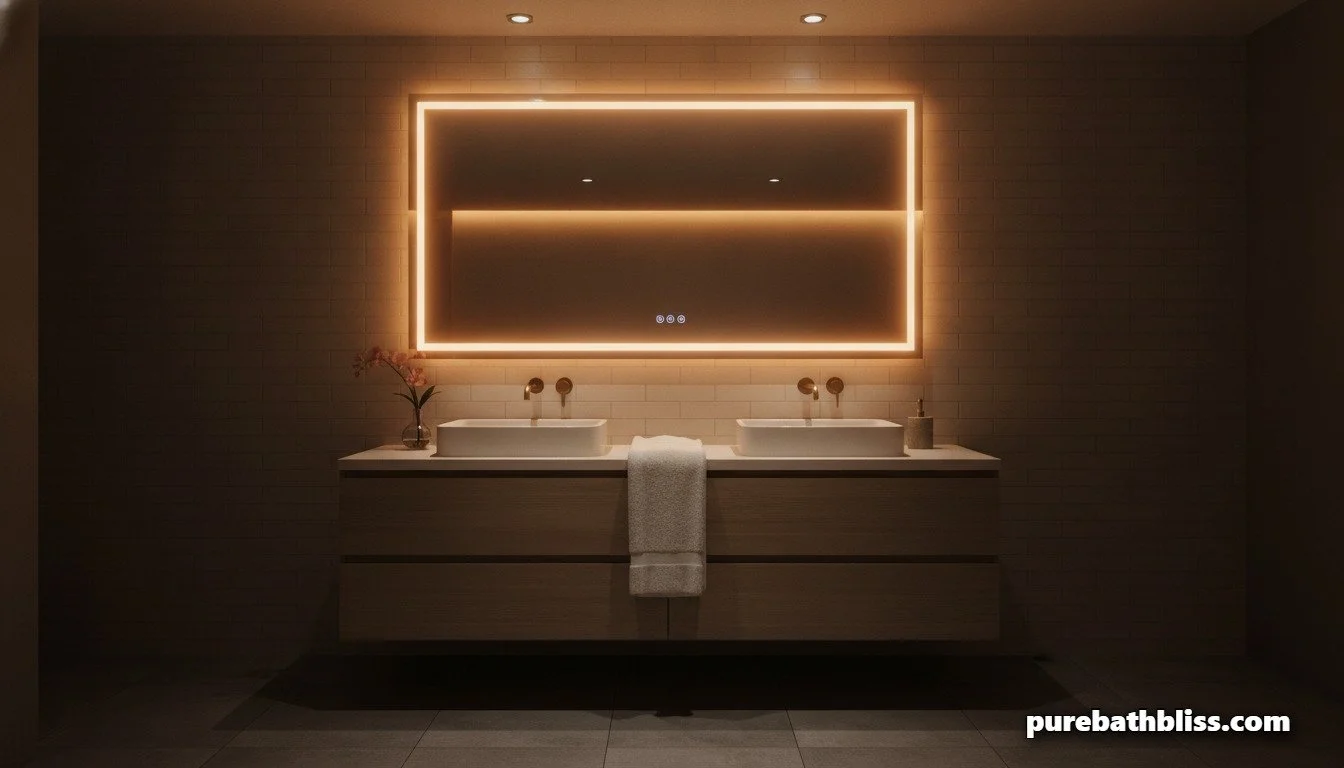
I replaced it with a 36 by 48 inch LED mirror with anti-fog, touch dimmer, and three colour temperature settings. The installation took about forty minutes. The difference is not subtle. Walking into the bathroom now, the mirror is clear regardless of how steamy the shower was, the lighting is genuinely flattering rather than the harsh overhead wash we had before, and the room looks noticeably more considered without a single other change. I understand the TikTok obsession.
What I also understand, after spending time researching the category before buying, is that there is significant variation in what these mirrors actually deliver for the price and some features are genuinely useful while others are marketing. Here is the complete guide to what matters, what does not, and what to buy at each price point.
Why This Trend Has Actual Staying Power
Most bathroom TikTok trends are aesthetic. A specific tile pattern, a particular plant, a colour scheme. They look good in videos, they influence purchase decisions for a season, and then the next thing arrives. The LED anti-fog mirror trend is different because it solves real daily problems rather than just looking good on camera, which is why search volume has been climbing consistently for two years rather than spiking and dropping like a typical trend cycle.
According to the 2025 Houzz Bathroom Trends Study, LED lighting is now the most requested specialty mirror feature at 24 percent of renovated bathrooms, with anti-fog systems second at 22 percent. These are not impulse purchases being returned after a week. They are features people research, buy deliberately, and consistently rate positively in reviews. The one million household figure cited by the best-selling mirror on Amazon is real and reflects a category that has genuinely crossed from early adopter to mainstream.
The TikTok content around these mirrors is also some of the most genuinely informative in the home category. Before and after bathroom reveals showing the transformation a lit mirror produces are compelling because the visual difference is real. The mirror is not just a mirror anymore. It is the primary light source for the vanity zone, a fog management system, and a design statement simultaneously.
TikTok Content Worth Watching Before You Buy
The TikTok community around LED bathroom mirrors is genuinely useful for understanding what these mirrors look like installed in real homes rather than product renders. A few specific searches worth doing before you buy:
Search #ledbathroommirror to see hundreds of real installation reveals showing before and after bathroom transformations, including small bathrooms where the lighting effect is particularly dramatic
Search #antifogmirror to find demonstration videos showing the heated defogger in action, which is the most useful way to understand how fast and how completely the fog clears
Search #bathroomremodel2026 to see how these mirrors are being integrated into broader renovation contexts, including which frame styles and sizes are being paired with different tile and vanity combinations
The content from creators who have actually installed and lived with these mirrors for several months is the most valuable. Unboxing videos are less useful because the difference between a good and mediocre mirror is not visible in the box. It shows up in the quality of the light after three months of daily use and in whether the touch controls are still responsive after a year of steam exposure.
The Features That Actually Matter
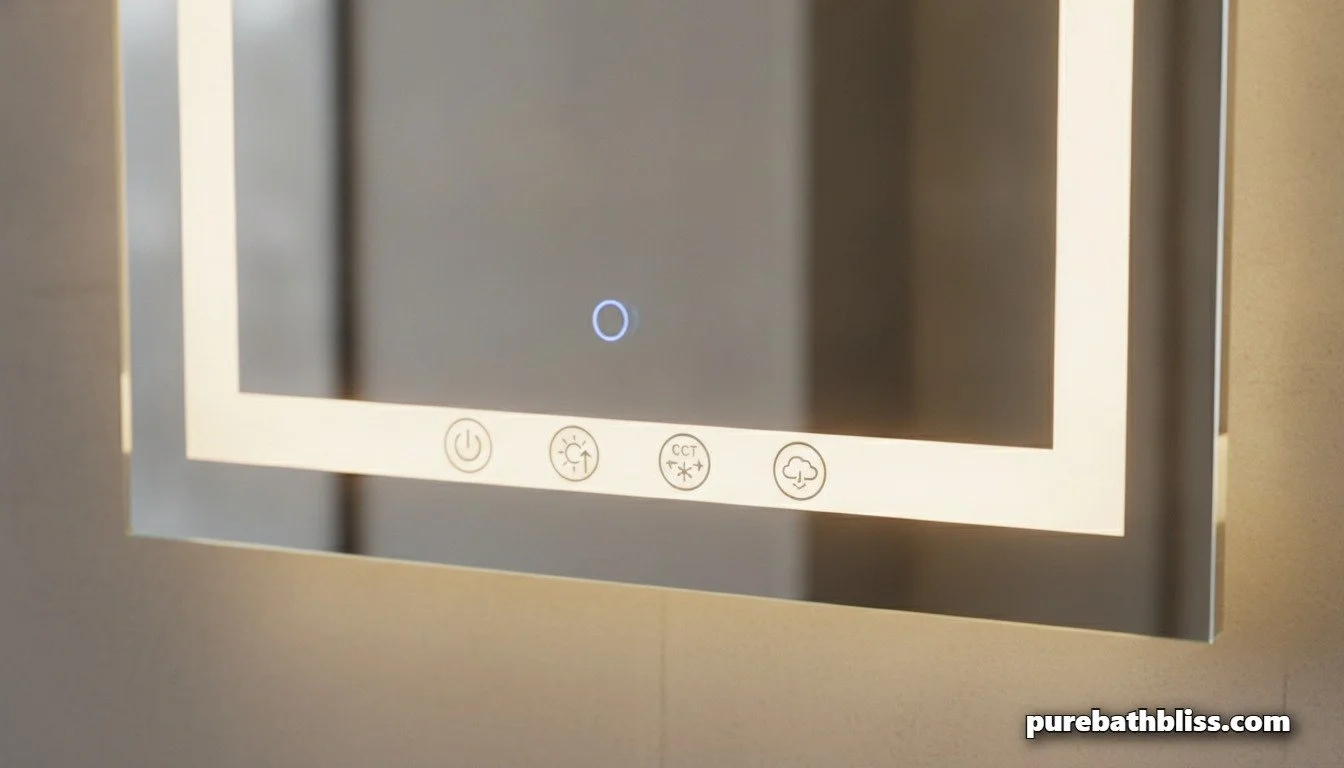
| Feature | Worth It? | What to Look For | What to Avoid |
|---|---|---|---|
| Backlit LEDs | Yes — ambient glow and premium look | Even diffusion with no hot spots around perimeter | Using as sole task light — shadows on face |
| Frontlit LEDs | Yes — essential for grooming and makeup | Even face-forward illumination, CRI 90 or above preferred | Low CRI — colours look wrong for makeup |
| Hybrid (front and back) | Yes — best of both, independent controls | Separate touch controls for each light source | Linked controls that can only operate together |
| Anti-fog defogger | Yes — genuinely eliminates daily friction | Full-surface heating, clears in under 30 seconds | Centre-only heating at lower price points — edges still fog |
| 3-colour temperature settings | Yes — essential for versatility | 3000K warm, 4000K neutral, 6000K cool daylight | Single fixed colour temperature — no flexibility |
| Stepless dimming | Yes — smooth dimming without flicker | Smooth brightness curve, no flicker at low levels | 3-level only dimming — not nuanced enough |
| Memory function | Yes — saves your preferred settings | Retained across power cycles, not reset by light switch | Memory that resets every time power is cut |
| Bluetooth speakers | No — sound quality universally poor | Buy a separate waterproof Bluetooth speaker instead | Paying a premium for mirror speakers |
| Digital clock display | No — rarely readable in a lit bathroom | N/A | Paying premium for a feature you will not use |
Lighting Type: Backlit vs Frontlit vs Hybrid
This is the most important decision in the category and the one most people do not think about until after they have bought the wrong configuration for their bathroom.
Backlit mirrors have LED strips behind the glass that create a halo glow around the perimeter. They are beautiful. They add depth and ambiance to the room. They are not ideal as your primary light source for grooming because the light comes from behind and around the mirror rather than toward your face. If your bathroom has good overhead lighting and you mainly want a premium look plus ambient glow, backlit is the right choice.
Frontlit mirrors have LEDs facing outward through a diffuser on the front surface. They provide direct, even face illumination that eliminates the under-eye shadows that overhead lighting creates. If you wear makeup, shave, or do any detailed grooming in front of this mirror and it will be your primary vanity light source, frontlit or hybrid is the better choice.
Hybrid mirrors have both front and back LEDs with independent controls. This gives you the flexibility to use the backlight for ambiance and the front light for task lighting. At the same price point, hybrid is almost always the better choice because you can dial in both functions separately depending on time of day and what you are doing.
The Anti-Fog System
The anti-fog feature uses a thin heating pad behind the glass that warms the mirror surface just enough to prevent condensation from forming. When the mirror glass is warmer than the dew point of the steam-saturated bathroom air, moisture cannot condense onto it. The result is a fog-free mirror from the moment you get out of the shower without wiping.
The performance varies significantly between models. A good defogger clears the full mirror surface in under 30 seconds. A mediocre one clears the centre only and leaves foggy edges, which is what most budget models deliver. Full-surface heating is the specification to look for if complete fog elimination matters to you. A partial-surface defogger is still better than no defogger, but it is worth understanding what you are buying.
Our existing guide on how to stop your bathroom mirror fogging up covers why mirror fog happens and the physics behind the dew point, which is useful context for understanding what the heated pad is actually doing and why exhaust fan quality affects how well it works.
Colour Temperature and CRI
Three colour temperature settings (typically 3000K warm, 4000K neutral, and 6000K cool daylight) is the standard configuration and the right one. The reason all three matter is that warm light (3000K) is what you want for a relaxing evening bath routine, cool daylight (6000K) is what you want for accurate makeup application or shaving, and the neutral middle setting covers everyday use.
CRI (Colour Rendering Index) is the less-advertised spec that matters more than most people realise. CRI measures how accurately the light source renders the true colour of objects and skin. A CRI of 80 is standard and adequate. A CRI of 90 or above renders colours noticeably more accurately, which matters for makeup application specifically. If you wear makeup regularly, prioritise a mirror with CRI 90 or higher in the specifications.
Memory Function
The memory function saves your preferred brightness and colour temperature settings so the mirror returns to them automatically when turned on. Without it, the mirror resets to factory default settings every time it powers on and you have to re-set your preferences each use. This sounds minor but becomes a daily frustration. If the mirror is hardwired and the bathroom light switch cuts power to it, the memory function may reset each time the switch is used. Check whether the mirror can be wired with a dedicated always-on circuit with the touch panel as the on/off control, which preserves the memory function regardless of the light switch position.
The Features That Are Mostly Gimmicks
Bluetooth speakers. Some mirrors include built-in speakers for playing music while you shower. In practice, the speaker quality in these is universally poor because there is no physical space for a decent driver behind a mirror glass. A small waterproof Bluetooth speaker is both cheaper and significantly better sounding than any mirror-integrated speaker we have come across.
Digital clocks and weather displays. The hidden display feature that shows the time, date, or temperature through the mirror looks genuinely impressive in product photos. In practice, the display is rarely bright enough to be readable in a lit bathroom and is unnecessary information in a space where your phone is typically within reach.
RGB colour cycling. Some mirrors offer a gradient function that cycles through colour temperatures or even colours. Interesting for thirty seconds and then essentially unused. Stick to the three standard colour temperature settings and put the budget difference toward a better quality front light or larger size.
What to Look for in Specifications
| Specification | Minimum Standard | Premium Standard | Why It Matters |
|---|---|---|---|
| Safety certification | UL or ETL listed | UL listed with damp location rating | Non-negotiable for electrical safety in a humid space |
| IP rating | IP44 (splash resistant) | IP54 or above | Bathroom moisture resistance — essential near shower zone |
| Glass type | Tempered safety glass | Tempered glass with shatterproof protective film | Safety in case of breakage in a bathroom environment |
| CRI (Colour Rendering Index) | CRI 80+ | CRI 90+ for makeup accuracy | Determines how accurately the light renders skin tone and colour |
| LED lifespan | 30,000 hours | 50,000 hours | At 2 hours daily use, 50,000 hours = 68 years. This is not a consumable. |
| Warranty | 1 year | 3 years with returnless replacement | Electronics in a humid environment need real warranty coverage |
| Installation type | Plug-in with cord management | Hardwired with dedicated circuit for memory preservation | Plug-in is easier. Hardwired looks cleaner and preserves memory function. |
The safety certifications are non-negotiable. UL or ETL listing in the US and Canada means the mirror has been independently tested for electrical safety in a damp environment. An uncertified mirror in a bathroom is an electrical safety risk that no aesthetic benefit justifies. IP44 is the minimum waterproofing rating for a bathroom mirror located near a shower zone. IP44 means splash-resistant, not fully waterproof, which is the correct standard for a mirror rather than a showerhead.
Size: How to Get This Right
The standard sizing guidance for a bathroom mirror is 2 to 4 inches narrower than your vanity width. This frames the mirror within the vanity footprint visually rather than extending beyond it, which reads as deliberate rather than mismatched. For a 36-inch single vanity, a 32 to 34-inch wide mirror is correct. For a 60-inch double vanity, a 54 to 56-inch wide mirror or two separate mirrors each matching the individual sink zones works well.
Height is determined by ceiling height, the position of any overhead lighting, and the height of the tallest regular user. Most mirrors mount with the centre of the mirror at approximately 65 inches from the floor, which suits adults of average height. If you have wall sconces flanking the mirror, the mirror width and sconce placement need to be coordinated before you buy anything. Sconces should sit at roughly eye level on either side of the mirror rather than above it for the most flattering face illumination.
On the shape question that is currently trending heavily on TikTok: round mirrors are having a significant moment in 2026 and they look genuinely beautiful over smaller single vanities. The backlit halo on a round mirror produces a more dramatic effect than on a rectangle. The practical consideration is that round mirrors provide less total reflective surface area for a given wall space, which matters in a bathroom used by multiple people simultaneously.
The Best Options at Each Price Point
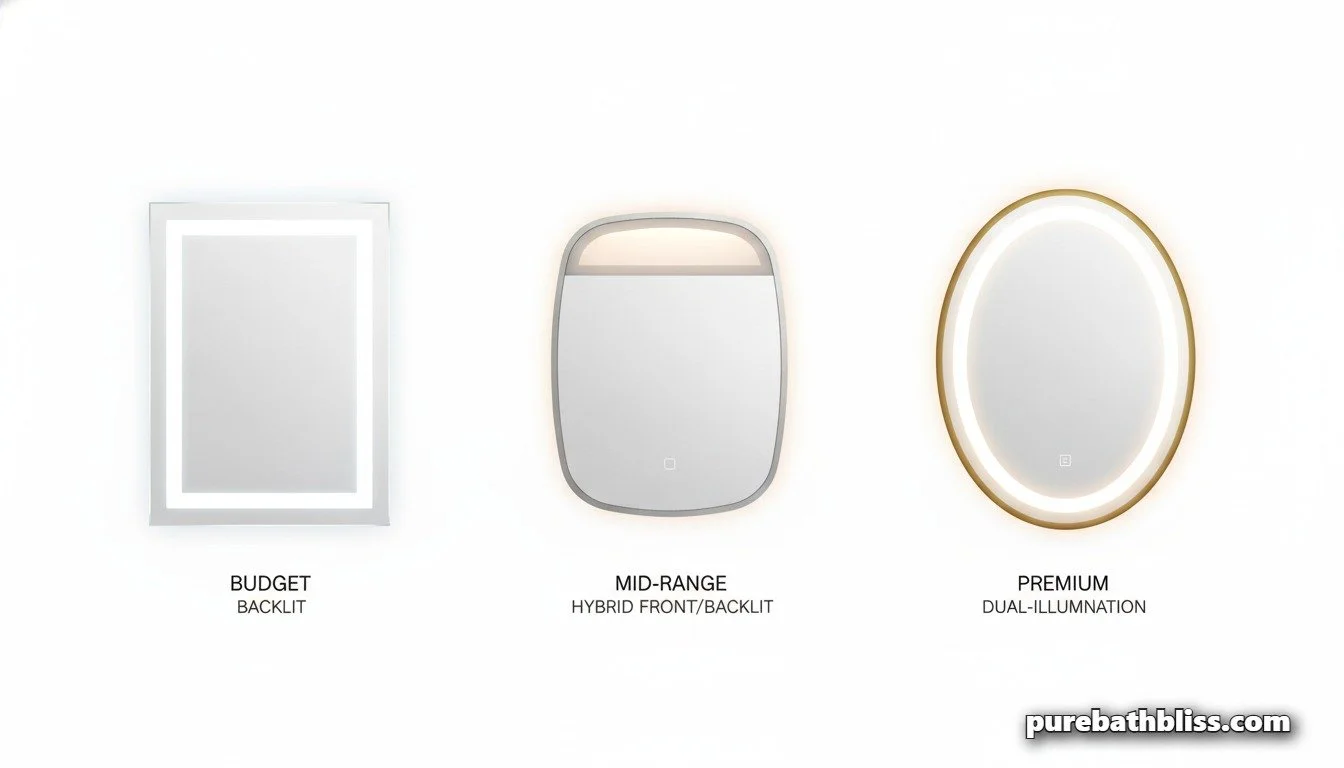
Budget ($80 to $150): Hivone LED Bathroom Mirror
The Hivone is consistently rated as the best value LED mirror at this price point, available in 19 size configurations from 24 by 32 inches up to 73 by 36 inches. It includes three colour temperature settings, adjustable brightness, anti-fog, and both front and back illumination at a price that undercuts most competing dual-illumination mirrors significantly. The anti-fog covers the centre zone rather than the full surface, which is the main compromise at this price. For a single user bathroom or a powder room where anti-fog is a nice-to-have rather than a must-have, this is a genuinely excellent starting point. Find the Hivone on Amazon.
Mid-Range ($150 to $250): Amorho Dual LED Bathroom Mirror
The Amorho is the step up that most people should consider for a primary bathroom. Independent front and back LED controls, full-surface anti-fog that clears in under 30 seconds, 14 size options, and a 3-year warranty make it the best all-around performer in the mid-range category. The anti-fog coverage is the most significant improvement over the budget tier, and the independent lighting controls give you the flexibility to use the backlight for ambiance and the front light for grooming without having both on simultaneously. Find the Amorho on Amazon.
Premium ($250 to $400+): Keonjinn or LuxHomez Large Format Mirrors
At this price point you are buying larger format glass, higher CRI lighting (90 or above), faster and more complete anti-fog coverage, better build quality on the touch controls, and longer warranty coverage. This Old House highlights the Keonjinn backlit mirror specifically for its water-resistant LED backlighting and dimming performance in their 2026 review. LuxHomez is called out by The Spruce for delivering a genuinely luxe backlit effect at the upper end of the value proposition. Both are worth considering for a primary bathroom renovation where you want the mirror to be a statement piece rather than just a functional upgrade. Find the Keonjinn on Amazon.
Best Round Option: Artika Romy 28 Inch LED Round Mirror
For a bathroom where a round mirror fits the aesthetic, the Artika Romy is the most consistently reviewed round LED option with a defogger, rated 4.89 stars across a significant review volume. The backlit halo on a round mirror is a genuinely beautiful effect that photographs and looks better in person than comparable rectangle options at the same price. Best suited to a single vanity under 36 inches wide. Find the Artika Romy on Amazon.
Installation: Plug-In vs Hardwired
Most LED mirrors come with a standard power cord and can be plugged into any nearby outlet. This is the simplest installation scenario: mount the mirror on the wall using the included French cleat or hanging plate system, tuck the cord behind the mirror or along the wall to the outlet, done in under an hour with no electrical work required.
Hardwired installation connects the mirror directly to the wall wiring without a cord. This looks cleaner, removes the outlet requirement, and is the right choice for a full renovation where you have wall access anyway. It requires a licensed electrician in most jurisdictions and adds $150 to $300 to the installation cost depending on your local rates. If you are doing a bathroom renovation and have any wall open, plan the mirror wiring at that stage. Adding it after the drywall is closed is a significantly more expensive job.
The mounting itself is straightforward for anyone who is comfortable with the towel bar installation we covered in our guide to bathroom wall hardware installation. The same stud-versus-drywall-anchor logic applies. A large LED mirror weighs 15 to 30 pounds depending on size, which means hitting studs or using quality toggle bolts is genuinely important rather than optional.
Is It Worth It?
For a primary bathroom used daily, yes without hesitation. The lighting improvement alone, replacing the standard overhead fixture with face-forward LED illumination at the right colour temperature, has a disproportionate effect on how good the bathroom looks and feels for the cost involved. Combined with the anti-fog elimination of the daily mirror-wiping friction, an LED mirror genuinely improves the quality of the daily routine rather than just improving the appearance of the room.
For a powder room used by guests, the aesthetic impact of a backlit LED mirror is probably the highest visual return on investment of any single item you can add to that space. It photographs beautifully, it makes guests feel like they are in a considered, high-end room, and it costs less than most vanity hardware upgrades.
For a secondary bathroom used occasionally, whether it is worth the investment depends on whether the lighting is genuinely inadequate. If the existing mirror and overhead light combination works for the people using it, the upgrade is aesthetic rather than functional and the decision is a matter of preference and budget rather than need.