Is 2-Ply Toilet Paper Actually the Best? What Ply, Fiber, and GSM Really Mean
Originally published Oct 26, 2025 · Updated July 29, 2026
Transparency Note: We independently select these products based on research and user reviews. If you buy something through our links, we may earn a commission.
As a Red Seal Carpenter I have spent a significant portion of my career thinking about what materials do to infrastructure over time. Drain lines are infrastructure. What goes through them daily, and how quickly it breaks down once it does, directly affects whether that infrastructure performs reliably for decades or starts showing problems within a few years. Toilet paper is a daily drain input for every household and most people choose it by price and ply count without knowing that both are among the least useful metrics available.
The question of whether 2-ply is the best toilet paper has a more interesting answer than most comparison guides provide. Ply count describes how many layers a sheet has. It says almost nothing about fiber quality, paper weight, bleaching method, disintegration rate, or skin compatibility, which are the variables that actually determine how a roll performs in use and what it does to your plumbing and your household's chemical exposure over time.
Here is the complete picture: what ply actually measures and what it does not, the metrics that matter more, the BPA contamination finding in recycled paper that most buyers have never heard of, how bamboo compares across all the meaningful variables, and a cost per sheet breakdown that changes how most people think about the price on the package.
What Ply Actually Means and What It Does Not
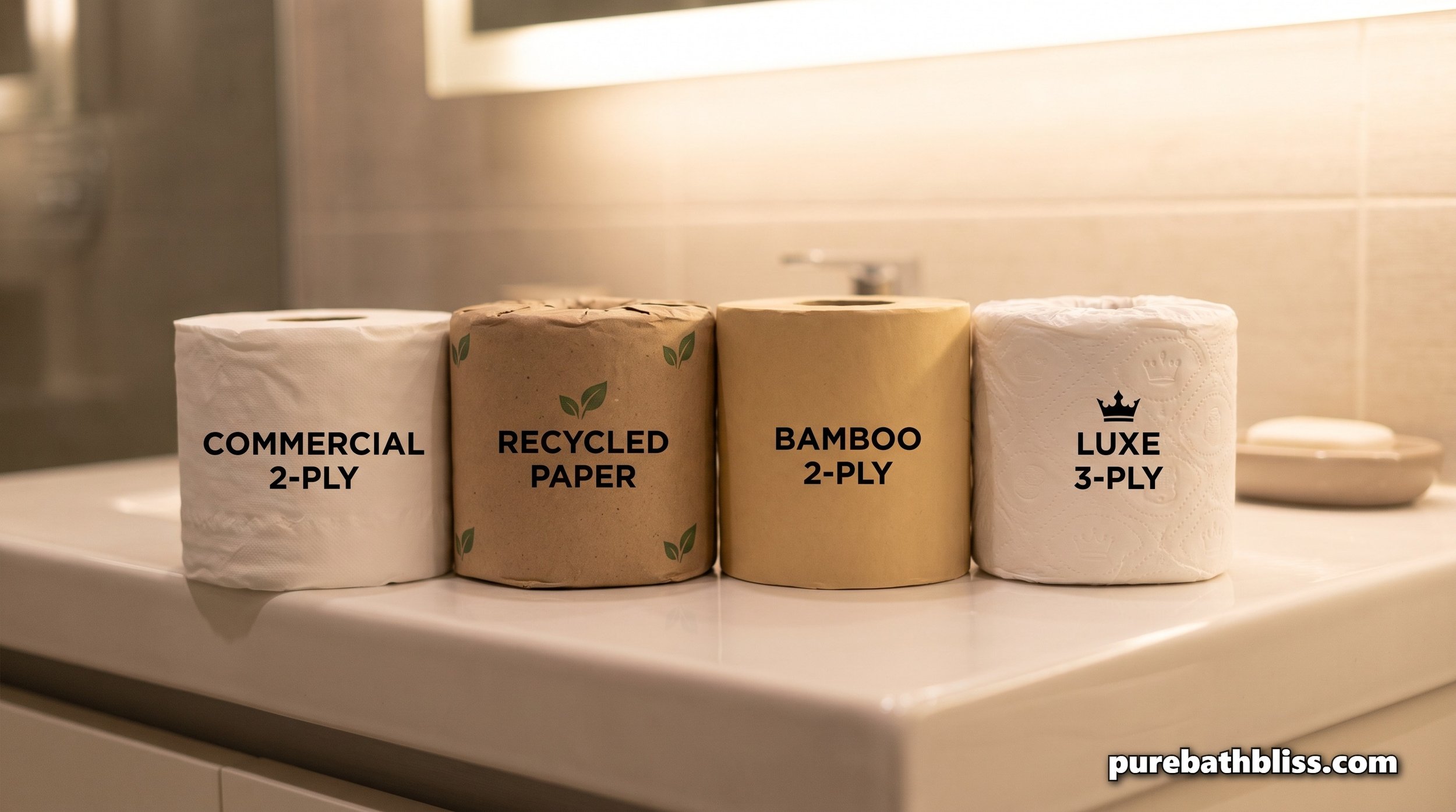
Ply is simply the number of paper layers bonded together to form a single sheet. One-ply is a single layer. Two-ply is two layers bonded at the edges. Three-ply is three layers. More layers generally means a thicker sheet with more absorbency and more strength against tearing, which is why the consumer assumption that higher ply equals higher quality developed in the first place.
The problem is that ply count tells you nothing about the quality of the underlying fiber in each layer. A 2-ply roll made from long-fiber virgin softwood pulp with high GSM paper weight can outperform a 3-ply roll made from short-fiber recycled pulp with low GSM weight on every performance metric: strength, softness, absorbency, and sheet count per roll. The number of layers matters only in relation to what those layers are made from and how heavy each layer is.
Standard 2-ply rolls typically land between 28 and 33 GSM total weight, with each ply weighing approximately 14 to 17 GSM. A premium 2-ply with long-fiber pulp at 33 GSM will feel significantly thicker and stronger than a budget 2-ply at 28 GSM using short-fiber recycled content, even though both are labeled identically as 2-ply. The GSM number, grams per square meter of paper weight, is almost never printed on consumer packaging despite being the single most informative specification available.
The Four Variables That Actually Matter
1. Fiber Source: Virgin Pulp, Recycled, or Bamboo
Virgin wood pulp from softwood trees produces the longest, strongest paper fibers available for toilet tissue manufacturing. Longer fibers mean stronger sheets that require fewer layers to achieve the same performance, which is why premium virgin pulp 2-ply often outperforms recycled 3-ply on strength and softness. The environmental cost is the direct trade-off: virgin pulp requires harvesting mature trees, and a significant proportion of North American virgin toilet paper pulp comes from the Canadian Boreal forest. A single roll of standard virgin pulp toilet paper requires approximately 37 gallons of water and 1.3 trees per 100 rolls to produce.
Recycled content paper uses post-consumer recycled fiber rather than virgin wood pulp. The fibers are shorter and weaker after the recycling process, which is why recycled paper often requires higher ply counts to achieve acceptable strength and why it can feel slightly rougher than virgin pulp at equivalent weight. The environmental advantage is genuine: recycled content paper uses significantly less water, energy, and no virgin forest material. The unexpected complication, covered in detail in the section below, is BPA contamination from thermal receipt paper in the recycling stream.
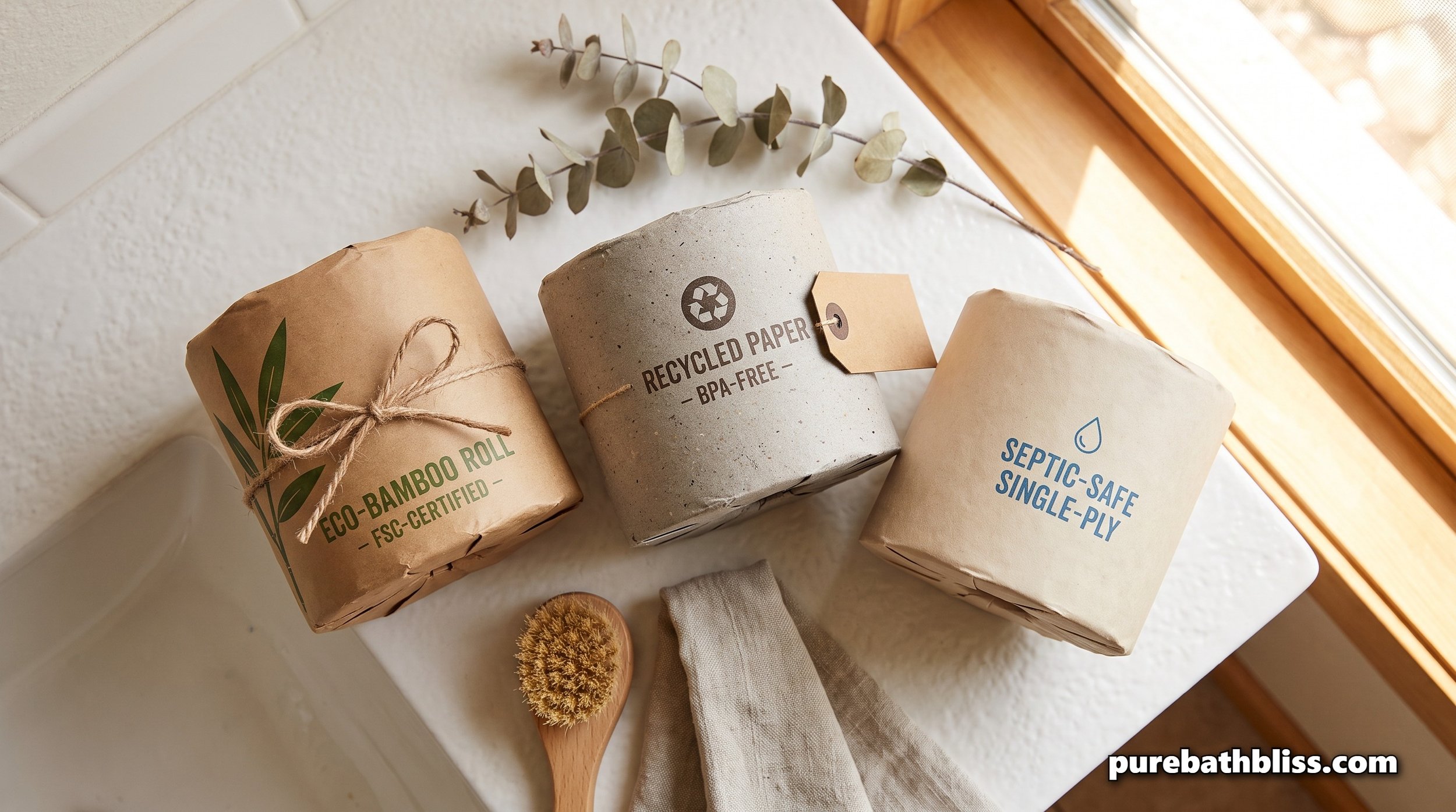
Bamboo fiber is the most meaningful improvement across all variables simultaneously. Bamboo is a grass that reaches harvest maturity in three to five years without replanting, compared to softwood trees that take thirty to sixty years. It produces a fiber that is naturally softer than most recycled content paper, breaks down in water faster than both virgin pulp and recycled fiber which matters specifically for septic systems and aging drain lines, and requires no pesticides or fertilizers in most growing conditions. FSC-certified bamboo toilet paper is the recommendation that appears in our eco-friendly toilet routine guide for exactly these reasons.
2. Bleaching Method: Chlorine, TCF, or Unbleached
The bright white appearance of most commercial toilet paper is produced by bleaching the paper pulp during manufacturing. The bleaching method determines what chemical compounds remain in the finished product and what is discharged into waterways during manufacturing.
Chlorine bleaching, the oldest and cheapest method, produces dioxins and furans as byproducts, compounds that are persistent environmental pollutants. Elemental chlorine-free (ECF) bleaching replaces chlorine gas with chlorine dioxide, reducing but not eliminating chlorinated byproducts. Totally chlorine-free (TCF) bleaching uses hydrogen peroxide or ozone, producing no chlorinated byproducts. Unbleached paper skips the whitening step entirely and is naturally cream or brown in color. For a household prioritizing non-toxic products, TCF or unbleached is the standard worth applying to toilet paper for the same reason it applies to food packaging and personal care products: chlorine compounds in the finished product contact the most sensitive skin in the body at every use.
3. Disintegration Rate: The Plumbing Variable
Toilet paper is specifically engineered to disintegrate in water, unlike facial tissue or paper towels which are engineered to resist wet tearing. The speed and completeness of disintegration directly affects drain line performance, septic system function, and the fatberg formation risk we covered in our eco-friendly toilet routine guide.
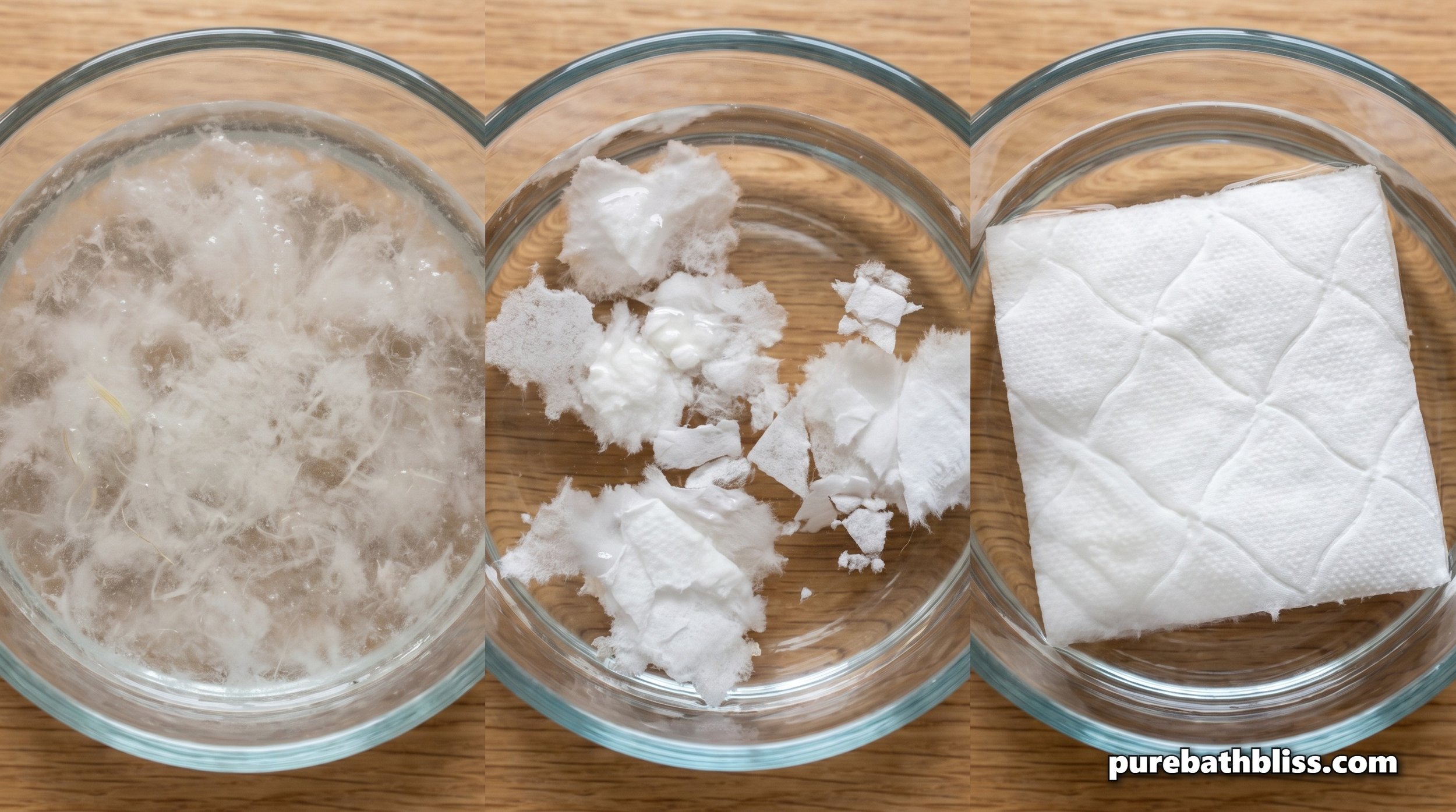
Bamboo fiber disintegrates faster in water than both virgin pulp and recycled fiber due to the shorter fiber length and the absence of the chemical bonding agents used in some commercial papers. Premium thick 3-ply paper, while soft and strong in use, can take significantly longer to disintegrate in drain water than standard 2-ply or 1-ply, which matters in households with older plumbing, lower-flow toilets, or septic systems where retention time in the tank affects how thoroughly paper breaks down before reaching the drain field. A septic-safe label on toilet paper indicates the paper has been tested for rapid disintegration, which is worth looking for specifically for septic households regardless of ply count.
4. Added Chemicals: Fragrance, Lotion, and Dyes
Scented, lotion-infused, and colored toilet papers introduce synthetic compounds that contact the most permeable and sensitive skin in the body. Synthetic fragrance in toilet paper carries the same undisclosed compound risk as synthetic fragrance in personal care products, potentially including phthalates and known allergens. Lotion-infused papers leave a residue that can irritate the urethral area and the perianal skin, particularly for children and anyone with sensitive skin. Aloe vera or vitamin E additives in toilet paper are present in concentrations too small to produce any skin benefit but sufficient to trigger reactions in sensitized individuals. Unscented, undyed, unlotion-ed paper is always the appropriate choice for sensitive skin and for children.
The BPA Finding in Recycled Toilet Paper
This is the finding most recycled paper guides do not cover and one that significantly complicates the straightforward environmental case for recycled content toilet paper.
BPA, bisphenol-A, is an endocrine-disrupting chemical used in the coating of thermal receipt paper, the paper used in cash register receipts, parking tickets, and similar printed documents. Thermal receipt paper enters the recycling stream along with cardboard, newspaper, and other paper products. During the recycling process, BPA from the thermal coating is not fully removed and can transfer into the recycled fiber used in paper products made from that stream.
A 2019 study published in Environmental Science and Technology Letters tested recycled toilet paper from multiple countries and found BPA present in a significant proportion of samples, with concentrations ranging from trace levels to levels that the researchers considered potentially relevant given the intimate and frequent skin contact that toilet paper involves. The perianal skin is among the more permeable regions of the body, and daily repeated contact with BPA-containing paper represents a cumulative exposure route that most consumers using recycled toilet paper for environmental reasons are entirely unaware of.
The practical implication is not that recycled paper should be avoided entirely but that BPA-free certified recycled paper is the meaningful specification worth looking for when choosing recycled content toilet paper. Bamboo toilet paper, which is not made from recycled paper fiber, does not carry this contamination concern. The same mineral and chemical buildup awareness that applies to bathroom products applies to kitchen products and textiles. Our sister site Pure Kitchen Bliss covers the citric acid approach to removing mineral and chemical buildup from kitchen towels and appliances, which uses the same chemistry that removes scale from toilet hardware.
The Cost Per Sheet Calculation
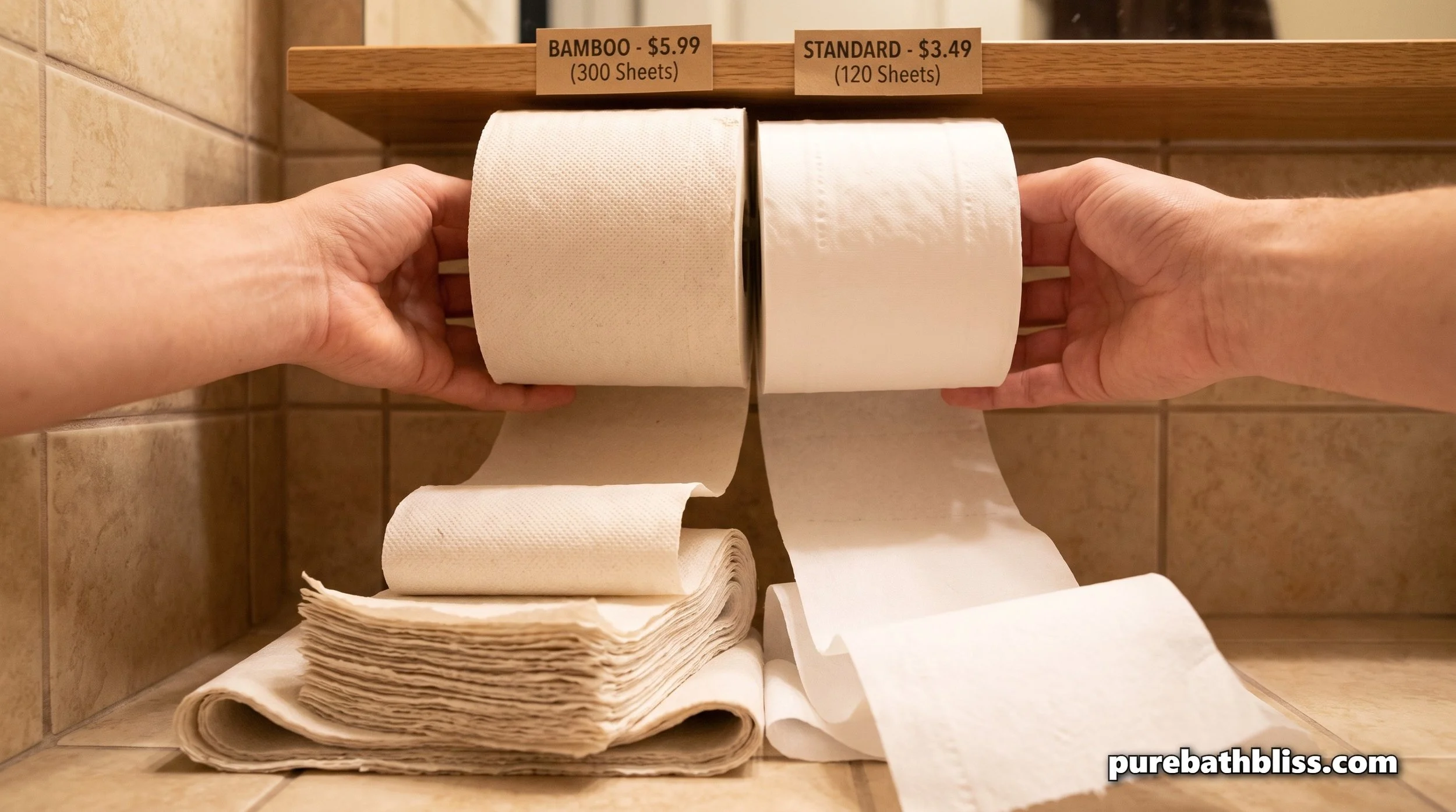
The price on the front of a toilet paper package is one of the least useful numbers available for comparing value across different products. Roll count and sheet count per roll vary so significantly across brands and formats that a cheaper price per roll frequently means a higher price per sheet, which is the only comparison that reflects actual usage cost.
The calculation is straightforward. Divide the total package price by the total number of sheets across all rolls. A 12-pack of a premium brand at $18.00 with 200 sheets per roll is 200 times 12 equals 2,400 sheets total, producing a cost per sheet of 0.75 cents. A 24-pack of a budget brand at $22.00 with 150 sheets per roll is 150 times 24 equals 3,600 sheets total, producing a cost per sheet of 0.61 cents. The premium brand costs less per sheet despite costing less per package.
Bamboo toilet paper consistently appears more expensive per roll than standard commercial paper and consistently appears competitive or cheaper per sheet when the calculation is done correctly because bamboo rolls typically contain more sheets per roll than the equivalent commercial format. The subscription pricing available from major bamboo brands reduces the per-sheet cost further and eliminates the restocking habit that causes most households to default back to whatever is on sale at the grocery store.
The Septic System Consideration
Households on septic systems have specific requirements that override the general ply preference discussion. A septic system relies on bacterial digestion of organic material in the tank before partially treated water reaches the drain field. Toilet paper that does not disintegrate rapidly increases the solids load in the tank, reduces the bacterial digestion capacity, and accelerates the frequency of pump-out service required.
For septic households specifically, the ply hierarchy reverses from the comfort preference most people have. Single-ply disintegrates fastest and produces the lowest solids load per flush. Bamboo 2-ply disintegrates faster than virgin pulp 2-ply and is the recommended choice for septic households wanting both comfort and system-appropriate performance. Premium thick 3-ply should be avoided in septic systems regardless of how good it feels in use. The silent leak test and flapper maintenance we cover in our silent toilet leak guide applies equally to septic households where a leaking flapper continuously moving water through the tank disrupts the bacterial ecosystem that makes the system function.
The water efficiency dimension connects directly to toilet paper choice as well. A WaterSense-certified 1.28 GPF toilet creates less turbulent flush action than older 3.5 to 7 GPF toilets, which means the paper needs to disintegrate readily under lower flush volume to clear the trap effectively. Higher ply count papers in low-flow toilets are a combination that produces more partial clears and more double-flushing than 2-ply or bamboo paper at equivalent sheet use.
The Complete Comparison
| Type | Fiber Source | Softness | Disintegration Rate | BPA Risk | Environmental Impact | Septic Safe? | Verdict |
|---|---|---|---|---|---|---|---|
| Virgin pulp 2-ply | Softwood or hardwood trees. 30 to 60 year maturity. | High. Long fibers produce soft, strong sheets. | Moderate. Slower than bamboo, faster than premium 3-ply. | None. No recycled fiber contamination. | Worst. Virgin forest sourcing, high water use, 37 gallons per roll. | Yes for standard 2-ply. Check label for thick or premium formats. | Comfortable but worst environmental option. Avoid unless FSC-certified sustainable forestry. |
| Recycled content 2-ply | Post-consumer recycled fiber. Shorter, weaker than virgin. | Moderate. Shorter fibers reduce softness at equivalent weight. | Moderate to fast depending on bonding agents used. | Present in some products from thermal receipt paper in recycling stream. Look for BPA-free certified. | Good. No virgin forest use. Less water and energy than virgin pulp. | Generally yes. Check label. | Good environmental choice with caveats. BPA-free certified and TCF-bleached is the specification worth requiring. |
| Bamboo 2-ply | Bamboo grass. 3 to 5 year maturity. No replanting needed. | High. Naturally soft fiber, competitive with virgin pulp. | Fast. Disintegrates faster than virgin pulp in water. | None. Not made from recycled fiber. | Best. No virgin forest use, fast-growing renewable, no pesticides. | Yes. Recommended format for septic households wanting comfort. | Best overall. Strongest across all meaningful variables. FSC-certified and TCF or unbleached is the specification. |
| Virgin pulp 3-ply premium | Softwood virgin pulp. High GSM weight per ply. | Highest. Three layers of long-fiber pulp at high GSM. | Slowest. Three bonded layers take longest to break down. | None from recycled fiber. May contain fragrance or lotion compounds. | Worst. Highest resource use per sheet of any format. | Not recommended for septic systems. Slowest disintegration, highest solids load. | Comfortable but worst on every environmental and plumbing metric. Not recommended. |
| Single-ply | Varies. Virgin pulp, recycled, or bamboo. | Low. One layer provides minimal cushioning. | Fastest of any format. Best for sensitive plumbing and septic. | Depends on fiber source. | Good. Lowest material use per sheet. | Best for septic. Fastest disintegration, lowest tank solids load. | Best for septic households and older plumbing. Not the comfort preference for most households. |
The Recommendations
Best overall: FSC-certified bamboo toilet paper that is unbleached or TCF-bleached and septic-safe rated. Outperforms recycled content on softness, avoids the BPA contamination concern, disintegrates faster than virgin pulp, and has the strongest environmental lifecycle credentials of any format currently available. Subscription pricing makes the per-sheet cost competitive with mid-range commercial paper.
Best recycled option: BPA-free certified recycled content toilet paper with TCF bleaching. The BPA-free certification addresses the thermal receipt paper contamination concern. TCF bleaching eliminates the chlorinated byproduct concern. Recycled content eliminates virgin forest pulp use. Look for these three specifications together.
Best for septic systems: Single-ply rapid-dissolve toilet paper specifically rated for septic system use. Scott Rapid-Dissolving is the most widely tested and most consistently recommended format for septic systems. The reduced comfort compared to 2-ply is the trade-off for significantly lower solids load and faster disintegration in the tank.
Best storage solution: A wall-mounted bamboo toilet paper holder that holds multiple rolls eliminates the restocking problem that causes most households to buy whatever is on sale rather than maintaining their preferred sustainable option. We cover the broader zero-waste bathroom storage approach in our guide to zero-waste toilet paper storage.
The honest answer to whether 2-ply is the best toilet paper is that ply count is the wrong question. The right questions are what the fiber is made from, how it was bleached, how fast it disintegrates, and whether it contains any added chemicals that contact sensitive skin daily. A bamboo 2-ply that is FSC-certified, TCF-bleached, fragrance-free, and septic-safe rated answers all four of those questions correctly regardless of the ply number on the front of the package.