How to Naturally Clean Your Shower Curtain Liner (Without a Washing Machine)
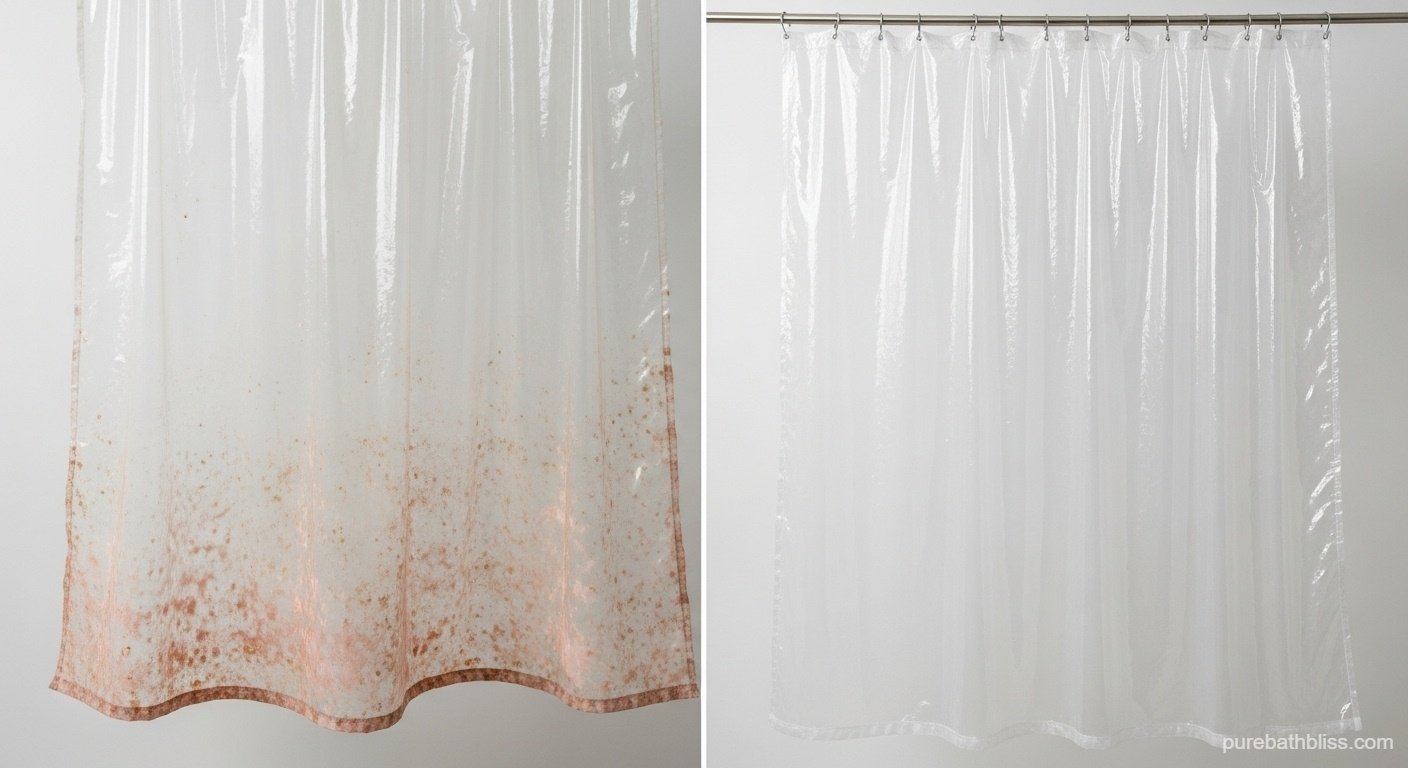
You know the moment. You pull the curtain open and there it is: orange-pink slime marching up the bottom hem, black speckles in the folds, and a general cloudy haze that screams “replace me.” Most people rip it down, toss it in the trash, and buy another $6 plastic liner. But that liner isn’t trash yet—and throwing it away is literally sending non-recyclable plastic straight to landfill.
In 20 minutes, using ingredients you already have, you can make it look brand-new again. No washing machine, no bleach, no tears in the plastic.
Why Shower Curtain Liners Get Gross So Fast
The Perfect Storm of Soap + Moisture
Every time you shower, body oils, soap residue, and hard-water minerals coat the plastic. That organic film becomes breakfast for Serratia marcescens (the pink bacteria) and regular mildew.
Zero Airflow = Mold Paradise
When you bunch the curtain to one side after showering, the wet folds stay damp for hours. Mold only needs 24–48 hours of moisture to colonize.
The Plastic Waste Problem
Most PEVA and PVC liners are not accepted in curbside recycling. Cleaning and reusing is the only truly zero-waste move.
The No-Machine Soak Method (Works Every Time)
Why Skip the Washing Machine?
Thin liners shred easily on even the gentlest cycle, and the agitator can rip the magnet hem or grommets. The bathtub is gentler, bigger, and lets you see exactly what you’re doing.
The Magic Recipe
Fill the tub with enough warm (not hot) water to fully submerge the liner
Add 1 cup distilled white vinegar
Add ½ cup baking soda (pour slowly—enjoy the volcano)
Add 10 drops tea tree essential oil (natural antifungal + fresh scent)
The vinegar dissolves soap scum and mineral deposits. The baking soda gently abrades. Tea tree oil kills mold spores on contact.
Soak Time
Drop the liner in (rings and all—it’s fine). Weigh it down with a shampoo bottle if it wants to float. Let it soak 15–20 minutes. You’ll literally watch the pink stains fade before your eyes.
The Scrub & Rinse (5 Minutes)
Targeted Scrub
Put on rubber gloves. Use a damp microfiber cloth or soft-bristle brush on the bottom 12 inches and any folds. The gunk wipes off like butter—no hard scrubbing needed.
Final Rinse
Pull the plug. Turn on the showerhead and rinse both sides thoroughly while the liner is still hanging. Give it a good shake to remove excess water.
Prevention: Make It Last 6–12 Months Instead of 3
The 5-Second Daily Habit
After every shower, shake the curtain like a beach towel to fling off droplets. Then pull it fully closed (spread out) across the tub so air can circulate on both sides.
Keep the Bathroom Vent On
Run the fan for at least 20 minutes post-shower. Good airflow is the #1 mold killer.
Pro Hack: Trim the Hem
If the very bottom 2 inches are permanently stained or starting to degrade, grab scissors and cut them off. You’ll instantly have a brand-new straight edge and lose zero height (most liners are oversized anyway).
How Often Should You Do This?
Light hard-water areas: every 3–4 months
Humid climates or heavy use: every 6–8 weeks
The moment you see pink: act immediately—it spreads fast
Bonus: When It Really Is Time to Replace
If the plastic has turned brittle, cracked, or the magnets have rusted through, recycle it at a local plastic-film drop-off (grocery store bag bins often accept them). Then upgrade to a machine-washable PEVA or hemp liner for even longer life.
The Satisfaction of Saving It
Twenty minutes of effort just saved you $6–15 and kept a sheet of petroleum-based plastic out of the landfill for another year. Your liner looks brand-new, your bathroom smells fresh (not like bleach), and you get that quiet pride that comes from refusing to throw something away before its time.

Now that your curtain is fresh again, make sure the tub it protects is just as clean—without toxic chemicals. Check out our guide: Baby-Safe Cleaning: How to Scrub the Tub Without Harsh Chemicals.
One small soak. One giant win for your wallet and the planet.