Why Your Plastic Loofah Is a Bacteria Trap (And the 3 Best Natural Swaps)
It hangs in millions of showers across the world: that bright, fluffy ball of plastic mesh. It costs $2, creates a mountain of lather, and feels like a shower essential.
But dermatologists and microbiologists have a different name for your plastic loofah: a "bacteria hotel."
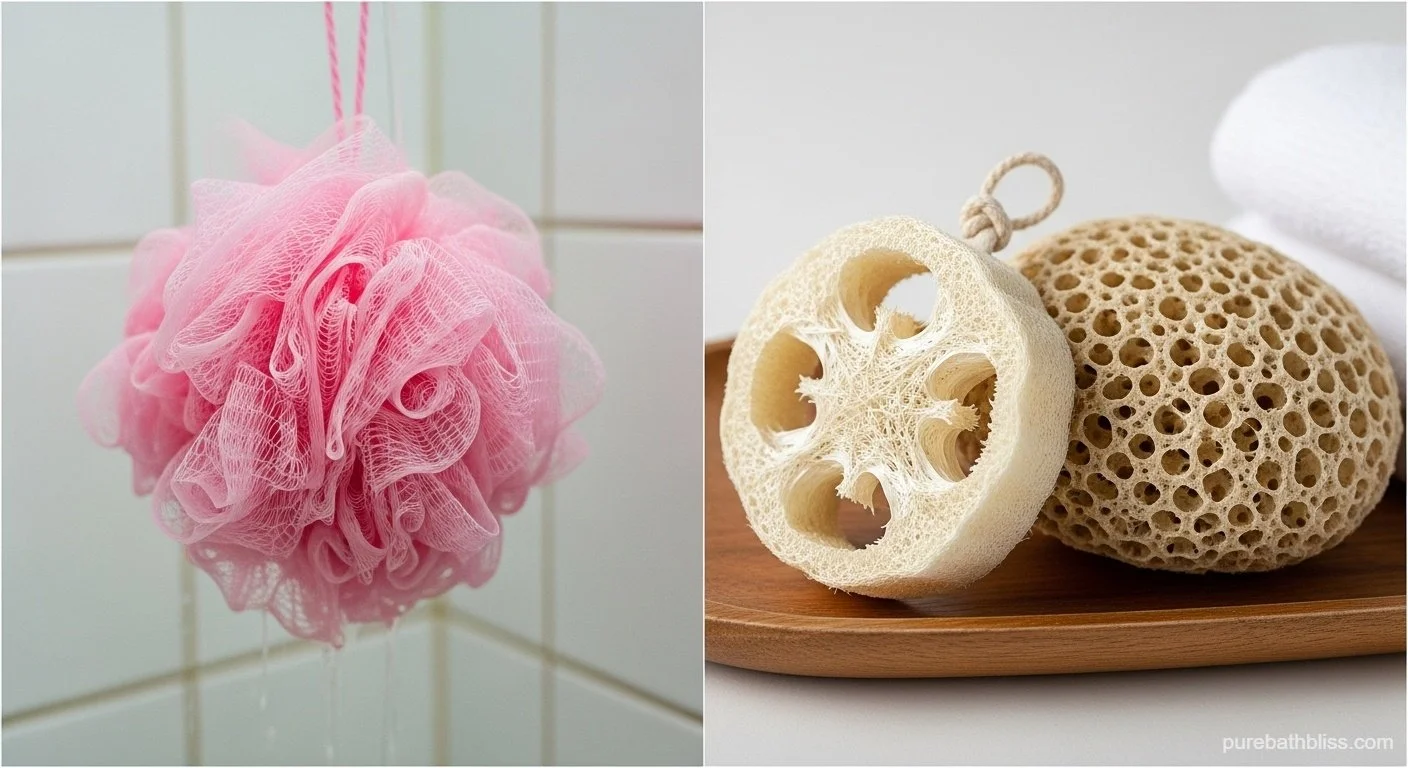
The tool you use to get clean is likely the dirtiest thing in your bathroom. Because of its design and material, a plastic pouf is virtually impossible to fully clean, trapping dead skin and moisture in a cycle that breeds bacteria faster than you can rinse it away.
If you are curating a Pure Bath Bliss sanctuary—one focused on hygiene, health, and sustainability—that plastic ball has to go. This guide explains exactly why it’s time to toss the pouf, the environmental toll of those plastic micro-threads, and the three luxurious, natural alternatives that will upgrade your scrub instantly.
The Science of the Mesh: Why It’s So Dirty
It’s not just about being a germaphobe; it’s about biology.
The Dead Skin Trap
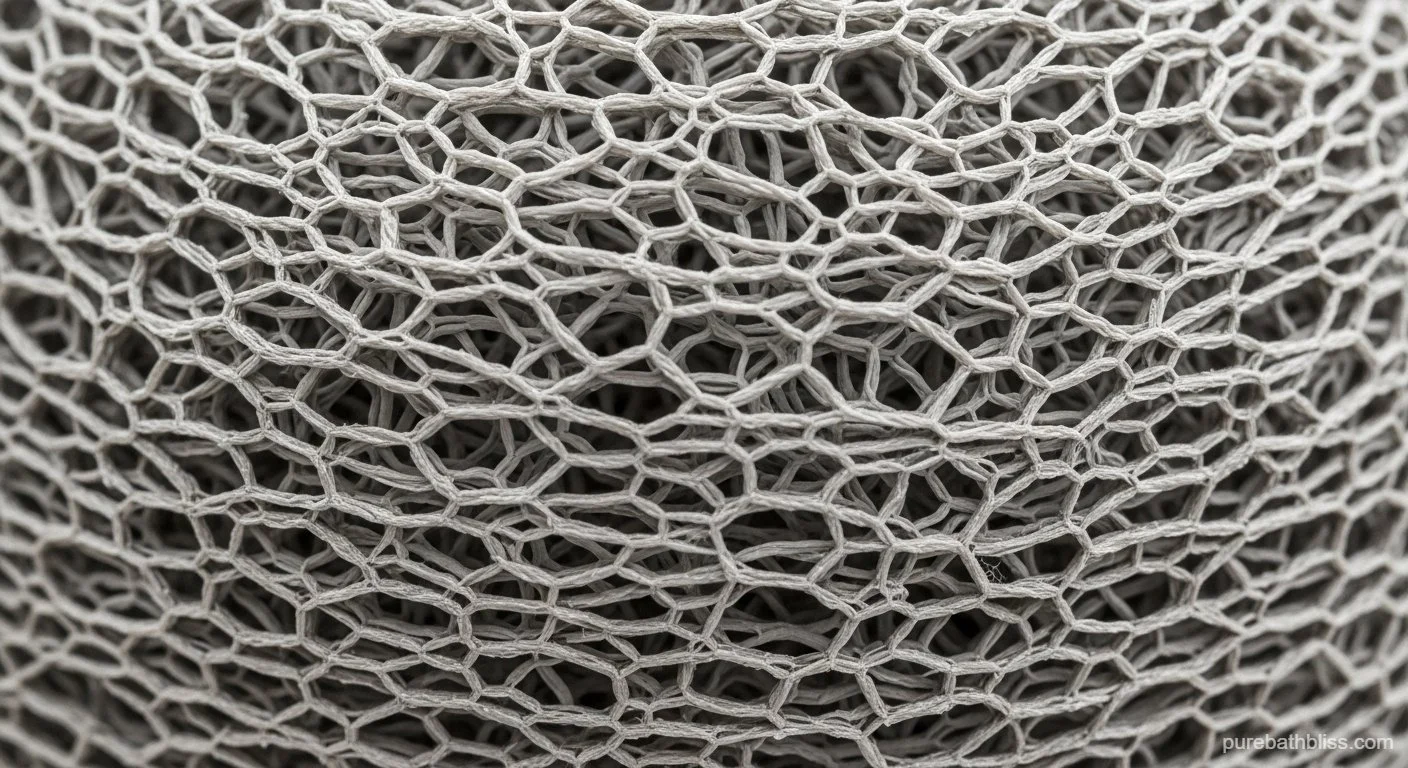
When you scrub, the mesh acts like a net. It catches thousands of dead skin cells (your body sheds about 30,000–40,000 per minute!). Unlike a flat washcloth that rinses clean, the complex, folded layers of the pouf trap this organic matter deep inside the core where water flow is restricted.
The Bacterial Breeding Ground
After your shower, that dead skin sits in a warm, humid, damp environment. This is the perfect recipe for Pseudomonas aeruginosa, a bacterium that thrives in wet environments and can cause folliculitis (infected hair follicles) and other skin infections.
A study published in the Journal of Clinical Microbiology found that bacteria grow exponentially on loofahs overnight. If you use that pouf on freshly shaved skin or a minor nick, you are scrubbing that bacteria directly into an open wound.
The Microplastic Drain
Beyond hygiene, there is the planet. Every time you scrub with a plastic pouf, micro-abrasion causes tiny plastic fibers to break off and wash down the drain. These microplastics bypass filtration systems and end up in our oceans.
Maintaining a hygienic environment involves more than just the tools you use on your body—it involves the tub itself. For a complete hygiene protocol, see our guide: Baby-Safe Cleaning: How to Scrub the Tub Without Harsh Chemicals.
The 3 Best Natural Swaps
You don’t have to give up exfoliation to be safe. In fact, nature designed better scrubbers long before plastic was invented.
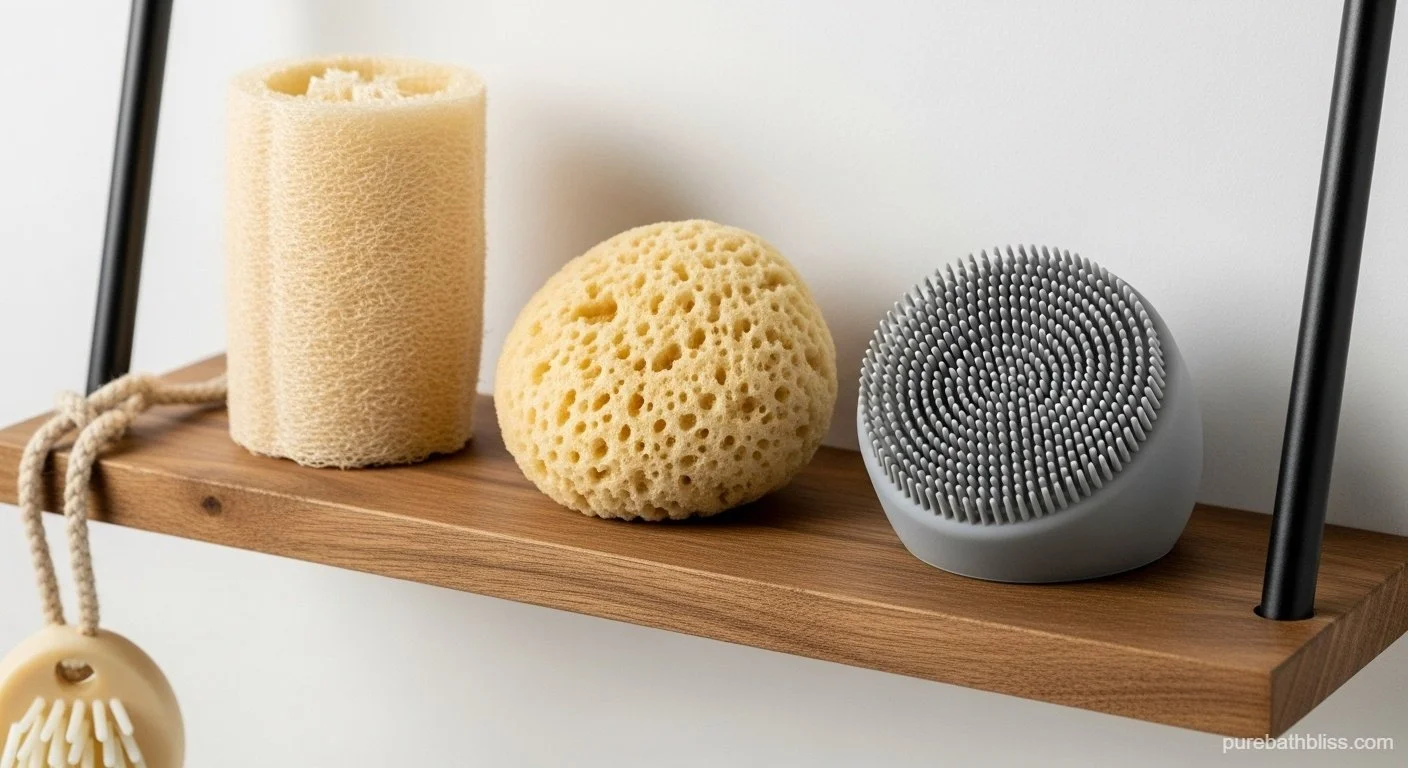
1. The Natural Loofah (The Gourd)
Many people think "loofah" means the plastic ball, but a true loofah is actually a dried vegetable—a gourd in the cucumber family!
The Feel: When dry, it feels rough and scratchy. When wet, it softens into the perfect scrubby texture that creates amazing lather.
Why It Wins: It is fibrous and porous, meaning it dries out much faster than plastic mesh, inhibiting bacterial growth.
End of Life: It is 100% compostable. When it wears out, you can bury it in the garden.
2. The Natural Sea Sponge (The Luxury Choice)
If you have sensitive skin or eczema, the vegetable loofah might be too abrasive. Enter the sea sponge.
The Feel: Incredibly soft, silky, and absorbent. It holds more water than a cloth, creating a luxurious rinse.
Why It Wins: Sea sponges contain natural enzymes that inhibit the growth of mold and bacteria. They are self-cleaning in a way synthetic plastic never can be.
Sustainability: Look for "sustainably harvested" sponges (like the Wool or Honeycomb variety), which are cut in a way that allows the sponge to regenerate in the ocean.
3. The Silicone Scrubber (The Modern Minimalist)
If you want something indestructible and easy to sanitize, silicone is the answer.
The Feel: Soft, rubbery bristles that massage the skin rather than scratching it.
Why It Wins: Silicone is non-porous. Bacteria and water cannot penetrate the surface, so it dries instantly. It creates less lather than a pouf, but it is virtually germ-proof.
Sanitizing: You can throw it in the dishwasher or boil it to sterilize it completely.
Maintenance: Keeping Your Tools Clean
Even natural tools need care to remain a "sanctuary" item rather than a science experiment.
The "Dry Out" Rule
Never leave your loofah or sponge in the shower stall where it stays damp. After every use:
Rinse thoroughly until no soap remains.
Shake out excess water.
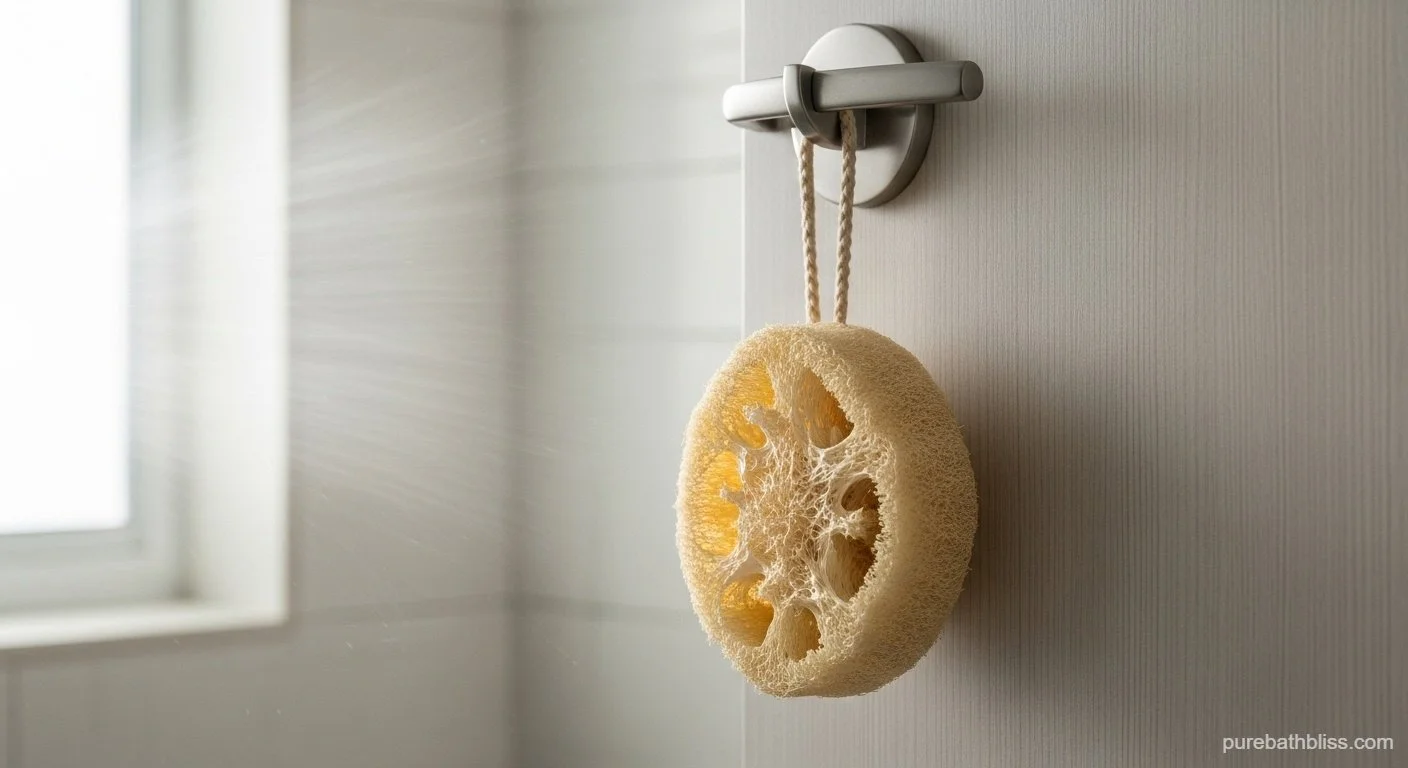
Hang it in a well-ventilated area (like a hook on the back of the bathroom door) to dry completely between uses.
Weekly Disinfection
Once a week, give your natural loofah or sponge a reset:
Vinegar Soak: Soak in a solution of 1 part white vinegar to 4 parts water for 10 minutes.
The Boil (Silicone Only): Boil your silicone scrubber for 3 minutes to sterilize. Do not boil sea sponges—they will shrink and harden!
When to Toss
Plastic Poufs: Every 3–4 weeks (Yes, really. That’s why they generate so much waste).
Natural Loofah: Every 4–6 weeks, or if it changes color/smell.
Sea Sponge: Every 2–6 months, depending on durability.