The Dishmatic Shower Hack Everyone Is Talking About (And How to Do It Right)
Transparency Note: We independently select these products based on research and user reviews. If you buy something through our links, we may earn a commission.
If you have spent any time on TikTok's CleanTok community in the past year, you have almost certainly seen it. Someone fills a Dishmatic dish wand with white vinegar and dish soap, takes it into the shower, scrubs the walls in about two minutes flat, and the result is genuinely spotless. The comments are always the same: "Wait, that actually works?" and "Why didn't I know about this sooner?"
I'll be honest with you. When my daughter first showed me this on her phone, my initial reaction as a contractor was skepticism. The Dishmatic is a kitchen tool. It lives by the sink. It does dishes. Taking it into the shower felt like the kind of shortcut that works great on camera and falls apart in real life.
So I tested it. Properly. On multiple surfaces, with the right ratios, in our actual family bathroom. And here's my contractor's verdict: the hack works, but most people doing it are getting a few things wrong that matter. This guide covers exactly how to do it right, what ratio to use, which surfaces to avoid, and which brush is actually worth buying.
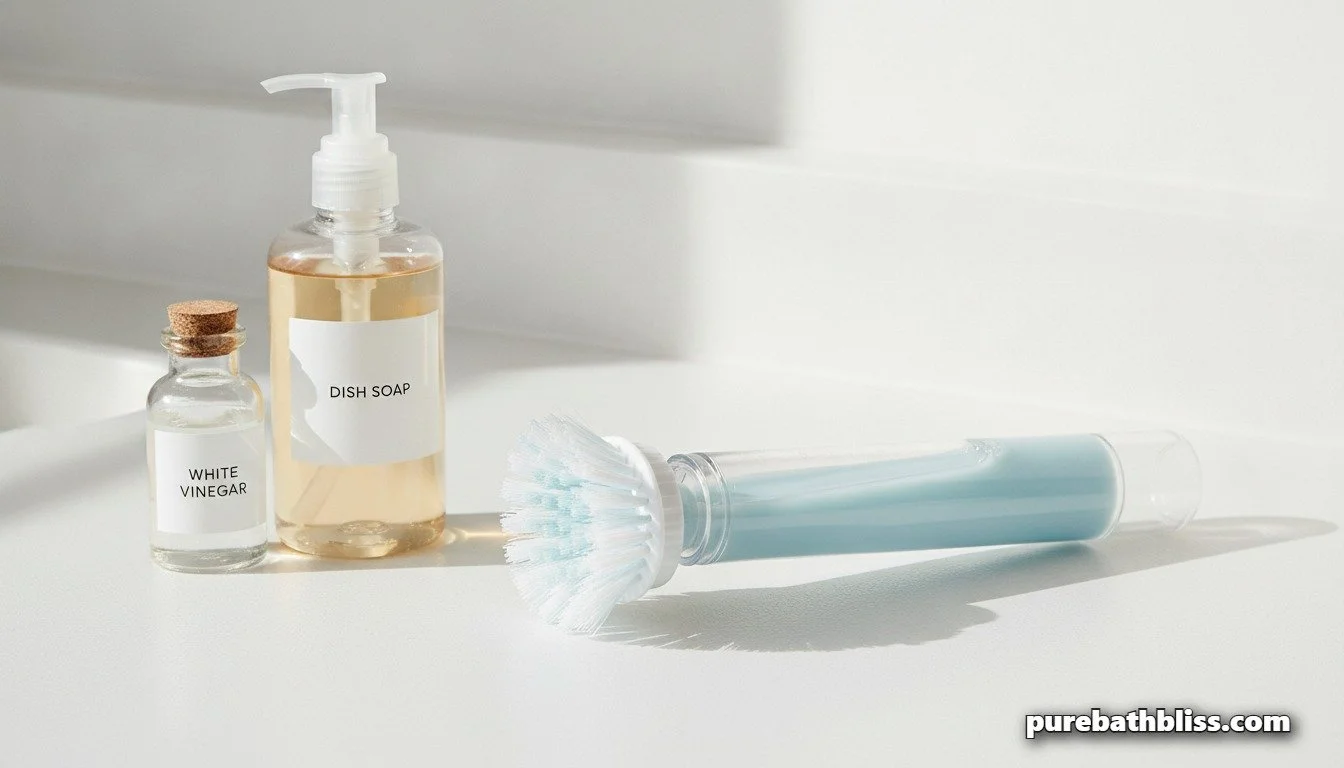
Why This Hack Went Viral in the First Place
The original TikTok version of this hack is credited to @VanesaAmaro91, a professional housekeeper with millions of followers who shared her go-to shower cleaning method. The video is simple: fill a refillable dish wand with equal parts Dawn dish soap and white vinegar, scrub your shower walls while your conditioner sits, rinse, and you're done. The whole process takes under five minutes.
The reason it resonated so strongly is that it solves a real problem. Shower cleaning is one of those chores that people put off because it feels like a production. You need the spray bottle, the scrubber, the separate glass cleaner, the grout brush. The Dishmatic hack collapses all of that into one tool that you leave right in the shower so it's always ready to go.
That convenience factor is real. But the chemistry behind why it works is worth understanding, because it tells you where the hack has limits.
The Science Behind Why Vinegar and Dish Soap Actually Work
This isn't just a feel-good combo that looks satisfying on camera. The chemistry is legitimate.
White vinegar is a mild acid, typically 5% acetic acid. That acidity makes it effective at dissolving mineral deposits, specifically the calcium and magnesium buildup that forms hard water stains and limescale on shower tiles, glass screens, and fixtures. It also inhibits the growth of mold and bacteria, which is why it's been a cleaning staple long before TikTok existed. We cover this in much more depth in our full guide to 7 brilliant uses for white vinegar in the bathroom.
Dish soap, on the other hand, is designed to cut through grease and oily residue. In a shower context, that means body oils, shampoo buildup, and the film that conditioner and soap leave behind on walls and floors over time.
Together, you get an acid that dissolves mineral buildup and a surfactant that lifts oily residue. The Dishmatic wand delivers both in one pass while the brush agitates the surface to break up grime mechanically. It is genuinely effective.
The catch is that vinegar is an acid, and not every bathroom surface responds well to acid. That's the part the 30-second TikTok videos don't cover.
Surfaces You Can Use This Hack On
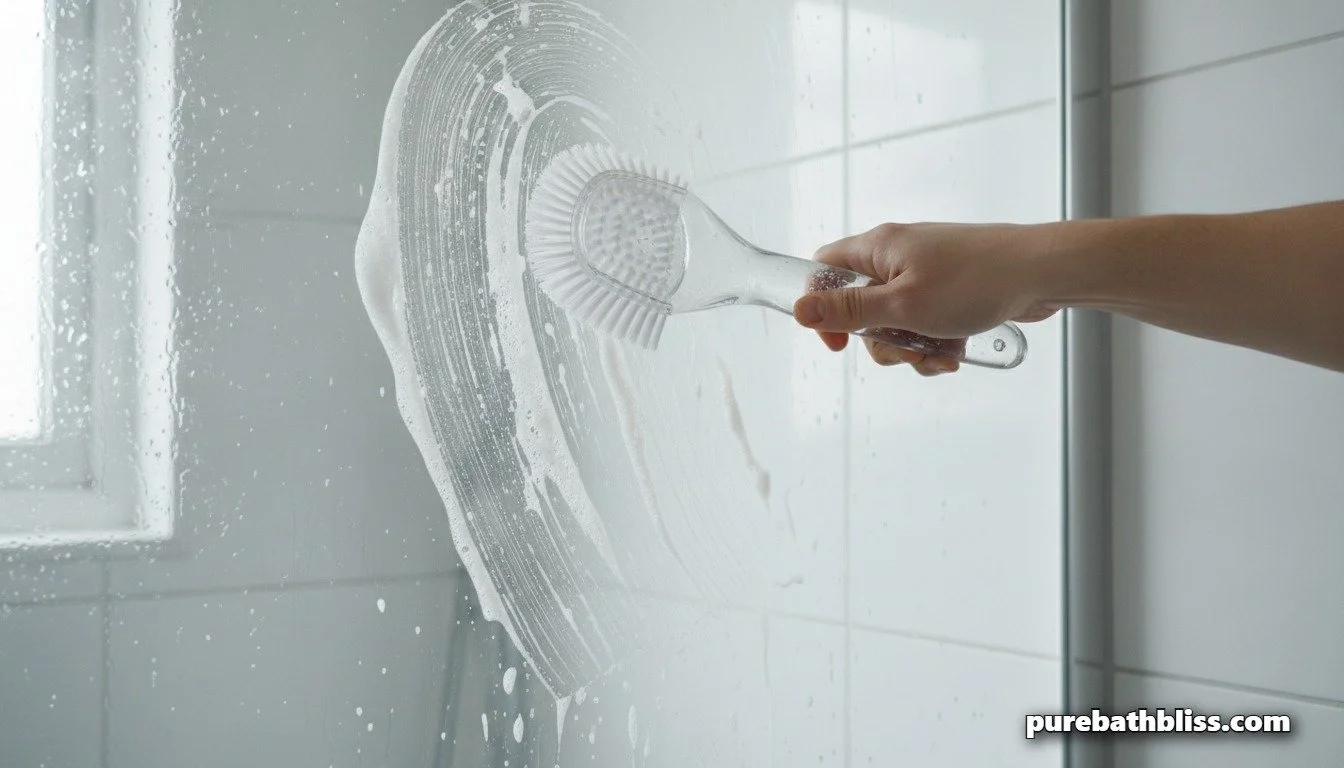
Ceramic and porcelain tile — This is the sweet spot for this hack. The vinegar and soap combo cuts through soap scum, body oil residue, and mild mildew quickly and effectively. Ceramic and porcelain are non-porous and acid-resistant, so there's no risk of damage.
Glass shower screens and doors — Excellent results. The acid in the vinegar dissolves the mineral film that makes glass look foggy, and the dish soap cuts through the soap scum. Finish with a squeegee for a streak-free result.
Acrylic and fibreglass shower surrounds — Safe to use with a light touch. Don't scrub aggressively on acrylic as it can scratch, but the Dishmatic's soft bristles are generally gentle enough.
Chrome and stainless steel fixtures — The vinegar is excellent for removing hard water spots from taps and showerheads. Rinse thoroughly afterward to prevent any prolonged acid contact.
Grout lines — Effective for surface cleaning of standard cement grout. If your grout is epoxy or urethane-based, even better, the acid has no effect on the resin and it simply cleans the surface.
Surfaces You Must Avoid
This is the part that matters, and that most TikTok videos skip entirely.
Natural stone, including marble, travertine, limestone, and onyx — Do not use vinegar on any natural stone surface. Ever. These stones are calcium-based, and the acid in vinegar will etch the surface, leaving permanent dull marks. If your shower has natural stone tiles or a stone floor, put the Dishmatic down and use a pH-neutral stone cleaner instead.
Unsealed or damaged grout — Repeated acid exposure will degrade cement-based grout over time. If your grout is already crumbling or cracked, the vinegar will accelerate the damage. Fix the grout first.
Brass and gold-finish fixtures — Vinegar can strip the finish from decorative brass and matte gold taps and fixtures. Stick to warm soapy water only for these.
Rubber seals and silicone caulking — Prolonged or repeated exposure to vinegar can break down rubber seals and soften silicone caulking over time. Use the Dishmatic carefully around these areas and rinse quickly.
The Right Ratio, And Why It Matters
Most TikTok versions of this hack say "equal parts" vinegar and dish soap. That's a reasonable starting point, but in practice, the ratio depends on what you're cleaning.
For regular maintenance cleaning (weekly): 50% dish soap, 50% white vinegar. This is the standard ratio and works well for keeping a shower clean between deep cleans.
For heavy soap scum and body oil buildup: Increase the dish soap to about 60-70%. The surfactant is doing more of the work here, and you want more of it.
For hard water stains and limescale: Increase the vinegar to 60-70%. The acid is the active ingredient against mineral deposits, so you need a higher concentration.
One practical note: vinegar and dish soap don't actually mix well in the chemical sense. If you shake the wand vigorously, you'll create a lot of foam that dissipates quickly. The better approach is to fill the wand, give it a gentle swirl, and let the two work alongside each other rather than trying to combine them into a uniform solution. They work better as a team than as a blend.
The same vinegar-forward principle applies in the kitchen too. If you're using dish soap and vinegar to tackle grease buildup on kitchen cabinets, our friends at Pure Kitchen Bliss have a full guide on natural cabinet degreasing that uses the same chemistry in a different context.
Which Dishmatic or Dish Wand Should You Actually Buy?
Ceramic and porcelain tile — This is the sweet spot for this hack. The vinegar and soap combo cuts through soap scum, body oil residue, and mild mildew quickly and effectively. Ceramic and porcelain are non-porous and acid-resistant, so there's no risk of damage.
Glass shower screens and doors — Excellent results. The acid in the vinegar dissolves the mineral film that makes glass look foggy, and the dish soap cuts through the soap scum. Finish with a squeegee for a streak-free result.
Acrylic and fibreglass shower surrounds — Safe to use with a light touch. Don't scrub aggressively on acrylic as it can scratch, but the Dishmatic's soft bristles are generally gentle enough.
Chrome and stainless steel fixtures — The vinegar is excellent for removing hard water spots from taps and showerheads. Rinse thoroughly afterward to prevent any prolonged acid contact.
Grout lines — Effective for surface cleaning of standard cement grout. If your grout is epoxy or urethane-based, even better, the acid has no effect on the resin and it simply cleans the surface.
Surfaces You Must Avoid
This is the part that matters, and that most TikTok videos skip entirely.
Natural stone, including marble, travertine, limestone, and onyx — Do not use vinegar on any natural stone surface. Ever. These stones are calcium-based, and the acid in vinegar will etch the surface, leaving permanent dull marks. If your shower has natural stone tiles or a stone floor, put the Dishmatic down and use a pH-neutral stone cleaner instead.
Unsealed or damaged grout — Repeated acid exposure will degrade cement-based grout over time. If your grout is already crumbling or cracked, the vinegar will accelerate the damage. Fix the grout first.
Brass and gold-finish fixtures — Vinegar can strip the finish from decorative brass and matte gold taps and fixtures. Stick to warm soapy water only for these.
Rubber seals and silicone caulking — Prolonged or repeated exposure to vinegar can break down rubber seals and soften silicone caulking over time. Use the Dishmatic carefully around these areas and rinse quickly.
The Right Ratio, And Why It Matters
Most TikTok versions of this hack say "equal parts" vinegar and dish soap. That's a reasonable starting point, but in practice, the ratio depends on what you're cleaning.
For regular maintenance cleaning (weekly): 50% dish soap, 50% white vinegar. This is the standard ratio and works well for keeping a shower clean between deep cleans.
For heavy soap scum and body oil buildup: Increase the dish soap to about 60-70%. The surfactant is doing more of the work here, and you want more of it.
For hard water stains and limescale: Increase the vinegar to 60-70%. The acid is the active ingredient against mineral deposits, so you need a higher concentration.
One practical note: vinegar and dish soap don't actually mix well in the chemical sense. If you shake the wand vigorously, you'll create a lot of foam that dissipates quickly. The better approach is to fill the wand, give it a gentle swirl, and let the two work alongside each other rather than trying to combine them into a uniform solution. They work better as a team than as a blend.
The same vinegar-forward principle applies in the kitchen too. If you're using dish soap and vinegar to tackle grease buildup on kitchen cabinets, our friends at Pure Kitchen Bliss have a full guide on natural cabinet degreasing that uses the same chemistry in a different context.
Which Dishmatic or Dish Wand Should You Actually Buy?
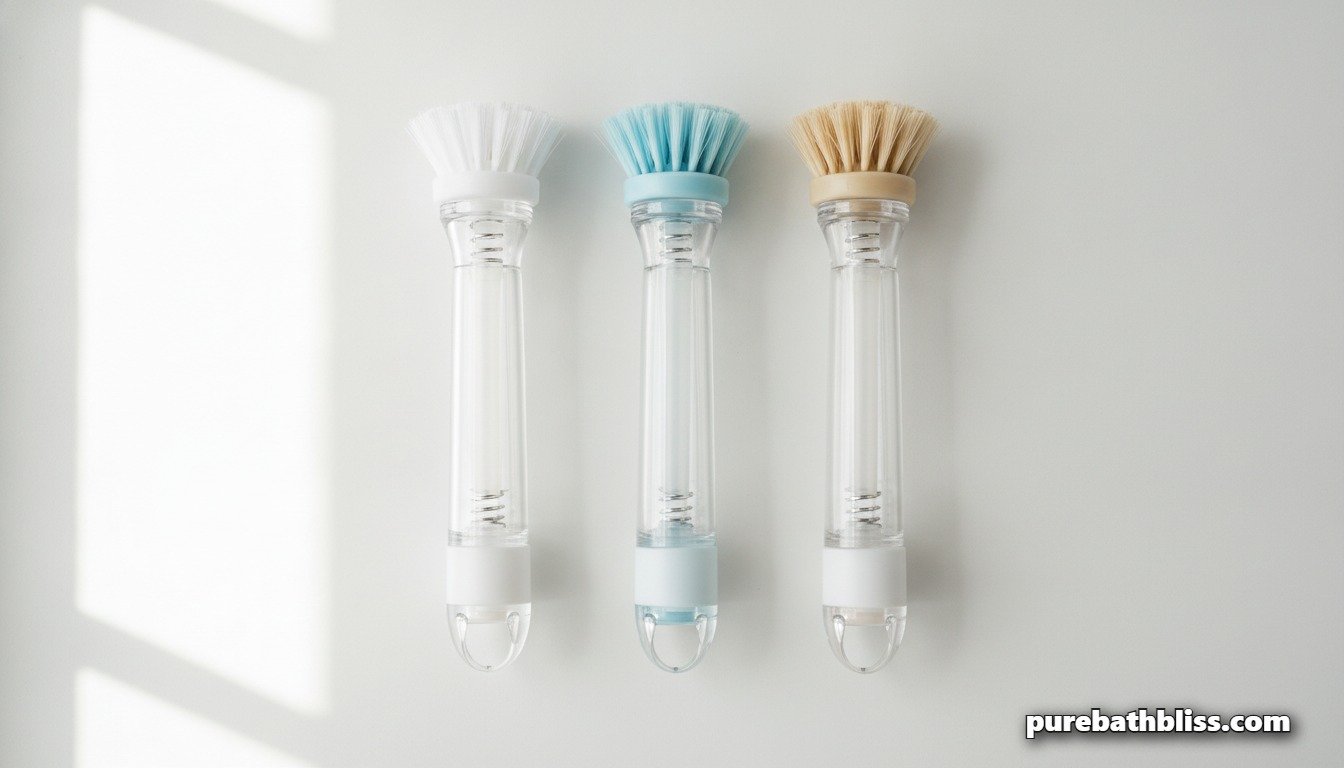
Not all refillable dish wands are the same, and the one you pick matters for this hack specifically. Here's what to look for:
A squeeze-to-dispense mechanism — You want a wand where you control how much solution comes out with each press. This prevents you from flooding the surface with too much liquid and lets you work in controlled, efficient passes.
Replaceable brush heads — The bristles will wear out and need to be sanitized regularly. A wand with replaceable heads means you're not throwing away the whole tool each time.
Dishwasher-safe head — You're using this in a shower. Run the brush head through the dishwasher weekly to keep it hygienic. Not all brush heads are dishwasher safe, so check before buying.
A non-scratch bristle head — Standard green Dishmatic scouring pads are too abrasive for acrylic surrounds and glass. Use a soft bristle or foam head for shower surfaces.
A reliable option that ticks all these boxes is the OXO Good Grips Soap Dispensing Dish Brush. It has a squeeze handle that dispenses solution directly through the bristles, a replaceable brush head, and it's dishwasher safe. It's the version I'd recommend for the shower specifically because the soft bristles won't scratch acrylic or glass surfaces the way stiffer kitchen scrubbers can.
The Step-by-Step Method for Best Results
Once you have your wand filled and ready, here's how to get the best result:
Step 1: Run the shower on warm for 60 seconds before you start. The steam loosens soap scum and opens up the surface slightly, making the cleaning solution more effective.
Step 2: Starting at the top of the walls, work your way down in sections. Gravity is your friend. Scrubbing top to bottom means dirty suds run down onto areas you haven't cleaned yet, not areas you already have.
Step 3: Use light circular motions on tiles and straight vertical strokes on glass screens. Don't press hard. The cleaning solution is doing the chemical work. You're just providing mechanical agitation.
Step 4: Pay extra attention to the bottom third of the walls and the corners. That's where soap scum and body oils concentrate most heavily.
Step 5: Rinse from top to bottom with warm water, then finish glass screens with a squeegee for a streak-free result.
Step 6: Leave the wand in the shower, filled and ready for next time. That's the whole point of the hack. It stays ready so you can do a quick two-minute scrub mid-shower once or twice a week instead of a major cleaning session once a month.
Keeping the Brush Hygienic
Here's something nobody in the TikTok comments talks about: the Dishmatic wand left sitting in a humid shower is going to develop bacterial buildup in the bristles if you don't maintain it. This is the same issue we cover in our guide to eco-friendly toilet brushes, and the principle is identical. Any cleaning tool left damp in a bathroom needs a maintenance routine.
Here is what I do:
After each use, rinse the brush head thoroughly and shake off excess water.
Store it bristle-side up or hanging so it can air dry, not resting flat in a puddle.
Run the brush head through the dishwasher weekly on a hot cycle.
Replace the brush head every 4 to 6 weeks, or sooner if the bristles start to flatten or smell.
My Honest Verdict
The Dishmatic shower hack is genuinely one of the better cleaning hacks to come out of TikTok in recent years, and I say that as someone who is usually skeptical of viral cleaning content. It works because the chemistry is real, the tool is well suited to the job, and the convenience factor actually changes behavior. When the brush is already in the shower, filled and ready, you will clean more frequently. And more frequent light cleaning is always better than infrequent deep cleaning in a shower environment.
The caveats are real too. Know your surfaces before you start. Never use vinegar on natural stone. Maintain the brush so it doesn't become its own hygiene problem. And get the ratio right for what you're actually trying to clean.
Do those things and this hack will genuinely change your shower cleaning routine. That's a pretty good result for a $10 dish brush and two ingredients you already own.