What Is the Ideal Type of Countertop for Your Eco-Friendly Bathroom?
If you’ve been working through a January Reset or slowly building your own Zero-Waste Sanctuary, you know that the bathroom is the heart of a healthy home. But while we focus a lot on the soaps we use and the plants we grow, the "bones" of the room matter just as much.
Your countertop is the real workhorse of the space. It has to handle heat from styling tools, constant splashes from the kids, and the occasional spilled bottle of essential oil. In the past, choosing "eco-friendly" usually meant you had to give up on durability, but honestly, that just isn't true anymore.
Between you and me, the best countertop isn't just the one that looks the part; it's the one that won't end up in a landfill in ten years because it warped, stained, or cracked. Let’s look at the options that actually hold up to real life.
1. The Modern Hero: Recycled Glass
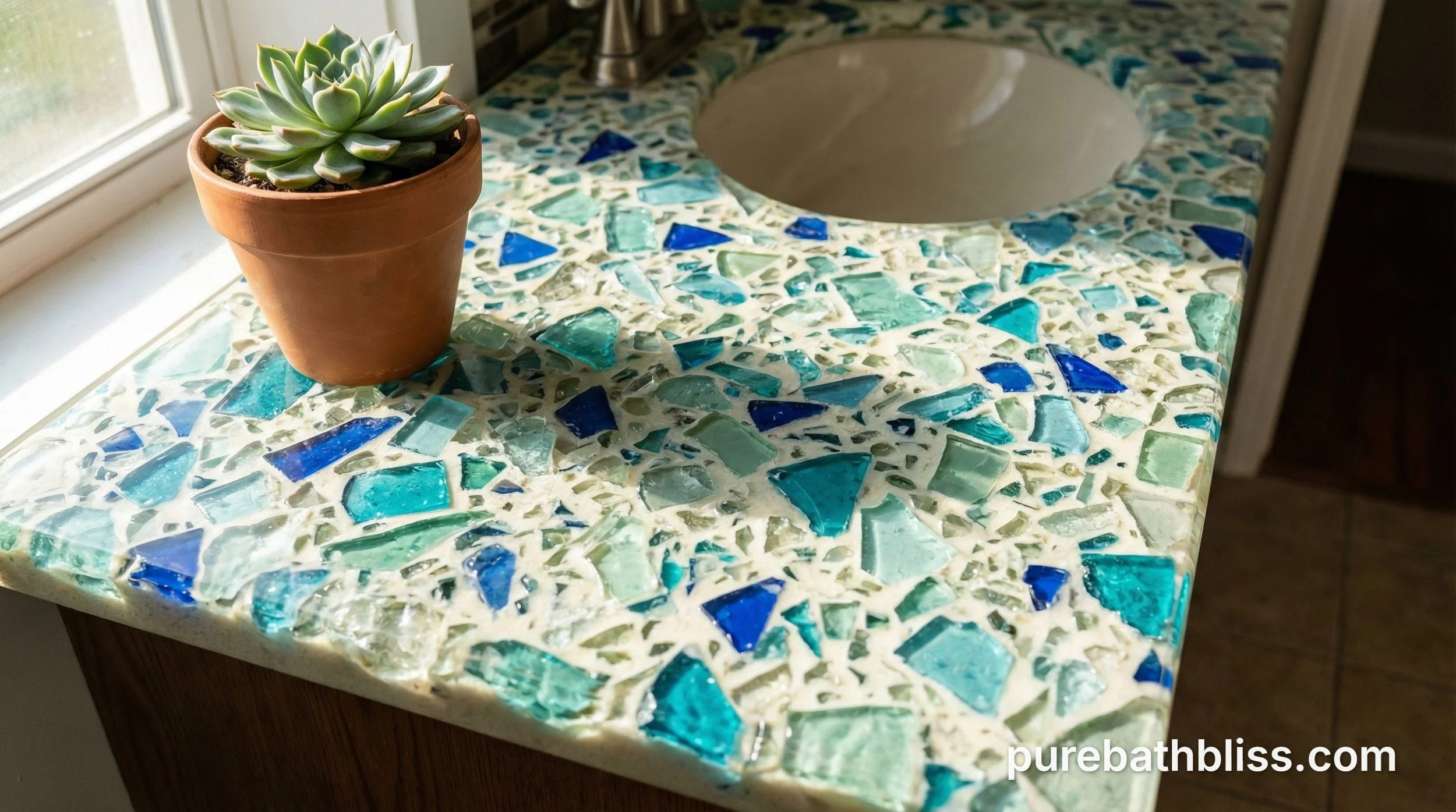
If you want something that really tells a story, recycled glass is hard to beat. These surfaces are made by embedding crushed glass, often from old bottles or even salvaged traffic lights, into a binder like cement or a non-toxic resin.
The Big Benefit: It diverts glass from landfills and uses far less energy than mining new stone.
The Real World Truth: These are incredibly tough. They are heat-resistant and nearly impossible to scratch. Just a heads-up: if you choose a version with a cement base, you’ll want to rub a little sealer on it every year or two. It takes five minutes, but it keeps things like makeup or hair dye from soaking in.
2. The Renewable Choice: Bamboo (End-Grain)
We talk about bamboo a lot for things like Toilet Paper Storage, but it makes a surprisingly good countertop too. For a wet environment like the bathroom, you’ll want to look specifically for end-grain bamboo.
Why it Works: Bamboo grows back in just a few years, whereas a granite slab took millions of years to form. It’s one of the fastest-growing resources we have.
A Tip From the Workshop: I’ve found that bamboo needs a bit of extra protection in the bathroom. You’ll want to seal it with a high-quality, waterproof finish like a hard-wax oil. This keeps the humidity from causing the wood to swell over time. This is also why I always suggest making sure your Bathroom Fan is up to the task!
3. The Reclaimed Soul: Salvaged Wood
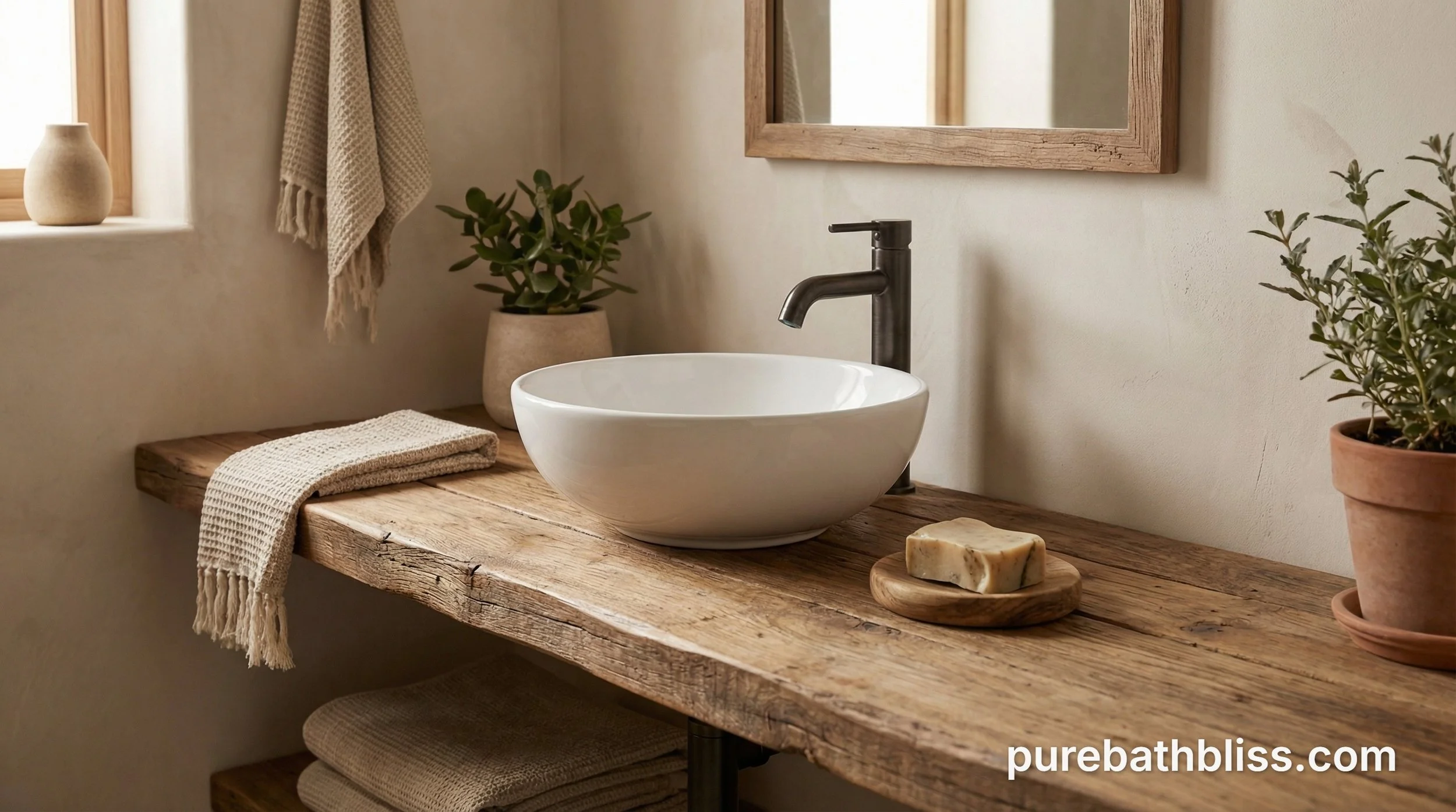
There is just nothing quite like the warmth of old-growth wood. Whether it’s from a local barn or a house being renovated down the street, reclaimed wood has a character that new materials can't touch.
The Eco-Win: You’re giving new life to old timber and saving it from the wood chipper.
Something to Keep in Mind: If you go this route, make sure you know where the wood came from. You want to avoid timber that was treated with heavy industrial chemicals in its previous life. Stick to wood that was used indoors, and seal it well. It looks beautiful paired with a simple white vessel sink.
4. The Industry Standard: Terrazzo
Terrazzo is making a huge comeback, and for good reason. It’s a composite material made of chips of marble, quartz, or glass.
The Sustainable Side: Many makers today use "scrap" stone from the marble industry that would otherwise be tossed out.
Durability: This is "forever-stone." If it ever gets dull after years of use, you can have it lightly sanded and polished, and it looks brand new. You'll likely never have to replace it.
What to Avoid (The "Red Flags")
Since the goal is a healthy sanctuary, there are a few things I’d suggest you skip over:
Traditional Laminate: It’s basically plastic glued to particle board. The glues can release fumes into your home, and once it chips, you can't really fix it. It’s a "disposable" product, which is what we're trying to move away from.
Virgin Granite from Overseas: While it's natural stone, shipping a 500lb slab across the ocean has a massive carbon footprint. If you love the look of stone, try to find a local quarry or see if a local stone yard has a "remnant" (a leftover piece) you can buy for a discount.
The Secret to Long-Lasting Counters
Once you’ve picked your surface, the worst thing you can do is scrub it with those harsh, bleach-heavy cleaners.
I’ve found that for almost all these surfaces, a simple spray of warm water and a tiny bit of castile soap is all you need. If you get those stubborn hard water stains around the taps, try the lemon juice trick from our January Reset guide. It’s much gentler on the finish and much better for the air you're breathing.
Conclusion: Which One is Your Favorite?
If you want something you can install and forget about, Recycled Glass or Terrazzo are your best bets. They can handle just about anything. If you prefer a warmer, more organic feel and don't mind spending ten minutes a year on a little maintenance, Reclaimed Wood or Bamboo is a wonderful way to go.
At the end of the day, the most sustainable choice is the one you’re going to love and take care of for the next 20 or 30 years.