The "Beach-to-Bath" Logistics Hack: Saving Your Surfaces from Summer
There is a specific kind of chaos that happens between the hours of 4:00 PM and 6:00 PM in the summer. Everyone returns from the beach or the pool, trailing a fine grit of sand across the floors, draped in dripping wet swimsuits, and covered in a thick layer of "water-resistant" sunscreen that seems to bond to everything it touches.
If you’ve invested in high-end finishes like unsealed travertine or custom walnut cabinetry, this "summer rush" can feel less like a vacation and more like a battle for your home’s survival. Most "stiff expert" sites will tell you to just mop more often. But as your knowledgeable best friend, I know you don’t want to spend your holiday with a bucket in your hand.
The key to keeping your sanctuary pristine is all about logistics. It’s about creating a flow that stops the sand at the door and keeps the "zinc-oxide handprints" off your designer hardware. Let’s break down the ultimate beach-to-bath system for 2026.
The "Dry Zone" Strategy
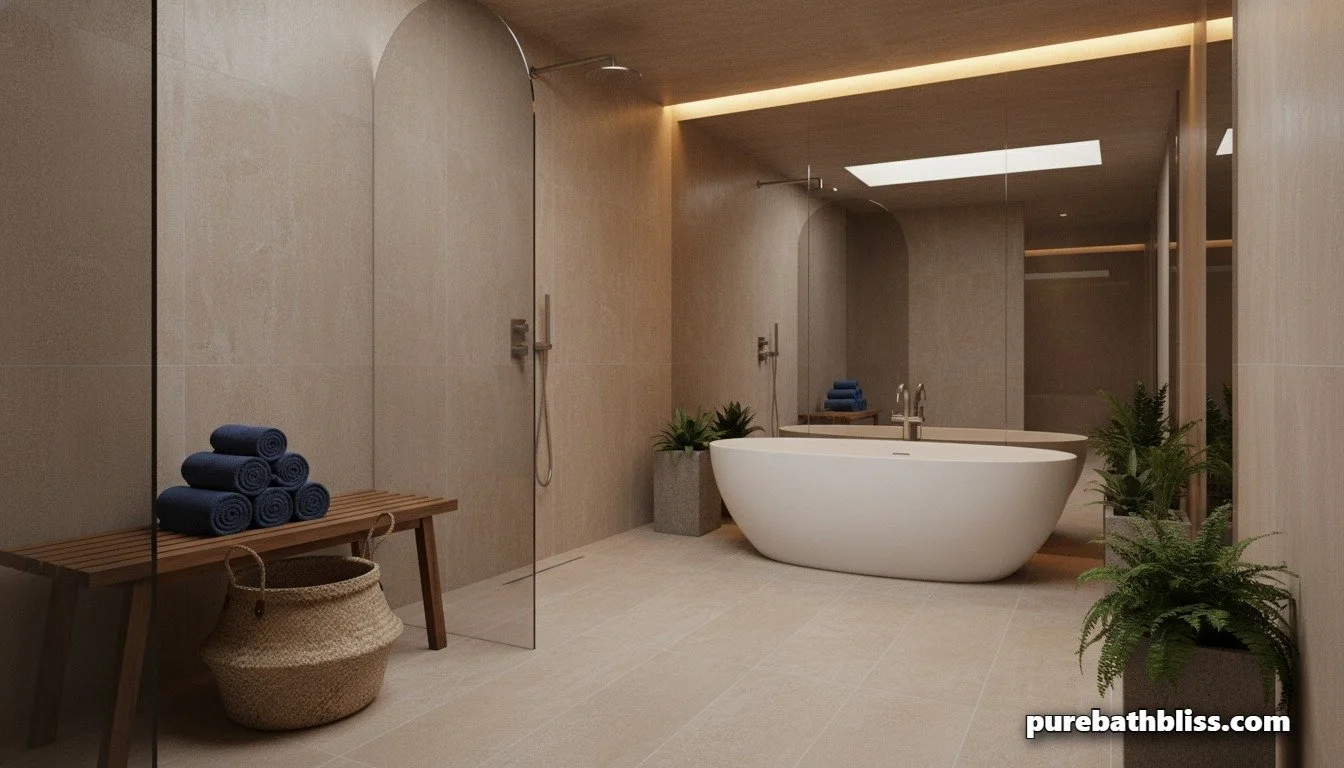
The biggest mistake most people make is letting the "de-sanding" happen inside the shower. Sand is incredibly abrasive and can actually act like sandpaper on your plumbing and high-end tile glazes over time.
Before anyone even turns on the faucet, you need a designated "Dry Zone." This is usually a bench or a sturdy rug just outside the shower where everyone can towel off the loose sand. By containing the grit to a small, easily vacuumed area, you prevent it from migrating into the grout lines of your wet room.
This is a perfect time to revisit our summer bathroom towel swimsuit organization, where we talk about the importance of airflow. Having a dedicated "sand-only" bin for beach towels prevents them from mixing with your plush, white indoor linens, saving your washing machine from a gritty fate.
The Zinc Oxide Battle: Saving Your Stone
Zinc oxide and titanium dioxide, the heroes of non-toxic sunscreens, are a nightmare for stone vanities. They are designed to stay on through water and sweat, which means they are also designed to "stain" porous surfaces if left to sit.
If you see a guest or a kid lean against your marble vanity with a sunscreen-slathered back, don't panic. The "lightbulb moment" here isn't a harsh abrasive; it’s oil. A tiny bit of coconut oil on a soft cloth will break down the sunscreen binders without scratching the stone. Follow it up with a pH-neutral stone cleaner to remove the oil residue.
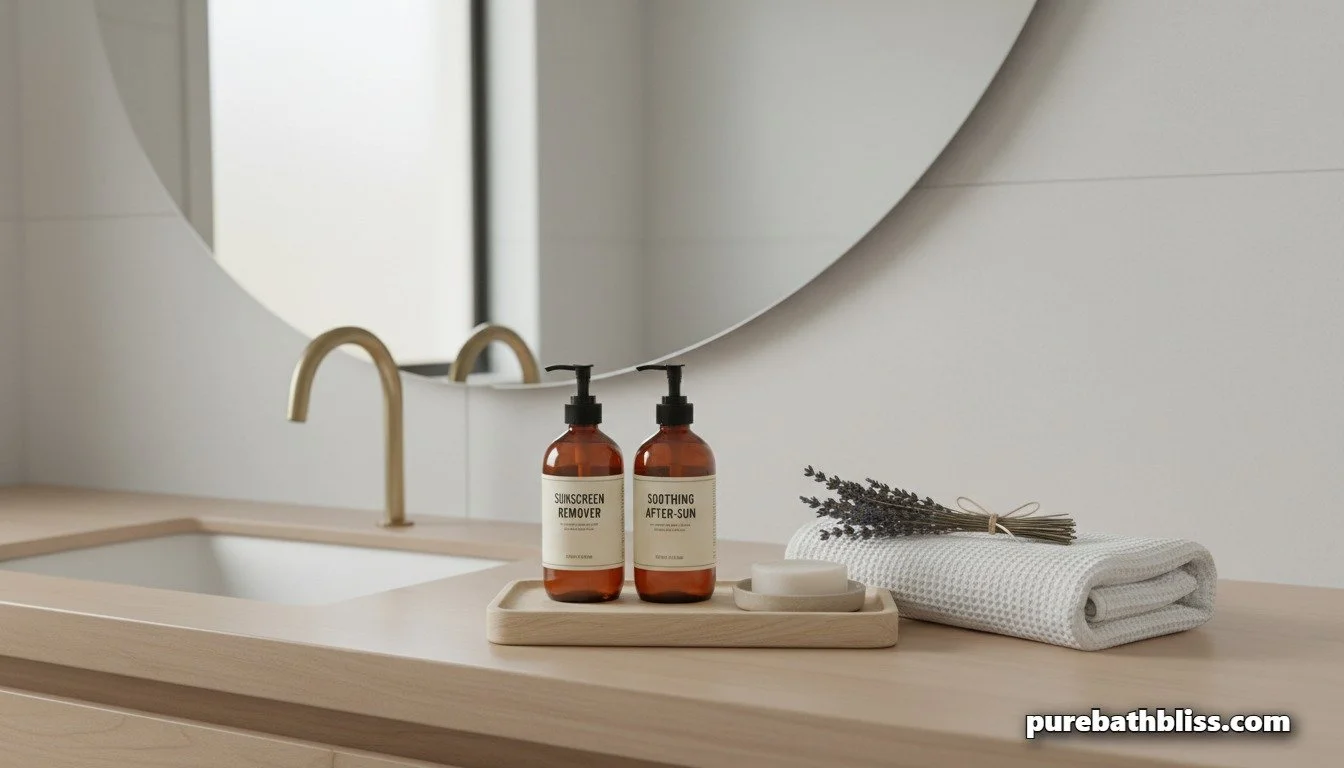
Pro Tip: For a summer guest-ready bathroom, consider placing a small tray of "safe" non-toxic face wipes on the counter. It encourages guests to wipe their hands and faces before they touch your custom hardware or light switches.
Managing the "Salty" Air
If you live near the coast, the "wet dog" scent isn't the only odor you're fighting. The salt in the air can actually trap moisture against your walls, leading to a heavy, musky feeling.
We talked about why your bathroom smells like wet dog as a diagnostic tool for hidden moisture, but in the summer, those salty breezes can make the problem worse. If your bathroom feels "heavy" even when it's clean, it’s a sign that your ventilation needs a summer boost.
The "Swimsuit Drip" Protocol
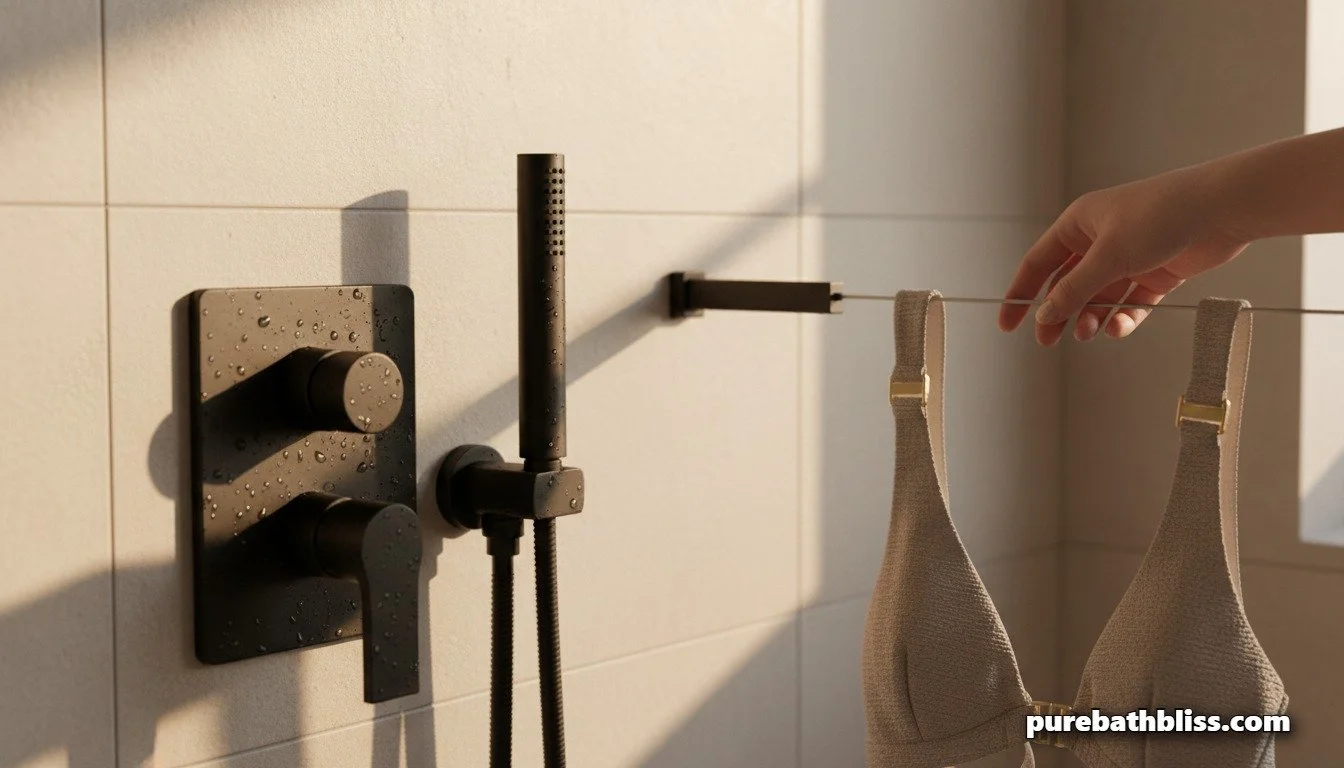
Nothing ruins a bathroom's "infrastructure" faster than wet swimsuits hanging over the shower rod or the back of a wooden door. The chlorine and salt can eat away at finishes, and the constant dripping can cause wooden doors to warp or swell.
Instead, utilize no-drill bathroom storage hacks for renters like tension rods placed inside the shower stall. This keeps the "drip zone" confined to the waterproof area. In 2026, we’re seeing a rise in "disappearing" retractable lines that pull out from the wall and disappear when the suit is dry, keeping your spa aesthetic completely intact.
The Summer Logistics Quick-Reference Table
| The Summer Culprit | The Risk | The Best-Friend Fix |
|---|---|---|
| Sand Grit | Abrasive damage to grout | Designated "Dry Zone" bench |
| Zinc Sunscreen | Staining on stone/marble | Coconut oil break-down method |
| Damp Swimsuits | Wood warping and corrosion | Retractable shower lines |
| Salt Air/Humidity | Musty odors and mirror fog | Increase high-CFM fan usage |
The Post-Beach "Deep Rinse"
When it is finally time to wash off the salt and sun, make sure your shower is up to the task. If you’ve noticed your water pressure is lackluster after a few weeks of heavy summer use, you might be dealing with the same issues we cover in our how to fix slow sink drain fast guide, sediment buildup.
Beach water often carries fine sediment that can get trapped in your high-efficiency showerhead’s internal screen. A quick "reset" will ensure your guest showers feel like a luxury experience rather than a drizzle. While you're at it, check your mirror's health; why foggy bathroom mirrors are good teaches us that clear glass is the best indicator of a healthy, dry bathroom.
The Toddler Transition
If you have little ones, the Beach-to-Bath transition is even more critical. They are the most likely to trail sand into the "forbidden" areas of the house. This is a great time to implement the "independence" tips from our aesthetic bathroom toddler-proofing guide.
A low-mounted hook for their "beach towel" and a specific "rinse-off" step stool can turn a chaotic afternoon into a structured routine they can follow themselves.
Summary: Protecting Your Peace
Summer is for making memories, not for obsessing over your grout lines. By setting up a "Beach-to-Bath" logistics system, you protect your investment and keep your sanctuary feeling like a spa, even when the rest of the house feels like a sandbox.
The secret is all in the flow: contain the sand, neutralize the sunscreen, and give the moisture a way out. Now, go enjoy that sunset!