If you were to walk into a bathroom remodel in 1988, you’d likely be blinded by high-shine, polished brass. It was everywhere, from the towel bars to the shower door frames. Because of that era’s "maximalist" obsession and the subsequent "over saturation" of cheap, yellow toned metals, many homeowners still flinch at the mention of gold fixtures. There is a deep seated fear that the bathroom will look dated before the grout even dries.
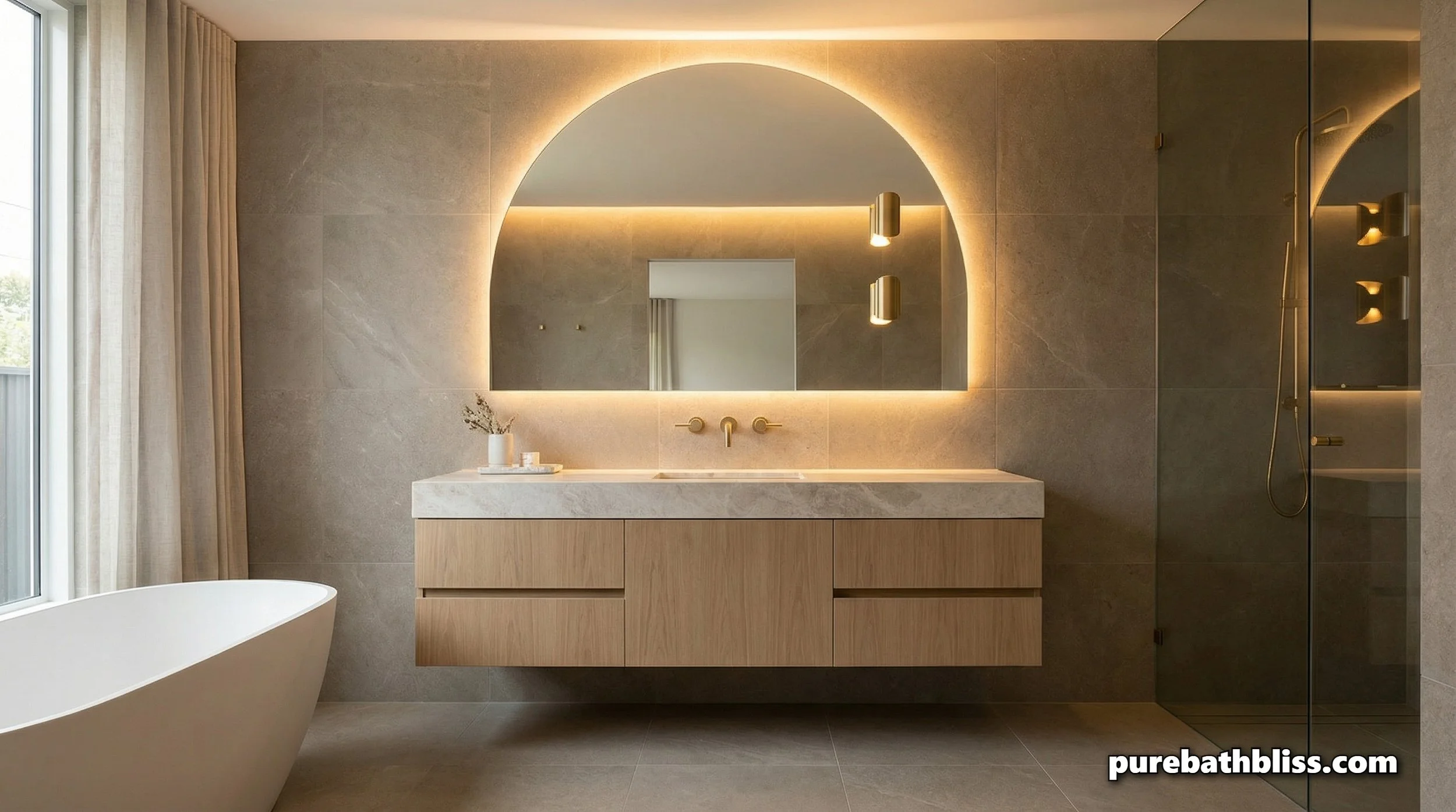
But in 2026, gold has undergone a massive "Heritage Revival." We are moving away from the cold, clinical grays and "Millennial Pink" of the last decade and returning toward warmth, organic textures, and a soft, candlelight "glow."
The question today isn't whether gold is inherently tacky, it’s whether you are choosing Gold Tone (Tacky) or Gold Finish (Timeless).
1. The "Tacky" Trap: What to Avoid
The reason gold got a bad reputation is that, for years, manufacturers used cheap materials to mimic the look of luxury. To build a Sustainable Sanctuary, you must be able to spot the difference between a high-end metal and a "costume jewelry" fixture. Here is what actually makes gold look "tacky":
The "Yellow" Factor: Lower-end fixtures often have a harsh, orange-yellow undertone that looks like spray-painted plastic. Real gold and high-quality brass have a paler, "champagne" or "honey" hue that feels grounded.
The "High-Shine" Overdose: In the 80s, everything was polished to a mirror shine. When every single surface, the faucet, the drain, the mirror, and the light, is ultra-reflective, it creates visual "noise." It stops being an accent and starts being a distraction.
Cheap Plating & Lacquer: Gold-colored paint or thin lacquer on top of plastic or zinc is the enemy of sustainability. These finishes chip, peel, and "pit" within a year of use, leaving your bathroom looking like a DIY project gone wrong.
2. The Infrastructure: Gold-Plated vs. PVD Finish
As a builder, I care more about the molecular bond than the color. If you want a gold bathroom that doesn't lose its luster, you need to understand the difference between Electroplating and PVD.
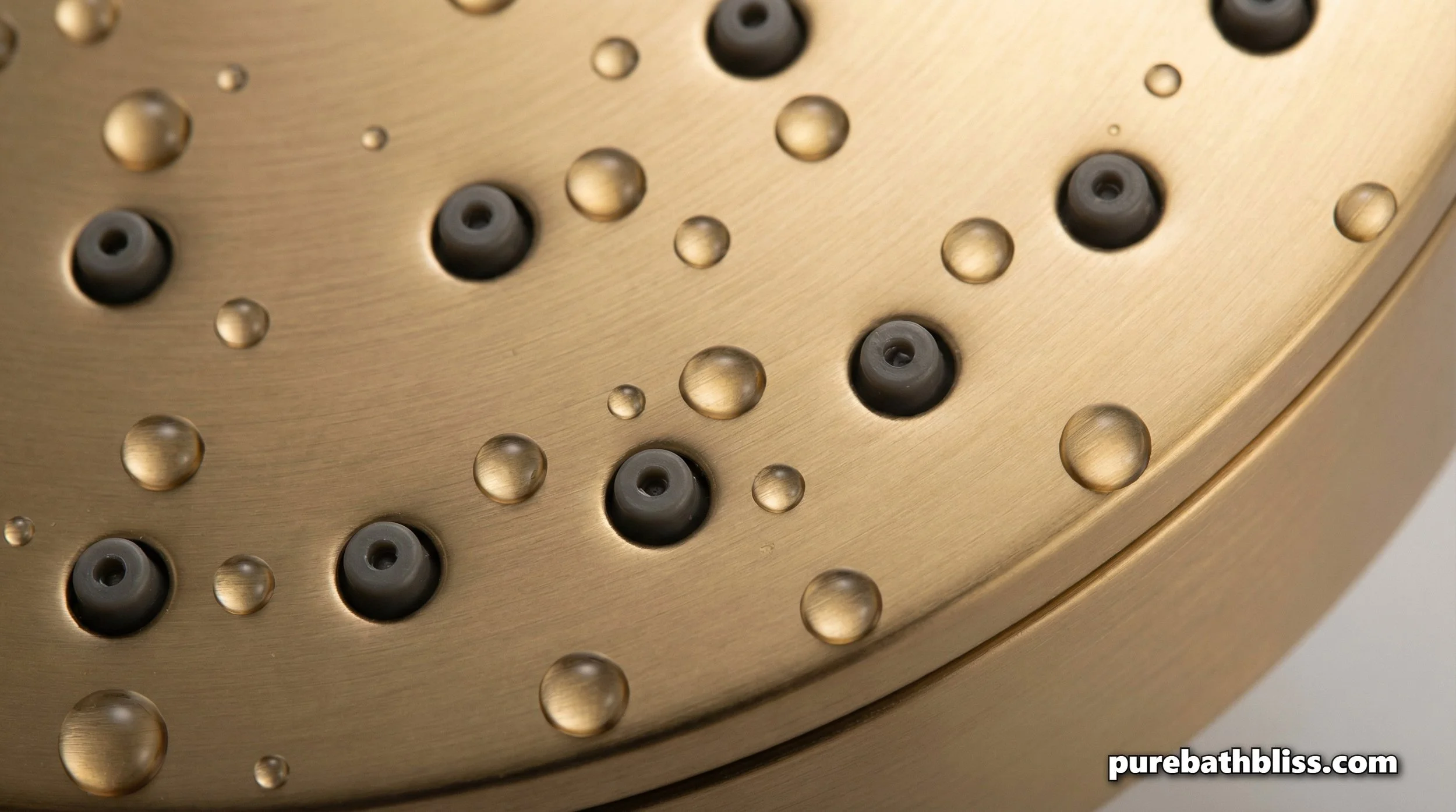
Gold Plating (Electroplating): This involves a thin layer of real gold being chemically bonded to a base metal (usually nickel). While it looks incredibly authentic, gold is a "soft" metal. Over years of cleaning with microfiber cloths and soaps, the gold can literally be "scrubbed off," eventually exposing the silvery nickel underneath.
PVD Finish (The 2026 Gold Standard): Most modern "Brushed Gold" or "Champagne Bronze" fixtures from reputable brands use Physical Vapor Deposition (PVD). This process happens in a vacuum chamber where the color is bonded to the metal at a molecular level. It creates a finish that is actually harder than the metal itself. It is virtually scratch-resistant, won't tarnish, and is immune to the "green" corrosion often seen in cheap brass.
3. How to Style Gold (The "Rule of Restraint")
To keep gold looking sophisticated and "Pure," you have to treat it as the highlight, not the background.
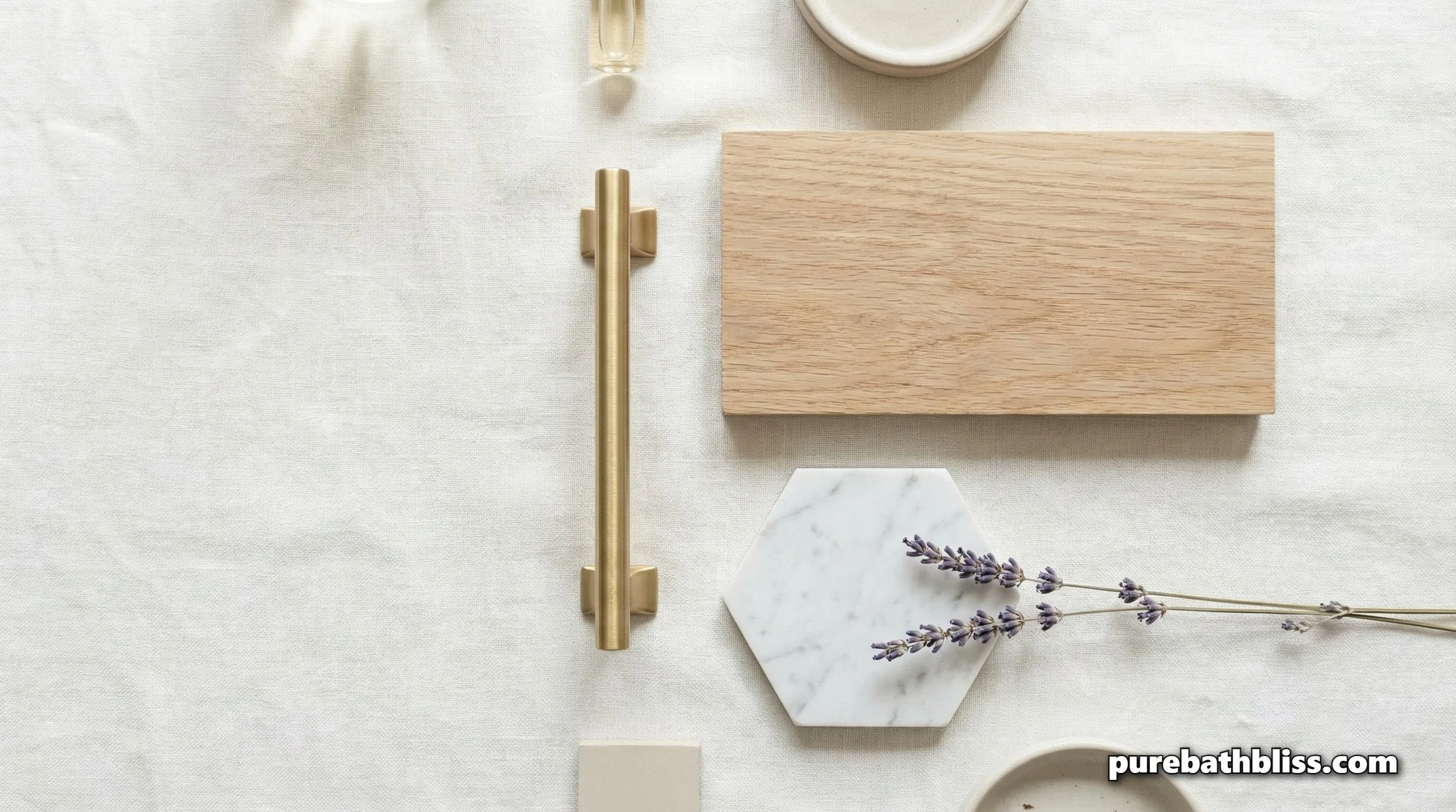
Pair with Natural Textures Gold is a "warm" metal. It reaches its peak aesthetic potential when paired with "earthy" materials that balance its intensity.
White Oak or Walnut: The wood grain softens the metal's shine.
Natural Stone: Carrara marble or soapstone provide a cool-toned contrast that makes the gold "pop."
Matte Tile: Zellige or terracotta tiles offer an organic, imperfect texture that keeps the room from feeling too "manufactured."
The "Mixed Metal" Secret One of the biggest design shifts in 2026 is the death of the "matching set." You no longer need your gold faucet to match your silver door hinges. In fact, a bathroom that is only gold can feel overwhelming.
The Pro-Mix: Use Brushed Gold for your "touch points" (faucets and cabinet pulls) and Matte Black or Polished Nickel for the secondary elements (towel bars, mirror frames, or shower tracks). This creates a "collected over time" look that feels curated and intentional.
4. Maintenance: Protecting the Glow
The quickest way to make a gold fixture look tacky is to let it get covered in lime scale, soap scum, or "crusty" mineral deposits. However, because many gold finishes (especially non-PVD ones) are delicate, you must avoid harsh chemicals.
Never Use: Bleach, ammonia, or abrasive scrubbing pads. As we’ve discussed before, Bleach Destroys Your Plumbing and it will certainly eat through a gold finish.
The Sanctuary Ritual: Use a soft microfiber cloth and a 50/50 mix of distilled water and white vinegar. This is acidic enough to dissolve hard water spots but gentle enough to preserve the finish. For an added layer of antimicrobial protection, our DIY Tea Tree Spray is the perfect companion for PVD gold.
5. Color Psychology: Why We Want Gold Now
There is a reason we are gravitating toward gold in 2026. In an era of high-tech screens and "cold" digital interfaces, we are subconsciously seeking out the warmth of the sun. Gold reflects light in a way that mimics a sunset or a fireplace, which triggers a relaxation response in the brain.
In a Sustainable Sanctuary, we aren't just looking for "pretty" things; we are looking for fixtures that enhance our circadian rhythm and make our morning routines feel like a grounding ritual.
6. The Verdict: Is it a Trend or a Staple?
Gold isn't a "fad"—it is a finish that has existed for thousands of years, from ancient bathhouses to royal palaces. What changes is the execution.
In 2026, we are seeing a move toward "Quiet Luxury." We want gold that looks like it has a history, Brushed Gold, Satin Brass, and Antique Bronze. These finishes provide a glow that feels grounded and permanent. If you choose high-quality PVD fixtures and pair them with natural materials, your bathroom won't look like a relic of the 80s; it will look like a timeless sanctuary.
Conclusion: Trust Your Eye
If you walk into a showroom and a fixture looks "too yellow" or "too shiny," trust your gut. "Tacky" is often just a synonym for "cheaply made." When you invest in the infrastructure of your home and choose metals with depth and durability, you aren't just following a trend; you are building a sanctuary that will age as gracefully as you do.