Why Your “Natural” Cleaner Is Ruining Your Marble in 2026 (Safe DIY Alternatives)
Transparency Note: We independently select these products based on research and user reviews. If you buy something through our links, we may earn a commission.
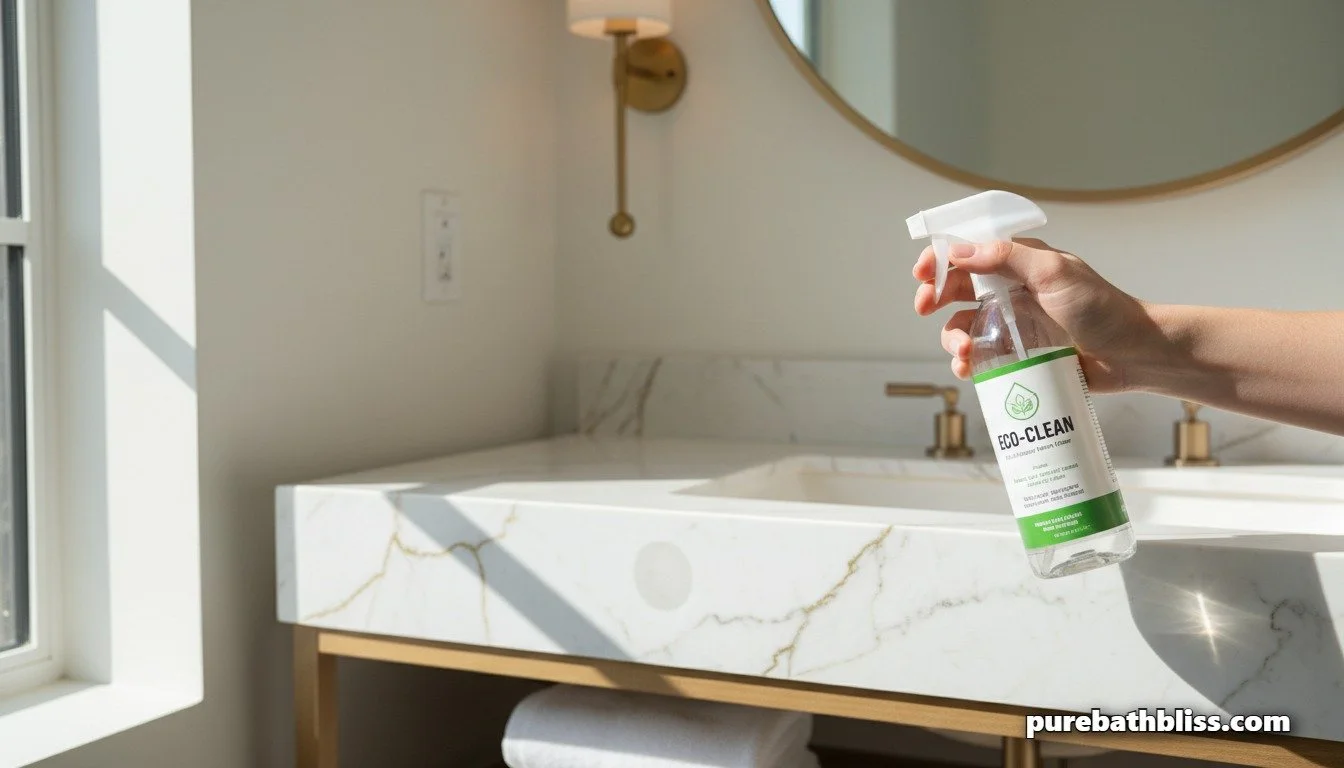
We’ve all been there. You stand in the cleaning aisle, looking for something that won't fill your home with harsh fumes. You grab a “natural” cleaner with pretty green leaves and soft “Ocean Mist” branding, spray it on your beautiful honed marble vanity, and walk away feeling like a responsible, eco-conscious homeowner.
Then the sunlight hits the stone at the right angle... and you see them: the dull, cloudy etch marks that won’t wipe away.
As your knowledgeable best friend in home care (and a builder who’s seen too many luxury renovations ruined by a single spray bottle), I have to be honest: “Natural” does not always mean safe, especially in 2026. Greenwashing is at an all-time high. Many brands are using technically “plant-derived” ingredients that quietly destroy natural stone, matte black hardware, and even your indoor air quality. Today, we’re doing a full 2026 Bathroom Detox, exposing the hidden culprits and giving you a safe, effective DIY that actually protects your investment.
The Biggest Myth: Vinegar Is Not Your Hero
The biggest "lightbulb moment" most of my readers have is realizing that vinegar, the holy grail of old-school DIY cleaning, is the #1 enemy of natural stone. Because vinegar is highly acidic (with a pH of around 2.0), it reacts chemically with the calcium carbonate in marble, limestone, and travertine. It literally dissolves the polished surface on contact, a process called etching. ”
Once that surface is eaten away, the damage is permanent without professional resurfacing. Many “green” cleaners also contain citric acid (from lemons) or other mild acids to boost cleaning power. These might be fine for ceramic toilets, but they are disastrous for stone vanities and the trendy matte finishes we see in every renovation and home improvement project this year.
Pro Tip: Vinegar is still a rockstar for your "internal infrastructure", use it for your pipes in our post-holiday bathroom drain detox guide, but keep it far away from your countertops and showers.
2026 Ingredients to Avoid in “Green” Cleaners
Look past the pretty labels and watch out for these common culprits that are often masked as "earth-friendly":
Citric Acid / Acetic Acid: Technically natural, but highly corrosive to stone and matte-black hardware.
Methylisothiazolinone (MI): A preservative found in many “natural” sprays that can irritate skin and leave a hazy film on porous surfaces.
Fragrance / Parfum: The ultimate loophole. This single word can hide hundreds of synthetic chemicals. Only trust products that specifically say “100% pure essential oils.”
D-Limonene: Often hidden in “citrus” scented cleaners. It smells like a spa, but it can actually strip the sealants right off your stone.
If you’ve recently done a toothbrush test and realized it’s time to refresh your vanity, don't let these ingredients ruin your new setup.
The PureBathBliss Safe Marble & Stone Spray (2026 Version)
This is my go-to recipe. It’s pH-neutral, non-toxic, streak-free, and costs under $0.50 per bottle to make. It’s the perfect companion to our no-drill bathroom storage hacks for renters because it’s gentle enough for any surface.
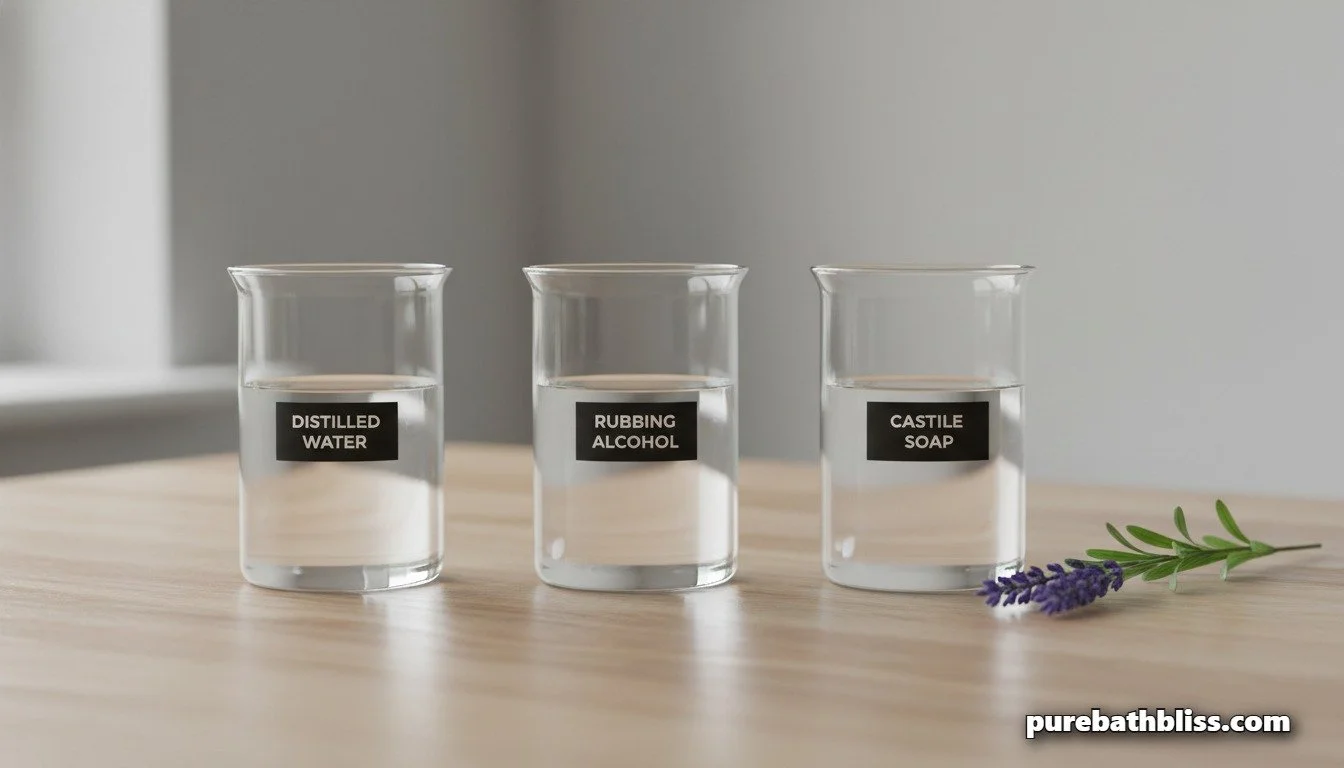
Ingredients (makes ~16–24 oz):
2 cups distilled water: Tap water contains minerals that cause the "fog" we discussed in our guide on why foggy bathroom mirrors are good.
2 tablespoons rubbing alcohol (91% isopropyl): This is the secret to a fast-drying, streak-free shine.
1 teaspoon unscented liquid Castile soap: A gentle surfactant that lifts dirt without etching.
10 drops Lemongrass or Lavender essential oil: Naturally antibacterial and smells like a luxury hotel.
Instructions:
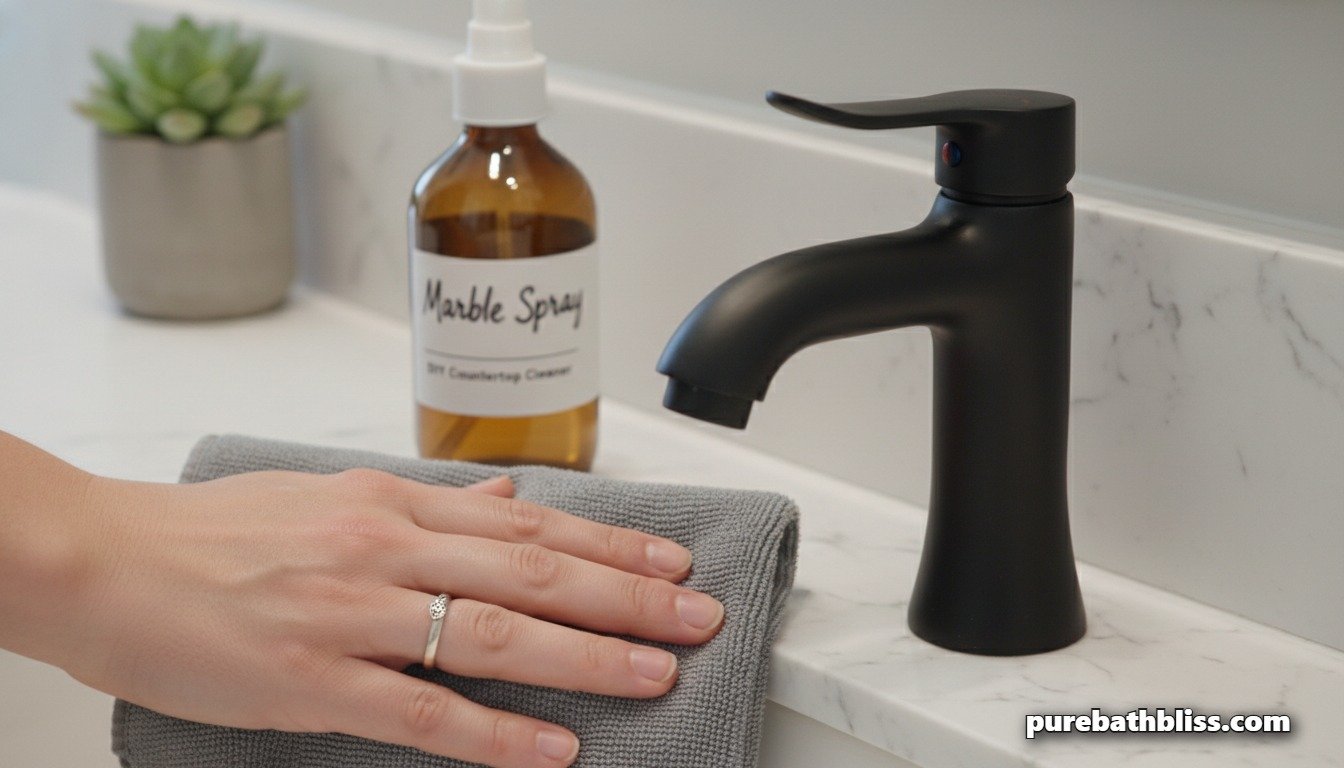
Add all ingredients to a dark amber glass spray bottle (essential oils stay potent longer in dark glass).
Shake gently before each use.
Lightly mist, wipe with a high-quality microfiber cloth, and let air dry.
2026 Greenwashing Decoder Table
| The “Eco” Claim | The Hidden Reality | PureBathBliss Verdict |
|---|---|---|
| "Plant-Based Acetic Acid" | It's just fancy vinegar. | Avoid on Marble, Limestone & Travertine. |
| "Natural Citrus Scent" | Often contains d-Limonene. | Can etch matte and sealed finishes. |
| "Bio-Degradable Surfactants" | Leaves a sticky, dull film. | Requires extra rinsing to avoid haze. |
| "Essential Oil Fragrance" | May be diluted with synthetics. | Only trust "100% Pure Essential Oils." |
The Shift Toward Microbiome-Friendly Cleaning
In 2026, we’re moving away from the "kill 99.9% of germs" mindset toward balanced, non-toxic cleaning. This is especially important for parents following our aesthetic bathroom toddler-proofing guide, as we want to maintain a healthy microbial balance in the home while keeping surfaces safe for little hands.
Harsh cleaners, even those marketed as "green", often leave residues that can disrupt your home's air quality. Instead, we advocate for bio-based formulations and functional scents. A simple bundle of dried eucalyptus in the shower provides a true spa experience without a single drop of synthetic perfume. It also helps combat those lingering odors we discussed in our guide on why your bathroom smells like wet dog.
Summary: Protecting Your Sanctuary
Don’t let greenwashing damage your beautiful bathroom. Your stone and fixtures are an investment in your home’s value and your daily peace of mind. By ditching the questionable “natural” cleaners and switching to simple, pH-neutral solutions, you protect both your surfaces and your family’s health. Your bathroom should be a sanctuary, not a source of hidden damage.