Transparency Note: We independently select these products based on research and user reviews. If you buy something through our links, we may earn a commission.
In a Sustainable Sanctuary, the goal is to work smarter, not harder. As a builder, I know that the glossy finish on your bathtub—whether it's acrylic, fiberglass, or porcelain—is its "first line of defense." Once that factory gloss wears down, the material becomes porous. That is when the permanent stains, rust, and the Bath Bomb Aftermath take over.
If you have a family of six, you don't have time to scrub the tub every single day. That is why I treat my bathtub like I treat a high-end tool or a classic truck: I wax it.
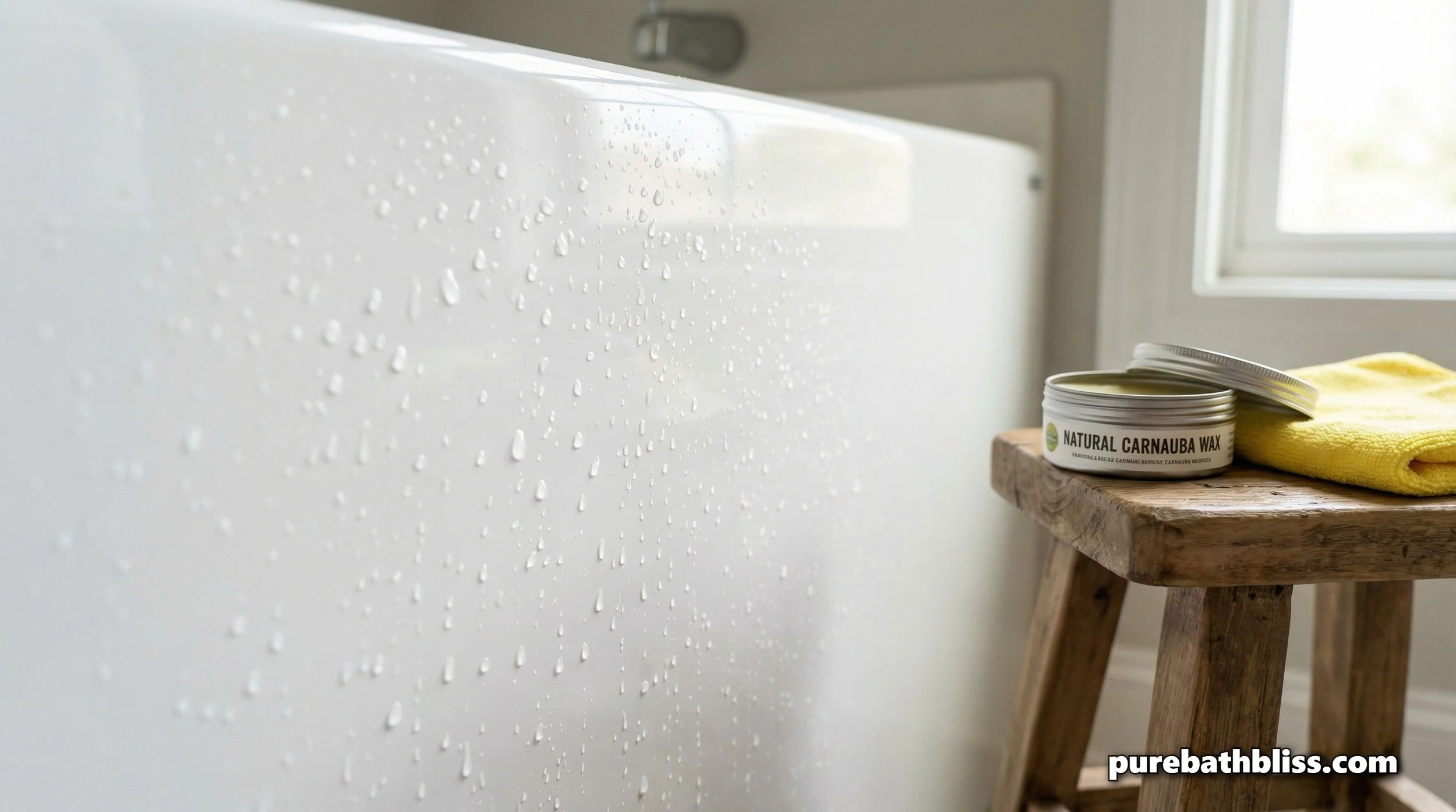
1. The Physics of "Beading": Restoring Surface Tension
It sounds strange at first, waxing is for cars and hardwood floors, right? But as a builder, I look at surfaces in terms of "surface tension." A brand-new tub has a high-gloss "gel coat" that allows water to bead up and roll away. Over time, "scrubbing" with harsh cleaners creates microscopic scratches that act as "anchors" for soap scum, body oils, and minerals.
When you apply a high-quality, non-toxic wax to the vertical walls of your tub, you are creating a hydrophobic barrier.
Water Rejection: Instead of water "sheeting" down the walls and leaving behind calcium deposits (the source of that chalky white buildup), it beads into tiny droplets and slides directly into the drain.
Oil Rejection: We’ve discussed how oils from bath bombs and conditioners cling to the tub. On a waxed surface, those oils can’t find a foothold. They stay suspended in the water and wash away completely, leaving no "orange ring" behind.
2. Preventing the "Big Family" Abrasive Cycle
With six people using the bathroom, your tub is likely being used 2–3 times a day. Most people clean their tubs by scrubbing hard with abrasive sponges or "Magic Erasers." As a carpenter, I see the long-term damage: this actually makes the tub harder to clean because you are stripping away the protective layer.
A waxed tub only needs a gentle wipe with a damp microfiber cloth to stay sparkling. You can retire the heavy-duty scrub brushes and the "elbow grease." You are essentially making the tub "self-cleaning."
3. The Builder’s "Safety First" Protocol
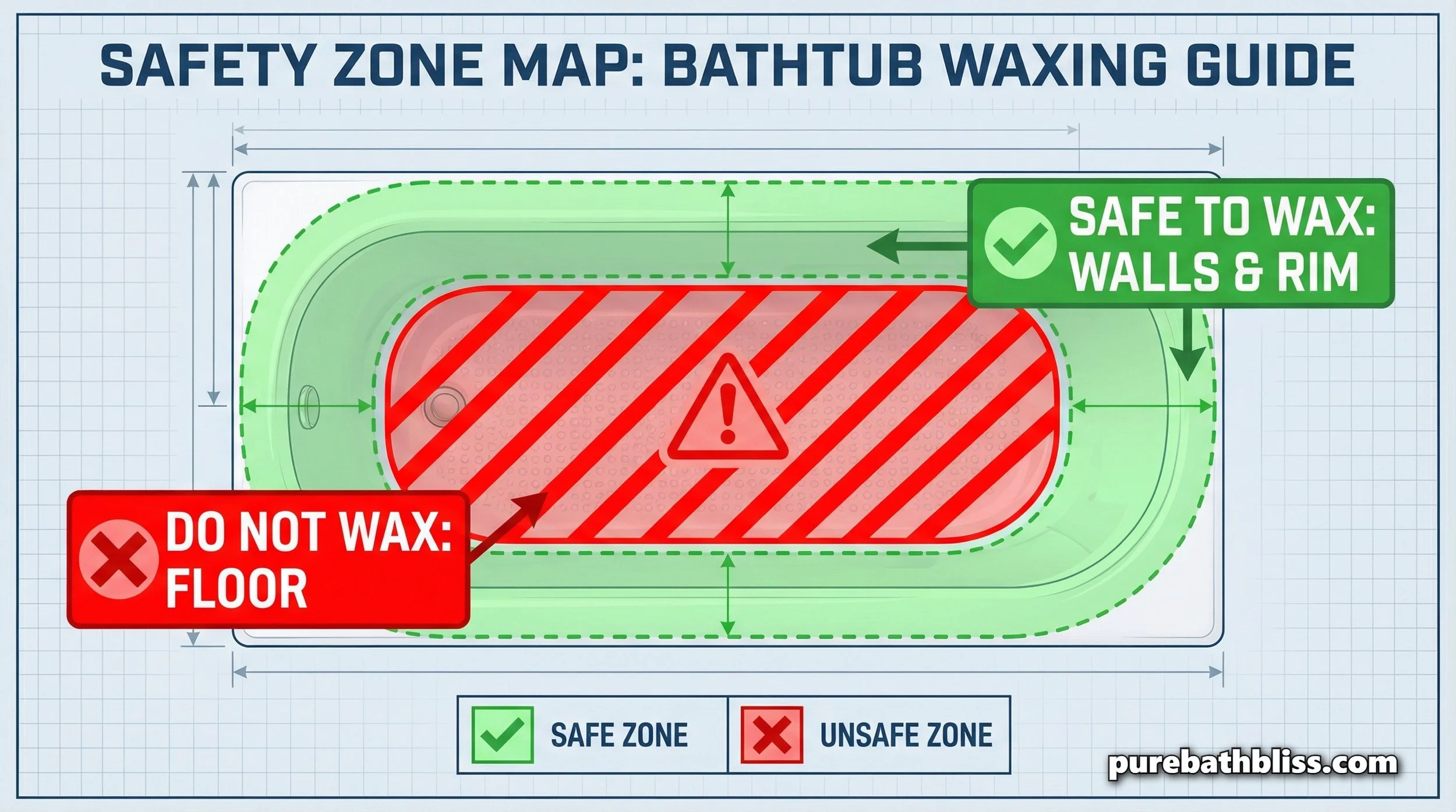
As a parent of four, I have to give you a non-negotiable warning. Wax makes things slippery. Incredibly slippery.
THE GOLDEN RULE: NEVER wax the floor of the bathtub.
Only apply wax to:
The vertical side walls.
The backrest (where you lean).
The top "rim" or deck of the tub (where water pools).
The faucet and handles (this prevents those annoying water spots).
By leaving the floor of the tub unwaxed (and using a high-quality non-slip mat), you maintain the safety of your sanctuary while still getting 90% of the maintenance benefits.
4. What Kind of Wax Should You Use?
In a Sustainable Sanctuary, we avoid waxes filled with heavy petroleum distillates. We want "Pure" options that won't off-gas in the small, humid environment of a bathroom.
| Wax Type | Material Best For | Sanctuary Rating |
|---|---|---|
| Pure Carnauba | Acrylic & Fiberglass | 9/10 (Food-safe, very hard) |
| Beeswax Polish | Porcelain & Enamel | 10/10 (Natural, great scent) |
| Refinisher's Wax | Older/Refinished Tubs | 8/10 (Specific for high moisture) |
5. The Application Ritual (The Semi-Annual Reset)
You don't need to do this every week. As a builder, I recommend a "Semi-Annual Waxing" (every six months).
The Deep Clean: Use your Vinegar and Dish Soap mixture to remove every trace of soap scum. The tub must be pristine, or you will be "waxing in" the dirt.
The Dry-Down: Use a towel to make sure there is zero moisture left on the surface. Wax and water don't mix.
Apply & Buff: Using a dedicated wax applicator or a microfiber cloth, rub a thin layer onto the walls in circular motions. Let it "haze" for about 5 minutes.
The Final Buff: Buff the haze out with a fresh, dry microfiber cloth until the surface feels "slick as ice" to the touch.
Conclusion: Protecting the Asset
Maintenance isn't just about appearance; it's about protecting the investment you've made in your home's infrastructure. By taking 15 minutes to wax your tub twice a year, you ensure that your bathroom remains a place of "Bliss" rather than a place of constant scrubbing.
A waxed tub is a protected tub. Keep your sanctuary's surfaces as resilient as its "bones."
Greg’s Tub-Waxing Toolkit
The Wax: Pure 100% Carnauba Wax - No petroleum, just high-gloss protection.
The Applicator: Microfiber Waxing Pads - Ensures an even, thin coat.
The Shine: Heavy-Duty Buffing Cloths - For that final, mirror-like finish.