When designing a streamlined, peaceful bathroom, we often default to standard fixtures without questioning their utility. The classic horizontal towel bar is a perfect example. It has been a bathroom staple for generations, operating under the assumption that a flat, wide hanging space is the optimal way to display and dry your linens.
But if you look at how a shared family bathroom or guest bath actually functions on a daily basis, the traditional towel bar reveals its fatal design flaw: it demands too much behavioral effort.
To hang a towel correctly on a bar, you must neatly fold it into thirds, align the edges perfectly, and drape it evenly over the metal tube. Because this multi-step process takes a few extra seconds of intentional effort, people rushing through their morning routines inevitably skip it. Instead, towels end up crumpled on the countertop, slung haphazardly over the shower glass, or left in a damp pile on the floor.
True spatial efficiency relies on designing for real human behavior, not hypothetical perfection. By implementing the 2-Hook Towel Rule, you can bypass the folding friction completely, speed up your laundry drying times, and effortlessly maintain a pristine room aesthetic.
The Physics of Airflow: Hooks vs. Layers
The most common argument against towel hooks is the belief that a bunched-up towel will trap moisture and develop a musty odor. However, unless you are using cheap, ultra-dense synthetic towels, modern textile physics actually favors the hook.
When you drape a damp towel over a traditional bar, you are folding the fabric over itself, creating a dense, multi-layered sandwich of wet cotton. Air cannot easily pass through the layers, causing the core of the towel to remain damp for hours.
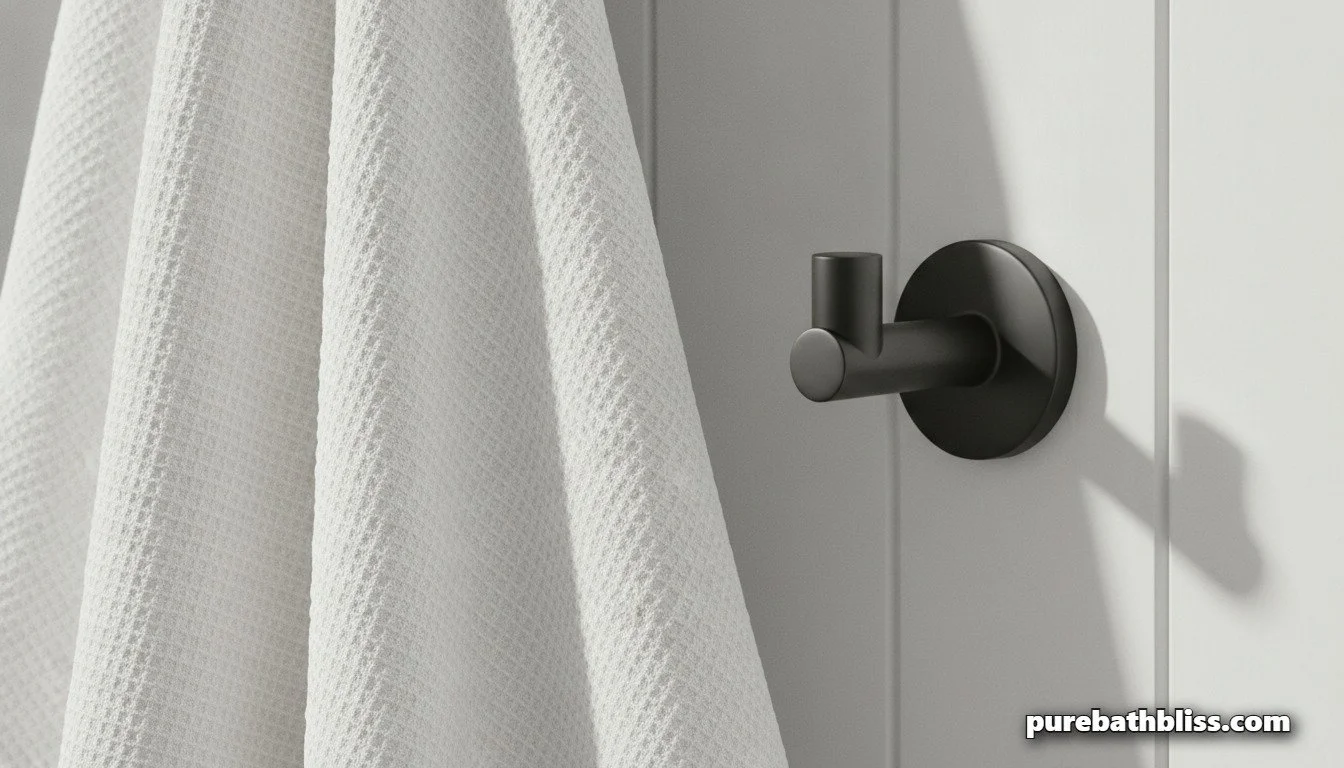
The Fix: When you hang a towel by a central loop or its edge on a dedicated wall hook, gravity pulls the fabric down into a series of long, vertical pleats. These folds act like natural chimneys. As the ambient air moves through your bathroom, it enters the bottom of the open pleats and channels upward, maximizing the surface area exposed to room ventilation. This natural chimney effect speeds up evaporation dramatically, especially when paired with an optimized fan run-time as detailed in our budget bathroom mold prevention guide.
2. The Behavioral Architecture of the 2-Hook System
The core of the 2-Hook Towel Rule is mapping your fixture placement to match your daily spatial habits. A single, isolated hook usually leads to overloading, but a dedicated multi-hook configuration establishes clear boundaries.
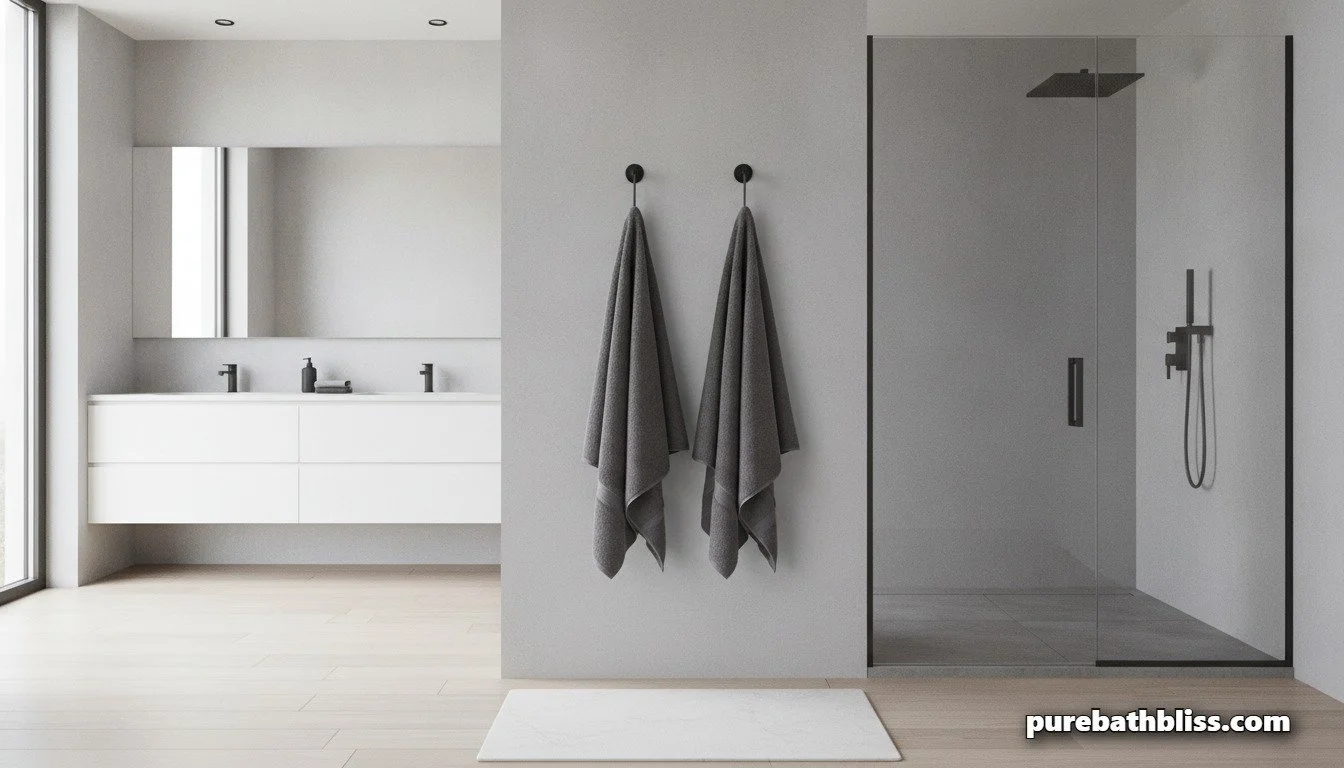
The Setup: Install a minimum of two identical, high-end hooks spaced exactly 8 to 10 inches apart on a single accent wall, or place them directly adjacent to your vanity perimeter.
This layout creates an instant, intuitive zoning system for shared spaces. Hanging a towel on a hook requires a single, sub-one-second physical motion: you simply grab the fabric and drop it over the post. Because you have removed the friction of folding, family members and guests will actually use them, instantly eliminating the visual chaos of abandoned linens. This clean, vertical alignment perfectly complements the sleek, minimalist ethos of modern shower niche styling.
Selecting and Sourcing the Right Hardware
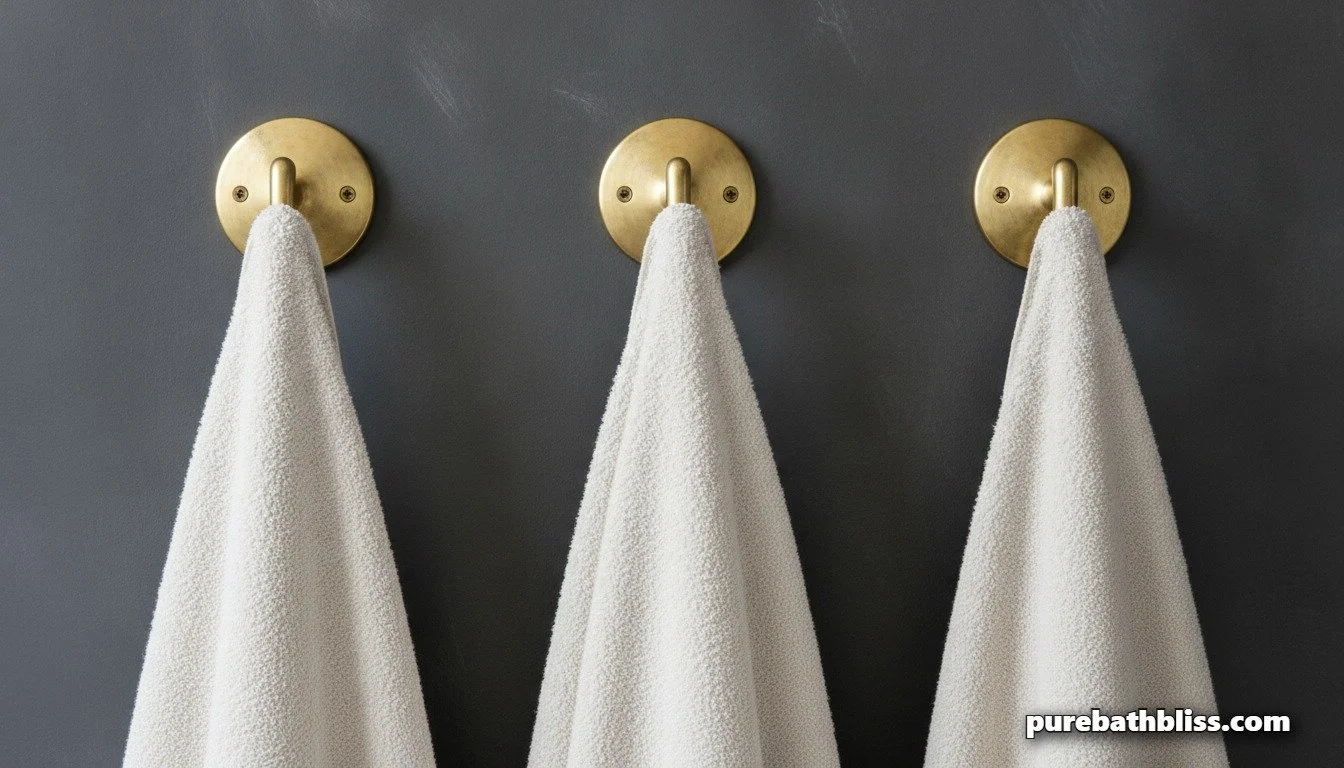
Switching to hooks doesn't mean sacrificing the high-end look of your space. In fact, a row of beautifully crafted hooks adds a punch of architectural interest that a plain horizontal bar simply cannot replicate.
The Post Profile: Avoid cheap, thin hooks with sharp edges, which can pierce or tear delicate linen fibers over time. Instead, source substantial hooks with a wide, flared post or a smooth, spherical top that distributes the weight of the wet fabric evenly.
The Material Coordination: Coordinate the metal finish of your hooks to act as a proper canvas for the rest of your space. Pair unlacquered brass or raw copper hooks with deeply textured, earthy wall paint to allow your hardware to develop its rich character patina over time, as highlighted in our living metal finishes guide.
Towel Bars vs. The 2-Hook Rule
| Operational Metric | Traditional Horizontal Bars | The Vertical 2-Hook Rule |
|---|---|---|
| User Compliance | Low (Requires precise folding and smoothing). | High (Requires a single, one-second drop motion). |
| Drying Efficiency | Slow (Traps moisture between overlapping layers). | Fast (Vertical pleats create a natural chimney effect). |
| Spatial Footprint | Consumes 18 to 24 inches of horizontal wall real estate. | Consumes minimal space; easily utilizes narrow wall studs. |
| Visual Aesthetic | Often looks sloppy unless towels are perfectly pressed. | Creates elegant, relaxed organic draping folds. |
Summary: Designing for Real Life
Great interior organization isn't about enforcing strict, high-effort rules on your household; it is about adjusting the environment to make tidiness the path of least resistance. By trading your horizontal towel bars for an intentional, multi-hook layout, you align the mechanics of your bathroom with natural human behavior. You speed up drying cycles, reclaim valuable wall real estate, and maintain a calm, visually silent sanctuary with zero daily folding required.