GSM Explained: How to Decode Towel Labels to Find True Luxury
We have all been there. You are standing in the aisle of a home goods store, surrounded by a towering wall of bath towels. You reach out and touch one; it feels incredibly soft, almost silky. You buy a whole set, excited for your next shower.
But a few weeks and a few washes later, that initial softness has vanished. The towel feels thin, it pushes water around instead of absorbing it, and it takes forever to dry between uses.
Why does this happen? It's because in the store, manufacturers often coat towels with temporary softeners that wash right off. If you want to buy a towel that performs as good as it feels, you need to ignore the "ultra-soft" marketing labels and look at the hard data.
The secret to finding true quality lies in a three-letter acronym hidden on the tag: GSM.
This guide will decode the confusing world of towel specs, explaining exactly what GSM is and the crucial difference between cotton types, ensuring you never buy a disappointing towel again.
What is GSM and Why Does It Matter?
GSM stands for Grams per Square Meter. It is the standard measurement for the density and weight of fabric. Think of it like the thread count for your sheets, but for towels.
Put simply: GSM tells you how much cotton has been packed into that square meter of fabric.
Lower GSM number: The towel is lighter, thinner, and will dry faster.
Higher GSM number: The towel is heavier, thicker, denser, and more absorbent.
There is no single "best" GSM; it depends entirely on what you need the towel to do. A heavy luxury towel might be perfect for a master bathroom, but terrible for a humid gym bag.
The GSM Breakdown: Finding Your Perfect Weight
Towels generally fall into three weight categories. Knowing these will help you shop with confidence.
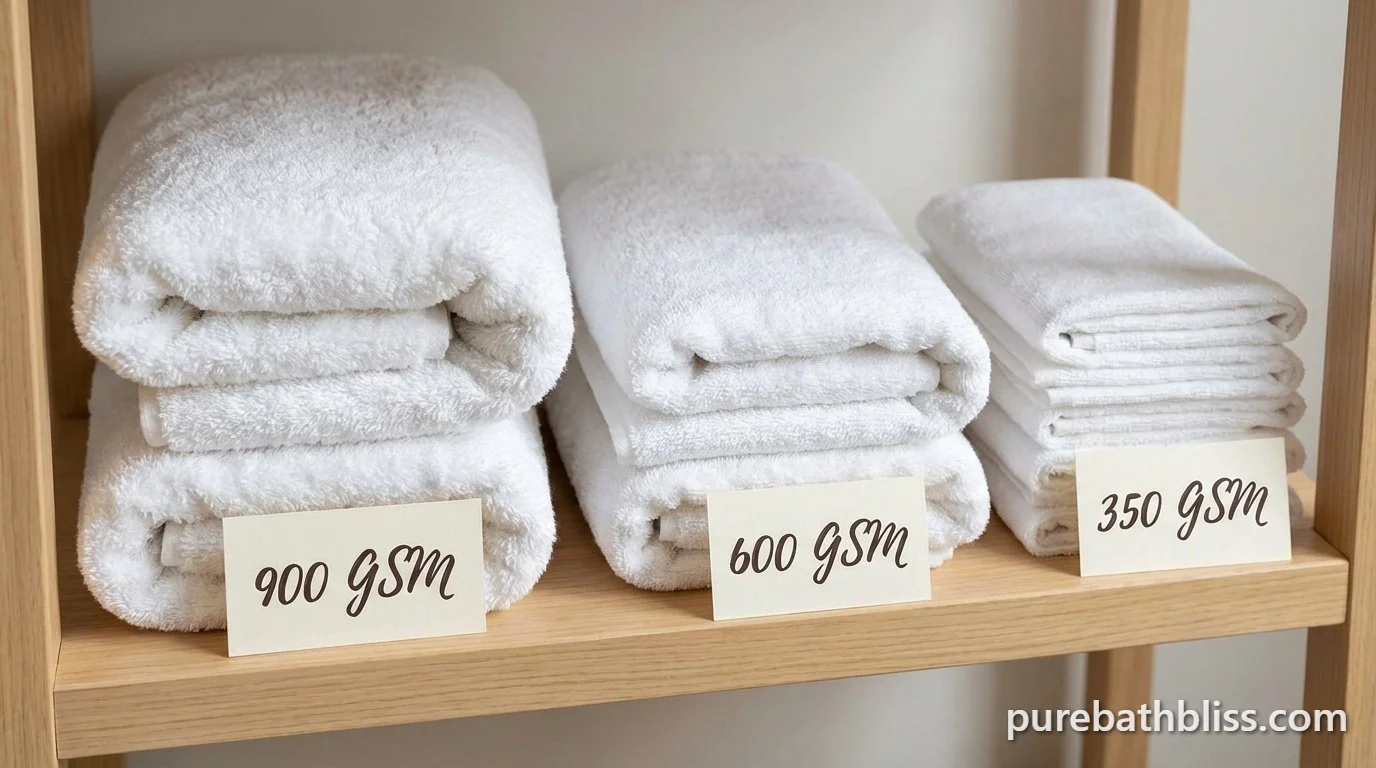
1. Lightweight (300 to 400 GSM)
These are thin, utilitarian towels. They are not meant for a luxurious post-shower wrap.
Pros: They dry incredibly fast, making them resistant to mildew. They are compact and pack down small.
Best Uses: Gym towels, travel towels, kitchen towels, or guest towels in very humid climates where thicker towels never fully dry.
2. Medium Weight / The "Goldilocks" Zone (450 to 600 GSM)
This is the sweet spot for most households. A 600 GSM towel offers a great balance of soft, absorbent plushness without being so heavy that it becomes unmanageable in the wash or takes two cycles to dry.
Pros: highly absorbent, durable for daily use, dries in a reasonable amount of time.
Best Uses: Your everyday bath towel and hand towels.
3. Heavyweight / Luxury (650 to 900 GSM)
This is what you find in a high-end spa or 5-star hotel. These towels feel substantial, dense, and incredibly warm. A 900 GSM towel is essentially a thirsty blanket.
Pros: Unmatched absorbency and a truly opulent feel against the skin.
Cons: They take up a lot of shelf space, get very heavy when wet, and require significantly longer drying times.
Best Uses: Master bathrooms, guest bathrooms where you want to impress, or for anyone who loves a heavy, warm wrap after a bath.
The Material Battle: Egyptian vs. Turkish Cotton
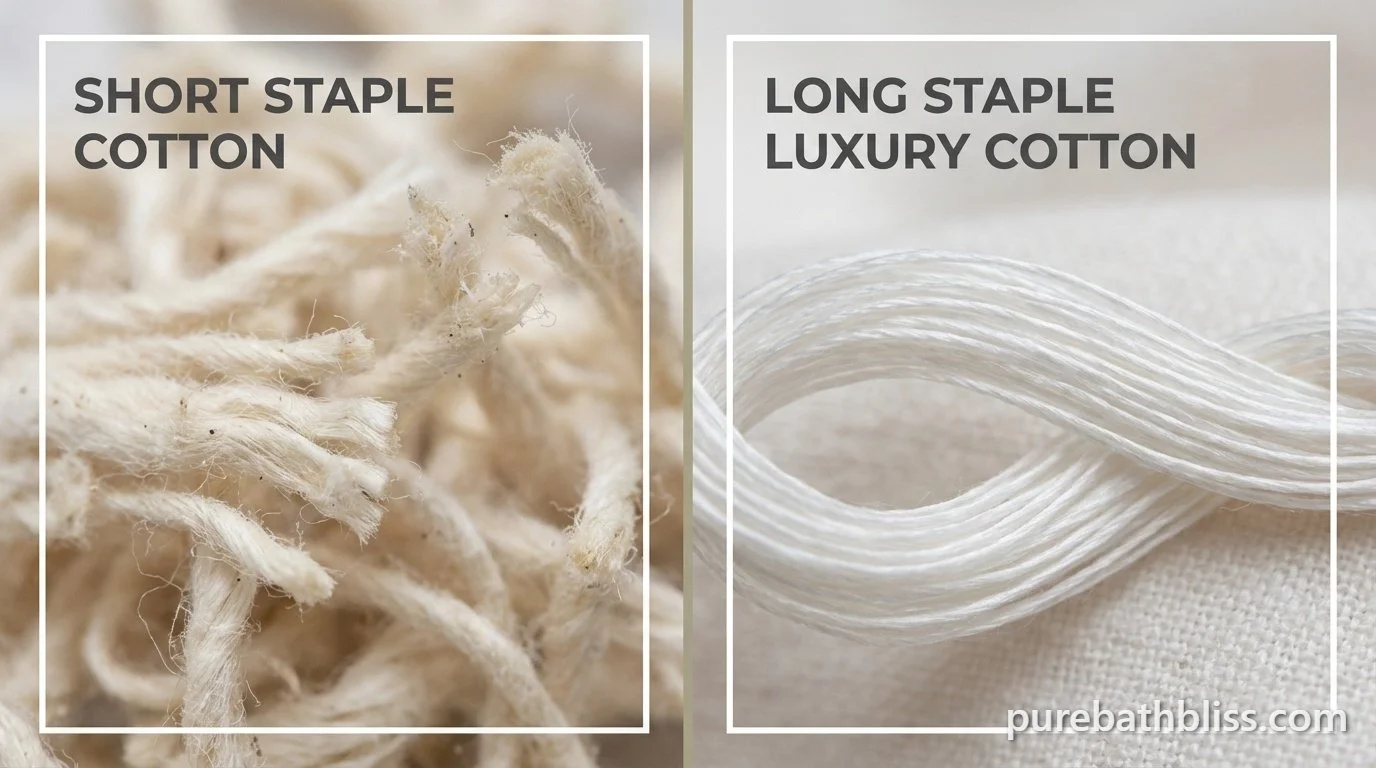
GSM is only half the story. The quality of the fiber itself dictates how soft the towel feels and how long it lasts. While you will see "100% Cotton" on almost everything, not all cotton is created equal.
The key differentiator is staple length. This refers to the length of the individual cotton fiber. Long-staple cotton can be spun into smoother, stronger, and finer yarns, resulting in a softer and more durable towel that doesn't pill easily. Short-staple cotton feels rougher and breaks down faster.
There are two titans in the luxury towel world, and they serve different purposes.
Egyptian Cotton: The King of Absorbency
Grown in the humid conditions of the Nile River Valley, Egyptian cotton is famous for having extra-long staples.
The Feel: It creates a very dense, plush towel that feels incredibly soft right away.
The Superpower: Extreme absorbency. It soaks up water like a sponge.
The Drawback: Because it holds so much water, it takes a long time to dry. In a damp bathroom, it may be prone to developing musty smells if not dried properly.
Turkish Cotton: The Quick-Dry Specialist
Grown in Turkey, this is also a premium long-staple cotton, but it has a different characteristic.
The Feel: It is smooth and durable, but perhaps slightly less "fluffy" initially than Egyptian cotton. However, Turkish cotton is known to get softer and fluffier with every wash.
The Superpower: It is highly absorbent, but it releases moisture faster than Egyptian cotton. This means it dries significantly quicker.
The Drawback: It may not feel as immediately opulent in the store as Egyptian cotton.
Verdict: If you want the thickest, thirstiest towel possible, choose Egyptian. If you want a premium towel that dries quickly and is perfect for daily use in humid climates, choose Turkish.
Other Buzzwords to Know
You might see a few other terms on tags. Here is a quick translation:
Ringspun Cotton: This means the long and short fibers are twisted tightly together to create a smoother, stronger, and finer yarn than regular open-end spinning. A good sign of quality.
Combed Cotton: The cotton has been literally combed to remove short, uneven fibers and impurities, leaving only the strongest, longest threads. This results in less pilling.
Zero-Twist: This is a manufacturing technique where long-staple cotton is held together with a special wrapping thread that dissolves in the wash, leaving the fibers untwisted. This creates an incredibly fluffy, cloud-like towel that is very absorbent but perhaps slightly less durable than a tightly twisted yarn.
Conclusion: Buying Better
The next time you are shopping for towels, look past the "ultra-soft" marketing sticker. Check the label for the GSM rating to know the weight, and look for "100% Egyptian Cotton" or "100% Turkish Cotton" to ensure fiber quality. Investing in the right specs for your needs means you will enjoy that spa-like feeling every single day, not just the first week.
Keep Your New Towels Feeling New
Now that you have invested in high-quality towels, you need to care for them properly so they don't turn stiff. If your current towels are already feeling scratchy, learn how to restore them using a simple pantry ingredient in our guide: How to Soften Stiff Towels with a Simple Citric Acid Trick.