Bird’s Nest Fern Care: How to Grow This Tropical Bathroom Beauty
Transparency Note: We independently select these products based on research and user reviews. If you buy something through our links, we may earn a commission.
If there is one plant that defines the "Bathroom Jungle" aesthetic, it is the Bird’s Nest Fern (Asplenium nidus). Unlike many of its finicky fern cousins that drop brown needles the moment the air gets dry, the Bird’s Nest Fern is a sturdy, structural masterpiece that actually thrives in the steam of your shower.
In our Sustainable Sanctuary, we love this plant not just for its wavy, apple-green fronds, but because it is a natural humidifier. It breathes with you, turning your morning shower into a tropical escape.
Here is everything you need to know to keep your Bird’s Nest Fern thriving.
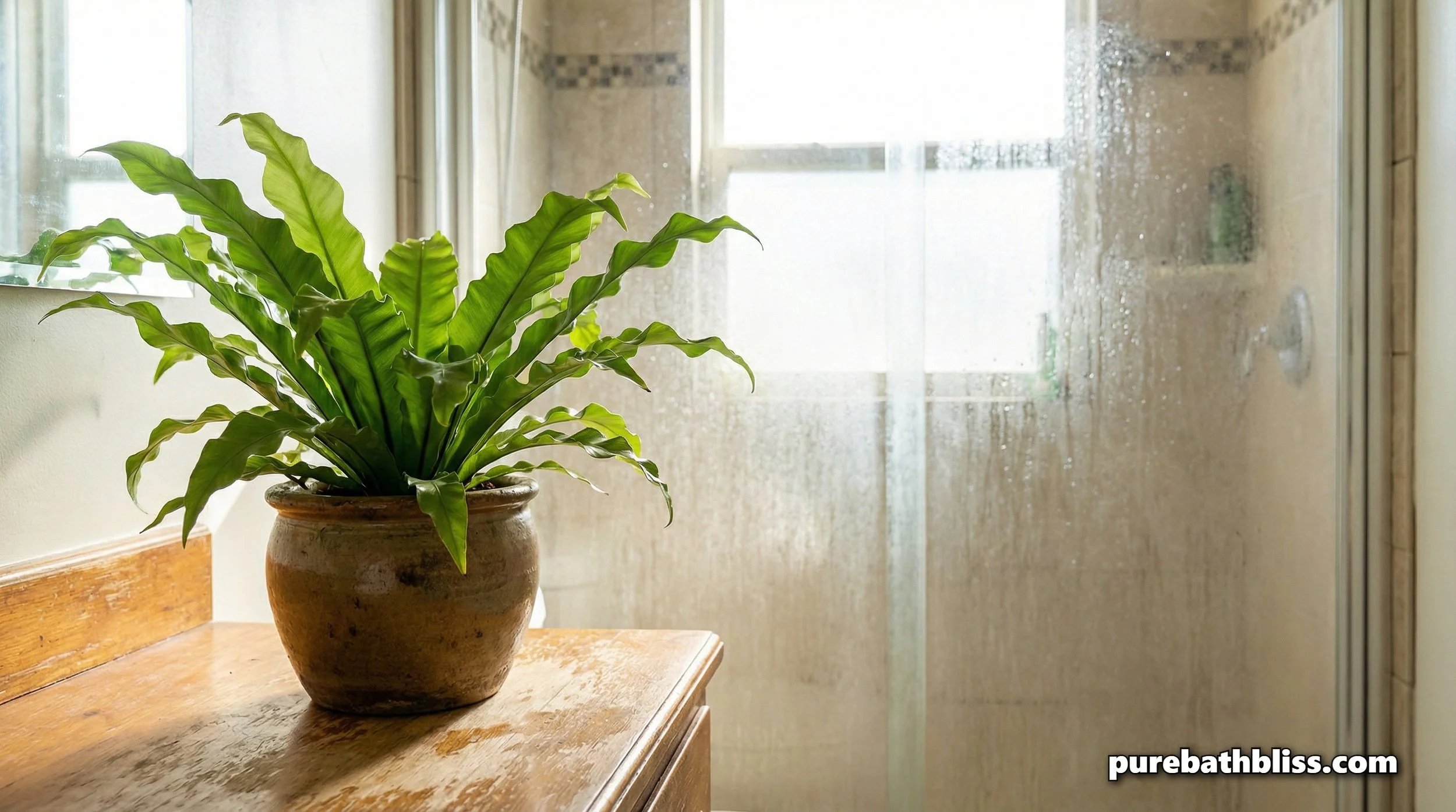
1. Light: Finding the Sweet Spot
In the wild, these ferns grow on the crooks of trees in the rainforest, shaded by the canopy above. This means they are biologically programmed for medium, indirect light.
The Best Spot: A bathroom window with a frosted pane or a shelf a few feet away from a bright window.
What to Avoid: Direct afternoon sun will scorch those beautiful wavy leaves, turning them yellow or crispy. If your bathroom is windowless, this plant will survive under Smart Mirror LED Lighting, provided the lights are on for 8–10 hours a day.
2. Water: The "Center" Rule
The most common mistake with a Bird’s Nest Fern is watering the "nest" (the center of the plant). The center is where new fronds emerge, and if water sits there, it can lead to crown rot, which is fatal.
How to Water: Always water around the edges of the pot, directly into the soil.
The Moisture Balance: Keep the soil consistently moist but never soggy. Think of a wrung-out sponge. If the top inch of soil feels dry, it’s time for a drink.
3. Humidity: The Shower’s Best Friend
This is why the Bird’s Nest Fern is at the top of our 12 Best Shower Plants Guide. It craves a humidity level of 50–70%.
If you notice the edges of the leaves turning brown and "crunchy," your air is too dry. The steam from your daily shower usually provides enough moisture, but if you live in a dry climate, a quick misting once a week will keep it happy.
4. Soil and Sustainability
At PureBathBliss, we advocate for the planet as much as the plants.
Peat-Free is Key: Traditional potting soils use peat moss, which is harvested from precious wetlands. For your Bird's Nest Fern, use a coco-coir based mix with a bit of perlite for drainage.
The Pot: Ensure your pot has a drainage hole. If you have a beautiful decorative pot with no hole, keep the fern in its plastic nursery liner inside the decorative pot.
5. Troubleshooting Common Issues
Yellowing Leaves: Usually a sign of too much light or overwatering. Check the soil!
Pale, Limp Leaves: Your plant might be hungry. Use an organic, water-soluble fertilizer at half-strength once a month during the spring and summer.
Dusty Fronds: Because these leaves are wide, they catch dust and hairspray. Gently wipe them with a damp Upcycled Towel Rag to keep their "pores" open for breathing.
Conclusion
The Bird’s Nest Fern is more than just decor; it’s a living piece of the rainforest that helps regulate your bathroom’s ecosystem. It’s the perfect "Level 1" plant for anyone looking to start their shower jungle.
Bird's Nest Fern Essentials
The Soil: Organic Peat-Free Coco Coir Mix.
The Food: Liquid Seaweed Fertilizer.
The Pot: Self-Watering Planter with Drainage.