Why Does My Toilet Get Stains? The Ultimate Guide to a Sparkling Bowl
Transparency Note: We independently select these products based on research and user reviews. If you buy something through our links, we may earn a commission.
It’s one of the most frustrating moments in home maintenance: you’ve just spent the weekend deep-cleaning your bathroom, only to look down a few days later and see a stubborn ring or a strange streak appearing in the toilet bowl.
Stains in the toilet are often seen as a sign of a "dirty" home, but between you and me, that’s rarely the case. Most toilet stains have nothing to do with how often you clean; they are a result of the chemistry of your water, the age of your pipes, and the organic realities of a high-traffic bathroom.
Understanding why these stains happen is the secret to stopping the cycle of endless scrubbing. In this guide, we’ll diagnose the most common toilet stains—from minerals to "biofilms"—and provide the non-toxic, Sustainable Sanctuary solutions to get rid of them for good.
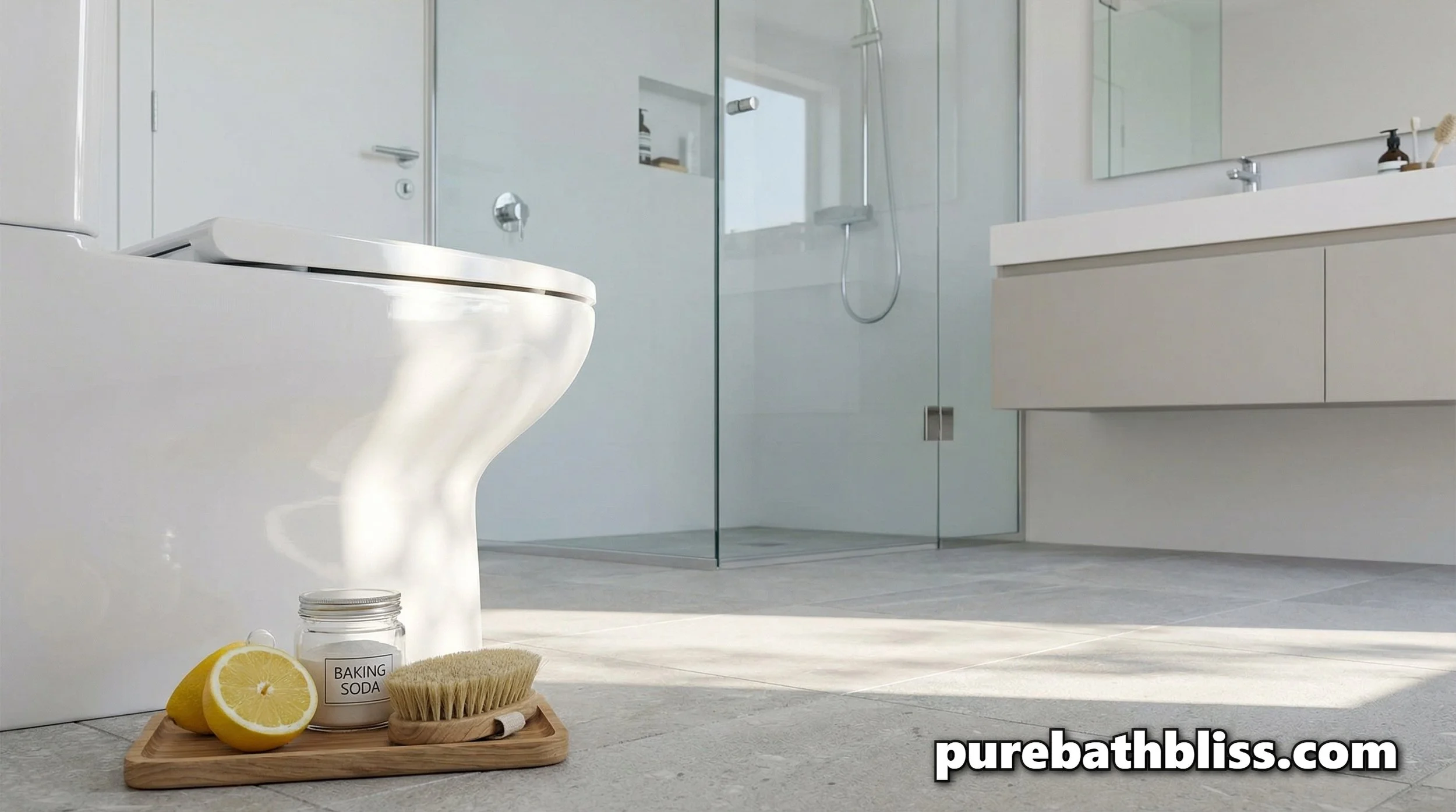
1. The Diagnostic: What Color Is Your Stain?
Before you reach for the cleaner, look at the color. The color tells you exactly what mineral, bacteria, or waste product you are fighting.
The Brown or Red Ring (Rust)
If you see streaks that look like rust or a reddish-brown ring at the water line, you are likely dealing with Iron. This is common in homes with older well water or aging galvanized pipes. When the iron in the water meets the oxygen in the bowl, it "oxidizes"—literally rusting inside your toilet.
The White, Crusty Build-Up (Limescale)
Does your toilet feel "rough" to the touch in certain spots? This is Limescale. If you live in an area with hard water, minerals like calcium and magnesium settle on the porcelain. Over time, these create a hard, white crust that traps dirt and waste, making the bowl look dingy.
The Pink or Black Slimy Ring (Bacteria & Mold)
This isn't a mineral, it’s alive! Pink stains are usually a bacteria called Serratia marcescens, which thrives on moisture and fatty substances. Black or dark green stains are typically Mold or Mildew fueled by the high humidity in your bathroom.
2. The "Hidden" Culprit: Organic Waste (Pee & Poo)
It’s the question no one wants to ask: Do pee and poo cause permanent stains? The answer is a bit more complex than a simple "yes."
The "Glue" Effect
On its own, urine usually flushes away without a trace. However, if you have even a tiny amount of limescale (the white, rough build-up mentioned above) on your porcelain, it acts like sandpaper. It catches the uric acid crystals and salts found in urine. These minerals and organic waste "glue" themselves together, hardening into a dark yellow or brown deposit known as Urine Scale.
The Biofilm Barrier
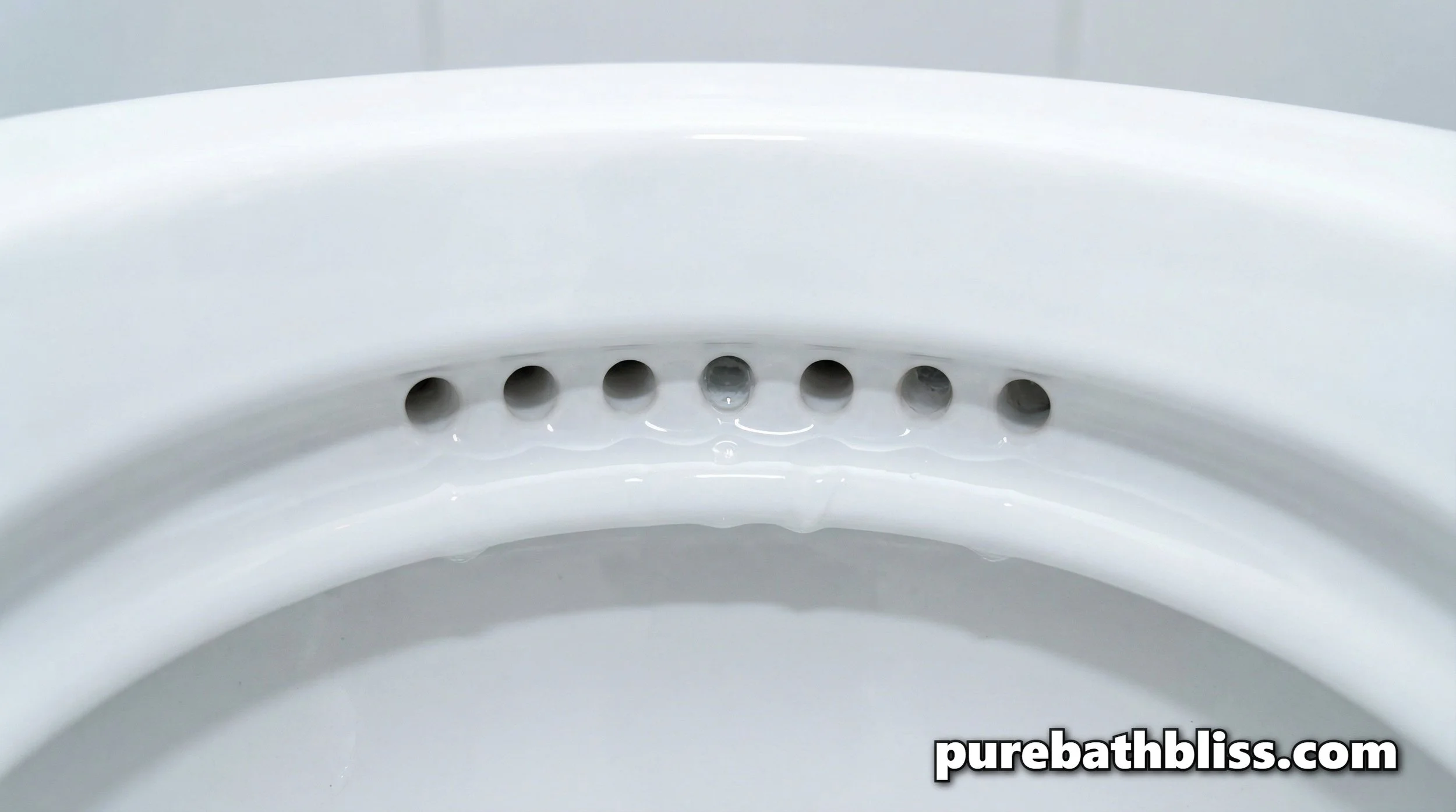
Poo contains natural bacteria. If the toilet isn't flushed immediately or if the "rim jets" (where the water comes out) are partially clogged, a biofilm can form. A biofilm is a thin, slimy layer of bacteria that creates a protective "home" on the porcelain. Once a biofilm is established, it attracts both minerals and organic waste, creating a dark, fuzzy, or slimy stain that seems to return just days after you scrub it away.
The "Let it Mellow" Risk
While saving water is a core part of a Sustainable Sanctuary, the "if it's yellow, let it mellow" rule can be tough on your toilet. When urine sits in the bowl, the water evaporates slightly, concentrating the acids. This concentrated mixture etches into the porcelain over time, making it easier for future stains to take hold.
3. The Best Non-Toxic Solutions
We avoid harsh bleaches and "blue" chemical pucks in our homes. They are tough on the planet and can damage the rubber seals inside your toilet tank. Instead, we use "The Big Three" of natural cleaning.
Method A: The Lemon and Salt Scrub (Best for Rust & Urine Scale)
The citric acid in the lemon breaks down the iron and uric acid, while the salt provides the "grit" to lift the stain without scratching the porcelain.
The Fix: Cut a lemon in half, dip it in coarse salt, and scrub the water line directly.
Method B: The Baking Soda & Vinegar "Volcano" (Best for General Grime)
The fizzing action of this classic combo helps loosen organic buildup and biofilms.
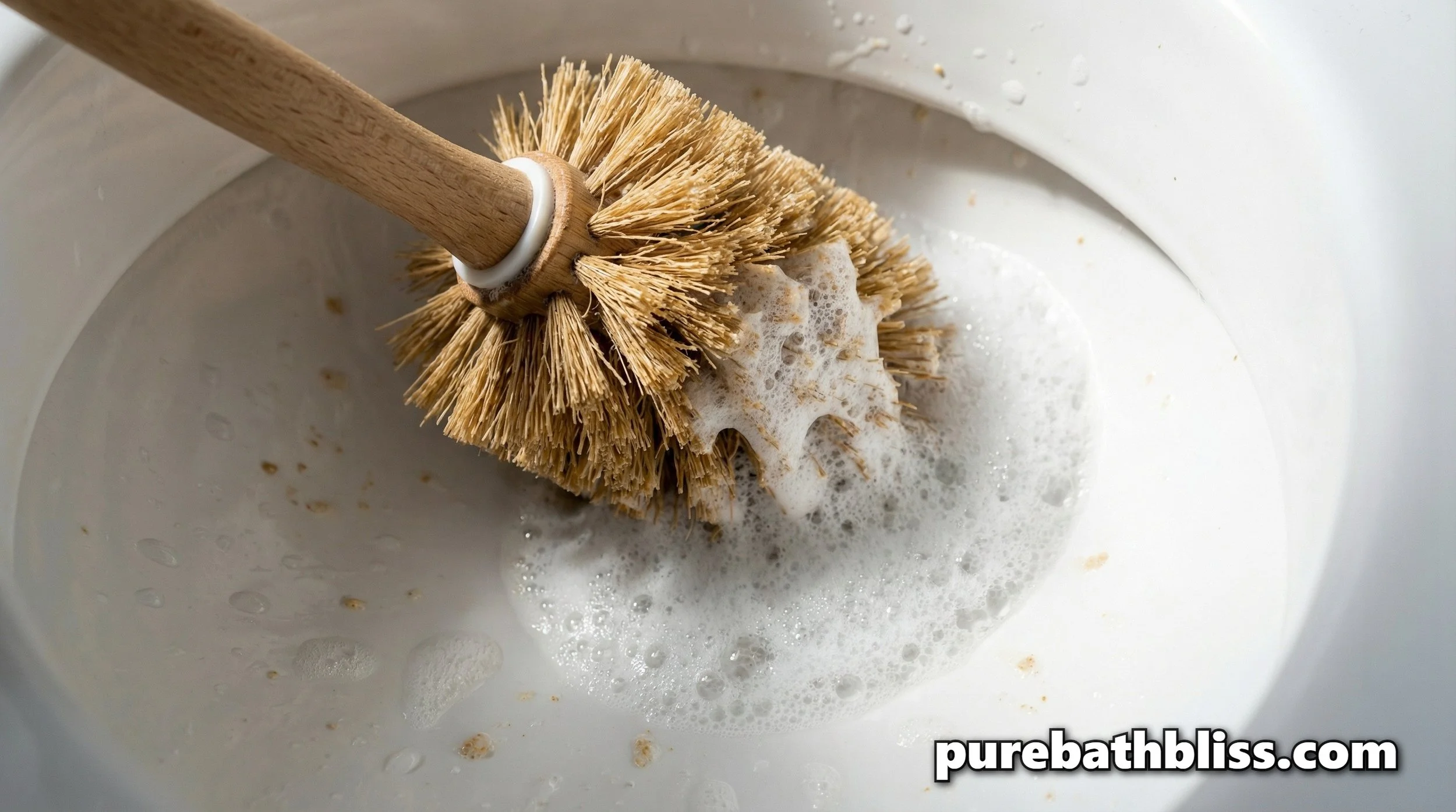
The Fix: Pour one cup of baking soda into the bowl, followed by one cup of white distilled vinegar. Let it sit for 30 minutes before scrubbing with a brush.
Method C: Hydrogen Peroxide (Best for Pink Slime & Mold)
For bacteria and mold, you need a safe disinfectant.
The Fix: Pour a half-cup of 3% hydrogen peroxide into the bowl and let it sit for at least an hour. Peroxide kills the "slime" at the source without the toxic fumes of bleach.
4. The "Secret" Tool: The Wet Pumice Stone
If that hard-water or urine-scale ring still won't budge, it’s time for the Pumice Stone.
The Rule: You must never use a dry pumice stone on porcelain. It will leave permanent grey scratches.
The Fix: Soak the stone in the toilet water for a few minutes until it’s dripping wet. Use very light pressure to "erase" the mineral ring. The stone will wear down as you use it, but it will leave the porcelain looking brand new.
5. How to Prevent Stains from Returning
Lower the Humidity
High humidity encourages mold and pink bacteria to grow. Keep your bathroom fan running for at least 20 minutes after every shower.
The Monthly "Vinegar Flush"
Once a month, pour two cups of white vinegar into the tank before you go to bed. This allows the vinegar to sit in the rim jets, breaking down the minerals and biofilms before they ever reach the bowl.
Close the Lid
Closing the lid prevents airborne spores from landing in the water, which can kickstart the growth of mold.
Conclusion: A Clean Bowl, A Healthy Home
A stained toilet isn't a failure of cleaning; it’s a puzzle of water chemistry and organic management. By identifying whether you're fighting rust, limescale, or a biofilm, you can use the right non-toxic tool for the job.
The Toilet Rescue Kit
The Scrubber: Natural Pumice Stone with Handle.
The Disinfectant: 3% Hydrogen Peroxide.
The "Grit": Bulk Baking Soda for Cleaning.